
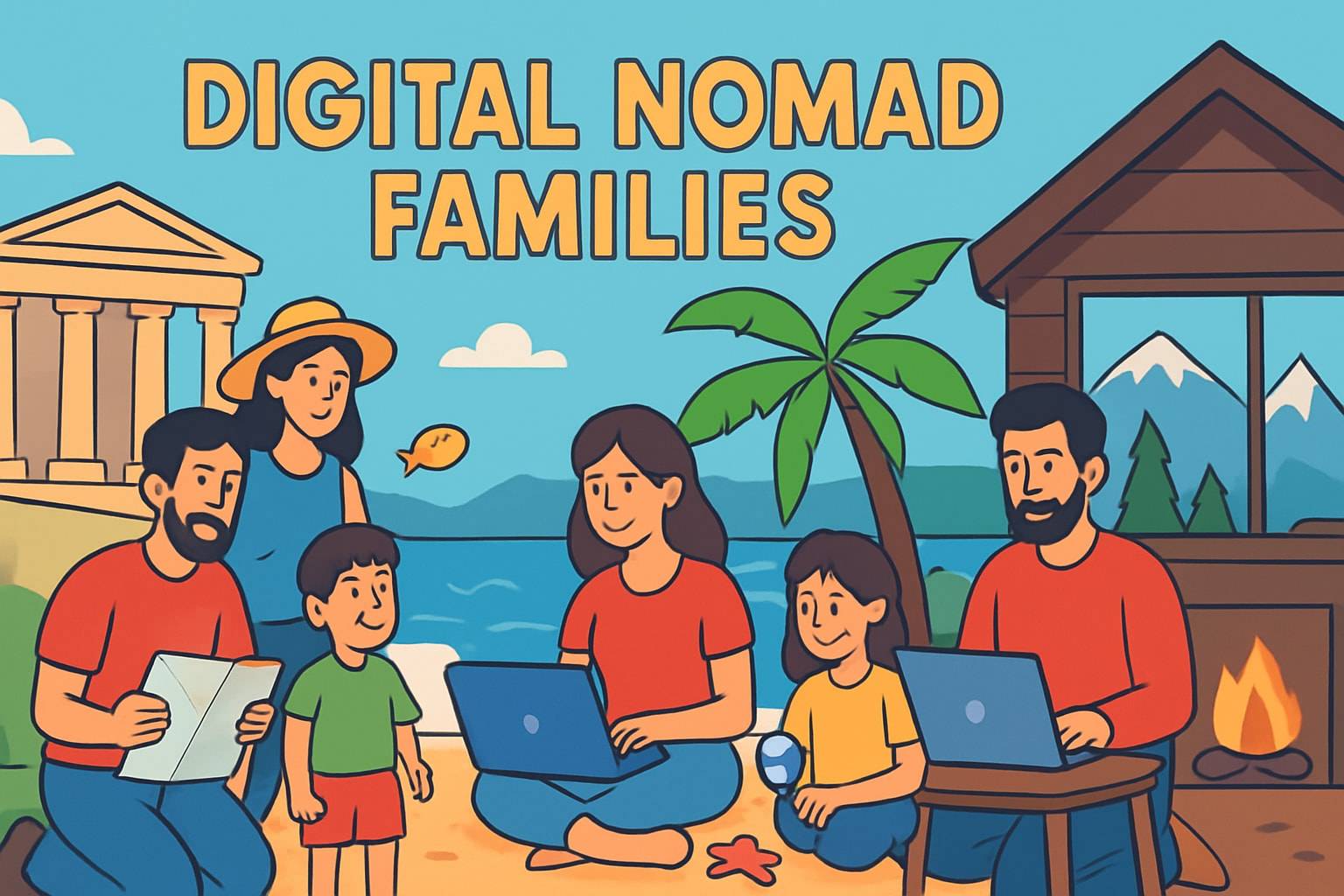
Picture your family wandering through Greek ruins, studying sea creatures on Balinese shores, then logging in for work and school from a mountain cabin in Chile—all in one year. This is the new reality for digital nomad families.
In 2026, digital nomad families are thriving, blending remote work, global education, and adventure like never before. Why are more parents trading routine for the world, and how are their children flourishing?
This guide empowers you to confidently embrace this lifestyle. Discover actionable steps, inspiring examples, and the latest insights. Learn how to plan, adapt, and thrive as a digital nomad family—exploring the rise of nomad families, legal essentials, worldschooling, family wellbeing, and future trends.
The Rise of Digital Nomad Families: Why 2026 Is the Year to Go Global
The landscape of remote work is evolving rapidly, and nowhere is this more evident than in the surge of digital nomad families. In 2026, parents and children are packing their bags not just for vacations, but for a lifestyle that blends work, learning, and adventure across continents. This transformation is reshaping what it means to call a place "home" and is opening up a world of opportunities for families everywhere.
Changing Demographics and the Growth of Family Nomadism
The rise of digital nomad families marks a significant shift from solo travelers to family units embracing global mobility. According to a Lonely Planet and Fiverr survey, 70 percent of "anywhere workers" now travel with children, showcasing a dramatic change in the demographic makeup of remote workers.
The COVID-19 pandemic played a pivotal role in normalizing remote work and virtual learning for all ages. As a result, more families have realized that their careers and education can be location-independent. This realization has led to an explosion of interest in digital nomad families seeking new ways to balance work, schooling, and quality time together.
One of the biggest facilitators of this trend is the expansion of digital nomad visas. Over 65 countries now offer family-friendly remote work visas, making it easier than ever for digital nomad families to settle abroad for months or even years. These visas often include provisions for children and partners, reducing bureaucratic barriers and encouraging more parents to take the leap.
Economic and lifestyle motivations are also powerful drivers. Many families are looking to escape high living costs, pursue adventure, and prioritize meaningful family time. The growing acceptance of worldschooling and alternative education models has helped destigmatize non-traditional paths, empowering more parents to educate their children on the road.
Real-world stories highlight these changes. The Young family, for example, has journeyed across the United States in a motorhome, blending remote work with hands-on learning. The Hawley family travels globally with their toddler, choosing destinations based on safety, community, and learning opportunities.
According to recent statistics, there are 35 million digital nomads worldwide as of 2025, with projections suggesting hundreds of millions by 2030. For a deeper dive into the numbers and emerging trends, see these Digital Nomad Families Statistics 2025.
Ultimately, digital nomad families are redefining the concepts of "home" and "school," ushering in a new era of flexibility and global citizenship.
Benefits and Challenges Unique to Families
Digital nomad families enjoy unique benefits that solo travelers rarely experience. Children gain enhanced cultural exposure and resilience, learning to adapt to new environments and building empathy through diverse interactions. Living abroad offers daily opportunities for language acquisition and the development of real-world skills that traditional classrooms struggle to provide.
However, the journey is not without challenges. Maintaining routines can be difficult, particularly when moving between time zones or adapting to unfamiliar cultures. Building a sense of community requires intentional effort, as digital nomad families must continually seek out friendships and support networks both locally and online.
Work-life balance is another hurdle. Parents juggle professional responsibilities while ensuring their children’s education and wellbeing are not compromised. Expert perspectives emphasize the importance of experiential learning, but also highlight the need for continuity and structure. Without careful planning, the excitement of travel can quickly give way to stress and instability.
A well-organized approach is essential for digital nomad families. Setting clear routines, seeking out worldschooling hubs, and prioritizing family rituals help foster stability. By intentionally balancing freedom with structure, families can thrive—enjoying the adventure while nurturing strong connections and lifelong learning.
Essential Legal, Financial, and Logistical Steps for Digital Nomad Families
Embarking on a journey as digital nomad families in 2026 requires thoughtful planning and precise execution. From securing the right visas to managing finances and balancing work with education, each step ensures a smoother transition into global living.
Securing Visas and Residency: A Step-by-Step Guide
For digital nomad families, understanding visa options is the foundation of global mobility. Over 65 countries now offer digital nomad visas, each with specific requirements for families. The process usually involves:
- Proof of remote income (often $2,000–$5,000/month)
- Comprehensive health insurance for all family members
- Background checks and education credentials
- Application forms, passport copies, and sometimes interviews
Visa fees can range from $100 per person up to $3,000, depending on the destination. Portugal, for example, offers a one-year renewable visa that includes families, while the UAE provides a one-year remote work visa.
The timeline from application to approval varies, so early research is crucial. Renewal periods range from six months in Iceland to up to ten years in Thailand, giving digital nomad families flexibility to plan long-term stays.
Tax implications should not be overlooked. Some visas offer initial tax-free periods, but ongoing obligations, especially for U.S. citizens, remain. For a comprehensive breakdown of requirements and costs, consult the Digital Nomad Visas for Families guide.
Staying informed through official consulate sites and resources like Nomad List helps digital nomad families avoid bureaucratic pitfalls.
Managing Finances and Healthcare Abroad
Financial planning is an essential pillar for digital nomad families. Begin with a detailed budget covering travel, accommodation, schooling, and daily expenses. Use international or digital banking services to manage multiple currencies and reduce fees.
Consider the following:
- Open accounts with global banks for ease of access
- Use currency conversion apps for real-time rates
- Set up emergency funds to handle unexpected costs
Healthcare is another top priority. Choose global health insurance plans that cover the entire family and meet visa requirements. Telemedicine services offer access to healthcare on the move, while local clinics provide immediate support. Digital nomad families should always carry copies of medical records and vaccination documents.
When planning extended stays, research local healthcare systems and identify nearby hospitals. For example, some families on U.S. road trips choose comprehensive travel insurance and establish a routine for regular checkups.
Proactive financial and healthcare planning enables digital nomad families to focus on exploration and learning, minimizing stress during transitions.
Organizing Work and School Schedules
Balancing remote work and education is central to the success of digital nomad families. Start by creating a flexible schedule that aligns parent work hours with children's learning routines. Use digital calendars and shared planning tools to coordinate activities.
Key tips include:
- Designate quiet workspaces for productivity
- Schedule learning blocks during parents' work hours
- Adjust routines to new time zones for continuity
Reliable internet access is vital. Invest in portable Wi-Fi hotspots and research connectivity in each destination. Adapt to local school requirements if planning a longer stay, ensuring smooth integration for children.
For instance, a German software engineer working remotely from New Zealand aligns her hours with European clients, allowing her family to balance work, school, and exploration.
By establishing structure and embracing flexibility, digital nomad families create an environment where both adults and children can thrive, no matter where they are in the world.
Worldschooling and Education on the Move: Empowering Kids Anywhere
For digital nomad families, education is more than textbooks and tests. It becomes an immersive journey, blending travel and learning into daily life. As more parents choose flexible, global lifestyles, worldschooling is emerging as a powerful way to empower children anywhere in the world.
Understanding Worldschooling and Alternative Education Models
Worldschooling is the practice of combining travel with education, allowing children to learn through real-world experiences rather than a traditional classroom. For digital nomad families, this approach supports curiosity, adaptability, and a deep understanding of global cultures.
The movement has grown rapidly since the pandemic. Many families realized the benefits of remote learning and began exploring alternatives to conventional schooling. Digital nomad families now have access to a variety of educational models, from unschooling and project-based learning to structured homeschooling and hybrid systems.
Benefits of worldschooling include enhanced language acquisition, critical thinking, and resilience. Children gain exposure to different customs, foods, and perspectives, which strengthens their sense of global citizenship. The Young family, for example, transformed their US road trip into an educational adventure by integrating visits to national parks, museums, and historic sites into their lesson plans.
For those seeking guidance, resources like this guide to flexible approaches to worldschooling offer practical frameworks for digital nomad families to tailor learning to each child’s needs.
Tools and Resources for Learning Everywhere
Digital nomad families rely on a wide array of tools to support learning on the move. Online curriculums and virtual tutors provide structure, while educational platforms offer interactive lessons that can be accessed from anywhere with an internet connection.
Adapting lessons to new environments is a hallmark of worldschooling. A day at the beach in Bali can become a marine biology lesson, while a hike through Chilean mountains offers opportunities for hands-on science projects. Museums, local markets, and historical sites serve as living classrooms for digital nomad families.
Tracking progress is important for families planning to re-enter traditional schooling or meet standardized testing requirements. Many use digital portfolios or education apps to document achievements and ensure continuity. Socialization is another key focus. Digital nomad families connect with other travelers through online groups, local meetups, and worldschooling hubs, giving children chances to build friendships and community.
The Hawley family exemplifies how routines and community can support a child’s development. By maintaining a balance of exploration and familiar activities, they help their child thrive while traveling.
Empowering Worldschooling with LearnSpark
LearnSpark is designed specifically for digital nomad families who value personalized, curiosity-driven education. This LearnSpark platform adapts lessons to each child’s level, interests, and location, making learning both relevant and engaging.
Families can access customizable, printable lesson plans that fit seamlessly into their travel routines. Progress tracking tools ensure that children meet learning milestones, even as they move between countries and cultures.
With LearnSpark, digital nomad families can confidently guide their children’s education. The platform supports a variety of worldschooling philosophies and offers flexible offline access, so learning continues uninterrupted regardless of internet availability.
By focusing on real-world exploration and adaptable content, LearnSpark helps digital nomad families foster a lifelong love of learning—wherever their journey takes them.
Thriving as a Family: Routines, Community, and Wellbeing on the Road
Embracing the digital nomad families lifestyle means navigating ever-changing environments while fostering a sense of stability, connection, and wellbeing. For families on the move, routines, community, and resilience are essential pillars. With thoughtful planning, digital nomad families can cultivate meaningful rituals, build global friendships, and thrive together through every adventure.
Building Structure and Rituals for Stability
For digital nomad families, routines provide the foundation for emotional security and learning continuity. Even as the scenery changes, familiar rituals like morning check-ins, shared meals, and nightly storytime help children feel anchored.
Consider creating a flexible family schedule that includes:
- Morning routines (breakfast, planning the day)
- Dedicated learning or work blocks
- Outdoor play or exploration time
- Family meetings to reflect on experiences
Adapting these routines to new time zones or cultures can be as simple as shifting meal times or blending local customs into daily life. For example, the Hawley family maintains a consistent bedtime ritual regardless of location, helping their child transition smoothly. Digital nomad families who prioritize structure find it easier to balance spontaneity with the comfort of predictability.
Fostering Community and Social Connections
One of the greatest challenges for digital nomad families is building and maintaining connections. Actively seeking out community is vital for both adults and children. Many families join digital nomad groups online, attend meetups, or participate in local classes and sports.
Children can form friendships at playgrounds, libraries, or group travel events. To support ongoing social growth, families often maintain relationships at home through regular video calls or pen pal exchanges.
For those looking to deepen their sense of belonging, worldschooling hubs for traveling families offer structured environments and peer learning for children, along with support networks for parents. These hubs can be an invaluable resource for digital nomad families seeking community on the road.
Managing Work-Life Balance and Parental Roles
Work-life balance is a central concern for digital nomad families. Parents often split shifts, alternating between work and childcare to ensure both responsibilities are met. Setting clear boundaries for work hours versus family time is crucial, especially when living and working in the same space.
To avoid digital overload, families schedule device-free periods dedicated to shared activities. Self-care is equally important: parents should recognize signs of burnout and make time for rest, exercise, and personal interests. Some families, like the Hawleys, bring a nanny for added support during busy periods, enabling a healthier balance for everyone.
Addressing Challenges and Building Resilience
Life on the road brings unique challenges for digital nomad families, from disrupted travel plans to cultural adjustments and homesickness. Building resilience starts with open communication—discussing concerns, celebrating achievements, and setting shared family goals.
Strategies for overcoming obstacles include:
- Creating contingency plans for health or travel disruptions
- Learning basic phrases in the local language
- Establishing familiar routines in new settings
Expert advice highlights the importance of strong support networks and maintaining some constants, even as everything else changes. By modeling adaptability and problem-solving, digital nomad families nurture lifelong skills in their children, empowering them to thrive wherever they go.
Overcoming Common Pitfalls: Practical Solutions for Digital Nomad Families
Digital nomad families encounter unique challenges on the road, from paperwork headaches to keeping children engaged in learning. However, with the right strategies, these obstacles become manageable milestones rather than roadblocks. Here, we explore practical solutions to help digital nomad families stay resilient, connected, and thriving wherever they go.
Navigating Legal and Bureaucratic Hurdles
Visa policies and local regulations can be complex, especially for digital nomad families. Requirements often change, so staying informed is essential. Check official government or consulate websites frequently before making travel commitments.
Keep digital and hard copies of all documents, such as passports, birth certificates, and vaccination records, organized in a secure folder. When facing rejections or appeals, use consulate resources and seek guidance from experienced nomad families. Referencing insights from the Rise of Digital Nomad Families can provide valuable background on evolving challenges.
Proactive organization reduces stress and helps digital nomad families move smoothly between destinations.
Mitigating Financial and Housing Risks
Currency fluctuations and changing costs of living can impact budgets for digital nomad families. Research local prices and set up contingency funds for emergencies. When searching for housing, prioritize short-term rentals, house swaps, or family-friendly hostels to avoid long-term commitments in uncertain markets.
Respect local communities by choosing accommodations that do not contribute to gentrification. Compare expenses using a simple table to track major costs like rent, groceries, and schooling.
| Expense Type | Local Rental | House Swap | Hostel |
|---|---|---|---|
| Rent | $ | $ | $ |
| Food | $ | $ | $ |
| Schooling | $ | $ | $ |
By planning ahead, digital nomad families can safeguard their finances and secure comfortable, ethical housing.
Ensuring Reliable Connectivity and Tech Support
Access to strong internet is non-negotiable for digital nomad families. Research destinations known for reliable connectivity before booking accommodations. Always test WiFi speeds and have backup options, such as portable hotspots or local SIM cards.
Prepare for outages by downloading key work and school materials offline. Time zone differences can be challenging, so synchronize family schedules with global commitments.
A tech toolkit with spare chargers, adapters, and mobile devices ensures digital nomad families remain connected and productive, even in remote areas.
Maintaining Educational and Professional Continuity
Balancing work and learning is a core challenge for digital nomad families. Use online platforms, virtual tutors, and printable resources to maintain progress. Tracking milestones is key for families planning to re-enter traditional schooling or meet professional goals.
Explore resources like the Homeschooling while traveling guide for actionable tips. Set up structured routines for work and study, but remain flexible to seize learning opportunities unique to each destination.
Intentional planning helps digital nomad families support both career advancement and high-quality education for their children.
Emotional Wellbeing: Coping with Homesickness and Uncertainty
Homesickness and uncertainty are natural for digital nomad families. Foster open communication about emotions and build new routines wherever you go. Stay connected with loved ones through regular video calls and encourage children to keep journals or exchange letters with friends.
Developing flexibility and resilience as a family is crucial. Celebrate small wins and maintain shared goals to reinforce a sense of belonging.
With patience and intentionality, digital nomad families can turn challenges into opportunities for growth and connection.
Future Trends and Predictions: The Next Evolution of Digital Nomad Families
Imagine a world where digital nomad families are not the exception, but the norm. This vision is fast becoming reality as technology, global policies, and cultural shifts converge to create new possibilities for families to live, work, and learn wherever they choose. In this section, we explore what lies ahead for digital nomad families, from demographic surges to educational innovations and broader societal impacts.
The Digital Nomad Family Movement: What’s Next?
The momentum behind digital nomad families is set to accelerate dramatically in the coming years. According to recent forecasts, the number of digital nomads worldwide is expected to grow from 35 million in 2025 to hundreds of millions by 2030. This surge is driven not only by individuals but increasingly by families seeking flexibility, cultural enrichment, and a balanced lifestyle.
The rise of family-friendly digital nomad visas is reshaping the global landscape. Over 65 countries now offer programs designed to welcome entire families, complete with provisions for dependents and access to education. This infrastructure is making it easier than ever for digital nomad families to establish temporary homes in new destinations.
As more organizations adopt remote work policies, parents are finding new opportunities to blend professional ambitions with family adventures. The normalization of worldschooling and other alternative education models is helping to break down barriers, empowering families to design learning experiences that fit their unique needs. To see how the profile of these families is changing, the Digital Nomad Demographics 2025 report offers valuable insights into age, family status, and travel patterns.
A growing trend is the rise of "slow travel" and the formation of regional hubs. Digital nomad families are increasingly choosing to settle in one location for several months, allowing for deeper community ties, stable routines, and richer cultural immersion. These hubs, from Portugal's Algarve to Bali and Mexico's Yucatán, are becoming magnets for families who value connection and shared experiences.
Innovations in Education and Technology
Education is undergoing a transformation as digital nomad families demand more flexible, engaging, and personalized approaches. The development of LearnSpark learning platforms is making it possible for children to receive adaptive instruction tailored to their interests and current location. Virtual and augmented reality are opening doors to immersive, location-based learning, allowing students to explore historical sites or marine ecosystems without leaving their host country.
Platforms like LearnSpark are at the forefront, enabling families to blend project-based and experiential learning with digital resources. For hands-on curriculum ideas, project-based learning for families is becoming a cornerstone of the worldschooling movement, helping parents engage children in meaningful, real-world projects wherever they travel.
Global networks and online communities for digital nomad families are also expanding. These networks facilitate social connections, resource sharing, and support, making it easier for families to find like-minded travelers and form lasting friendships. As these technological and educational innovations mature, they are empowering families to take charge of their learning journeys and professional growth.
Societal and Economic Impact
The rapid growth of digital nomad families is influencing not just individual lives, but also economies and communities worldwide. As families relocate, they contribute to local economies through housing, education, and spending, often revitalizing smaller towns and regions seeking new residents. At the same time, the influx of global citizens can drive up housing costs and create challenges around integration and sustainability.
Governments are responding by developing policies to attract digital nomad families while balancing the needs of local communities. This includes offering incentives, streamlining visa processes, and investing in digital infrastructure. The shift toward remote work and alternative education is prompting cities and countries to rethink their approach to education, urban planning, and cultural exchange.
Cultural impacts are significant as well. Digital nomad families bring diverse perspectives and foster cross-cultural understanding, helping to build bridges between communities. However, these benefits depend on intentional, respectful engagement and a commitment to sustainability.
Final Thoughts: Embracing a New Definition of Family Life
Looking ahead, digital nomad families are poised to redefine what it means to live, learn, and work together. The fusion of global mobility, personalized education, and strong community networks is creating a blueprint for a more adaptable, resilient, and connected family life.
As these trends unfold, families are encouraged to explore the resources, communities, and innovations that best suit their needs. By embracing flexibility and prioritizing shared goals, digital nomad families can thrive in a world where possibilities are only limited by imagination.
As you think about your family’s next chapter—whether that’s mapping out visa options, balancing work schedules, or nurturing your child’s curiosity with worldschooling—remember that you don’t have to navigate it all alone. LearnSpark was designed with worldschooling families like yours in mind, making it easier to personalize learning, track progress, and adapt to every new adventure. If you’re ready to empower your children’s education while exploring the world together, you can take the first step today.
Create Your Free Account
and see how seamless, joyful learning can fit into your family’s global journey.