
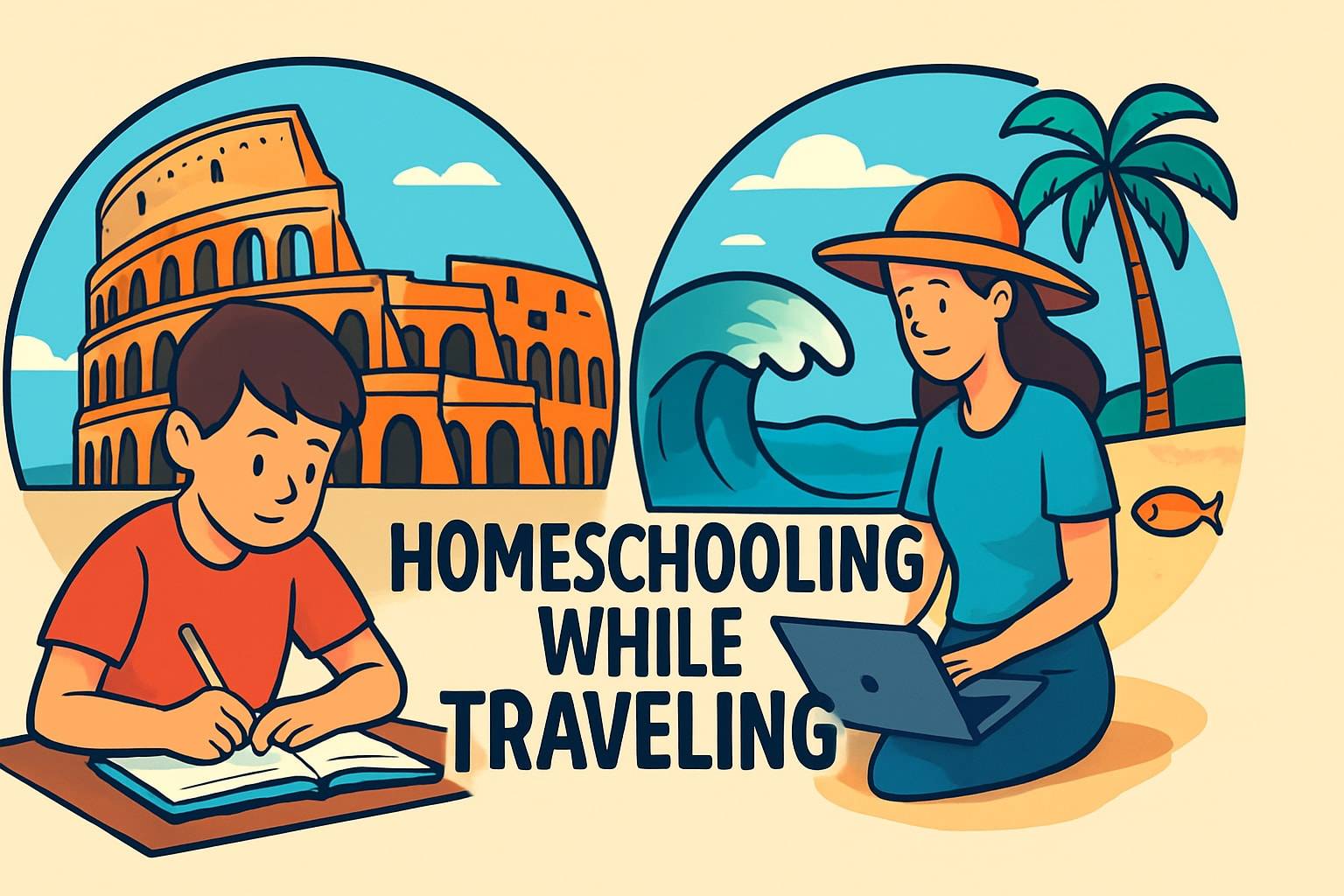
Imagine your family wandering through ancient Roman ruins on Monday, then studying marine biology on a Thai beach by Friday—all without missing a beat in your child’s education. In 2025, homeschooling while traveling is more accessible than ever, enabling parents to combine adventure with high-quality learning. This guide will show you how to balance the excitement of global exploration with the structure your child needs to thrive academically. Discover the benefits, challenges, legal essentials, planning steps, curriculum options, and practical strategies to make worldschooling a reality for your family. Ready to start your journey? Let’s dive in.
Why Homeschool While Traveling?
Imagine a classroom that moves with you, where learning happens in ancient cities, bustling markets, and quiet forests. Homeschooling while traveling is not just a trend, it is a movement that is redefining what education looks like for families worldwide.
The Rise of Worldschooling and Homeschooling on the Road
Over the past few years, homeschooling while traveling has seen a remarkable surge. According to Homeschooling growth statistics 2024-2025, millions of families have embraced alternative education models, with a significant portion choosing to combine travel with learning. This shift accelerated after 2020, as remote work and flexible schooling options became more accessible.
Understanding the key terms is essential. Homeschooling while traveling often overlaps with worldschooling and unschooling but each has distinct features. Homeschooling while traveling typically follows a structured curriculum, but is adapted to fit the family's journey. Unschooling is a more child-led approach, focusing on interests and experiences rather than formal lessons. Worldschooling blends both, using the world as a classroom and integrating cultural immersion into daily learning.
The benefits of homeschooling while traveling are extensive. Families enjoy real-world education, from learning history at the Colosseum to studying marine biology on tropical shores. Cultural immersion becomes part of the curriculum, with children gaining language skills and global awareness firsthand. The flexibility to set your own pace and tailor lessons to your child’s interests allows for a more personalized education than most traditional schools can offer.
Many parents worry about socialization, but research and family experiences debunk this myth. Children who are homeschooling while traveling often develop strong social skills by meeting diverse peers, joining local activities, and participating in group excursions. Studies show these children are just as socially adept, if not more so, than their classroom-based peers.
Consider the story of the Martins, who spent two years traveling across Europe and Asia. Their children learned history onsite, practiced math through currency conversions, and made friends in every country. For families like theirs, homeschooling while traveling has led to deeper learning and stronger family bonds.
Advantages and Challenges of Mobile Homeschooling
Homeschooling while traveling offers unique academic advantages. Children engage in hands-on, experiential learning—solving math problems at a market, exploring ecosystems during hikes, or writing stories inspired by new places. This approach makes learning memorable and relevant.
Family bonding is another major benefit. Shared adventures, problem-solving, and cultural discoveries strengthen relationships and create lasting memories. Many families say that homeschooling while traveling has helped them grow closer and develop resilience together.
However, there are challenges to consider. Time management is crucial when balancing lessons, travel logistics, and work commitments. Each country or state may have different legal requirements, so staying organized with documentation is essential. Parents must also learn to balance their roles as educators and caregivers, especially when routines are disrupted by travel.
Experienced families recommend several best practices:
- Set realistic goals for each trip or destination.
- Create a flexible learning schedule that adapts to travel days.
- Use both digital and physical resources to maximize learning opportunities.
- Connect with other traveling families for support and inspiration.
Mistakes are part of the journey. Some parents try to replicate traditional school too closely, leading to frustration. Others underestimate the importance of downtime. The most successful families find balance by embracing the unpredictability of travel and making learning part of everyday life.
Homeschooling while traveling is not without obstacles, but the rewards—academic growth, adaptability, and unforgettable experiences—make it a compelling choice for modern families.
Legal, Logistical, and Planning Essentials
Navigating the legal and logistical side of homeschooling while traveling is essential for a smooth, stress-free adventure. Whether you are exploring domestically or crossing borders, proper planning protects your child’s education and keeps your journey on track.
Understanding Homeschool Laws and Requirements
Before you begin homeschooling while traveling, research the legal requirements in your home country and any destinations. In the United States, each state has unique homeschooling laws. Some require notice of intent, annual assessments, or specific subjects. Others have minimal oversight. For a comprehensive overview, consult resources like the Homeschooling laws by state directory.
Keeping meticulous records is essential. Most families maintain digital portfolios, including photos, writing samples, and progress reports. These records help meet legal requirements and make re-enrollment or graduation transitions smoother. Digital scrapbooks and cloud-based folders are popular for storing documentation.
Traveling internationally adds another layer. You may need special visas, extended stays, or even temporary enrollment in local or international schools. Some countries have strict regulations, while others are flexible. It is crucial to verify both departure and arrival country laws to avoid surprises. For example, one family used Florida’s Virtual School (FLVS) to remain compliant, submitting required samples and reports online, which streamlined documentation during their world travels.
Legal preparation shields your family from disruptions. It also ensures your child’s academic progress is recognized when returning home or applying for higher education. Stay organized and proactive for a seamless experience.
Step-by-Step Planning for Homeschooling on the Go
Successful homeschooling while traveling requires clear goals and a flexible plan. First, define your educational objectives. Are you preparing for college, returning to public school, or pursuing a personalized path? These goals shape your approach and curriculum choices.
Next, create a schedule that balances travel days, sightseeing, and learning. Many families find that a rhythm—not a rigid timetable—works best. Block out time for core subjects, but allow space for spontaneous adventures and local experiences. Flexibility is key when moving across time zones or managing unexpected delays.
Organize your educational materials. Digital resources save space, but some families also pack essential physical books or hands-on supplies. Consider e-readers, tablets, and portable WiFi for easy access to lessons on the move. Keep a packing checklist for both tech and traditional materials.
Budgeting is another important step. Account for travel costs, educational fees, and materials. Many families track expenses in a spreadsheet or budgeting app. Consider these categories:
- Transportation and accommodations
- Digital curriculum subscriptions
- School supplies and tech devices
- Entry fees for museums, parks, and cultural sites
Lastly, seek advice from experienced families. Many worldschoolers recommend starting with a trial period, adjusting your approach as you go. Learn from their insights to avoid common pitfalls and set realistic expectations.
Careful planning empowers you to make the most of homeschooling while traveling, blending educational growth with unforgettable adventures.
Choosing the Right Curriculum and Educational Approach
Selecting the right educational approach is one of the most important steps for families considering homeschooling while traveling. With the world as your classroom, the flexibility to shape your child’s education can be both exciting and overwhelming.
Every family’s journey is unique, so understanding your options will help you build a learning path that fits your lifestyle, goals, and travel plans.
Homeschooling Styles for Travelers: Structured to Freeform
There are several approaches to homeschooling while traveling, each with its own strengths. The main styles include traditional homeschooling, unschooling, worldschooling, online programs, and hybrid models.
Here is a quick comparison of the most popular methods:
| Approach | Structure Level | Flexibility | Best For |
|---|---|---|---|
| Traditional Homeschool | High | Low | Families wanting set routines |
| Unschooling | Low | High | Child-led, interest-driven homes |
| Worldschooling | Medium | Very High | Integrating travel into learning |
| Online Programs | High | Medium | Need for accreditation |
| Hybrid Models | Medium | High | Mixing structure with freedom |
Traditional homeschooling while traveling often follows a set curriculum, with daily lessons and clear benchmarks. This can be reassuring for parents who want consistency, but may feel restrictive during long travel days.
Unschooling emphasizes child-led learning, allowing children to explore topics that interest them as you move from place to place. This can make homeschooling while traveling more spontaneous and adaptable, but sometimes lacks structure.
Worldschooling blends both approaches, using travel experiences as the primary source of education. Children might study ancient civilizations while visiting ruins or learn languages through real-life immersion.
Many families choose hybrid models, mixing structured math or writing lessons with experiential science and history. For example, a family might use online math programs in the mornings, then spend afternoons exploring local museums or nature reserves. This approach keeps homeschooling while traveling both effective and engaging.
The key is to find a balance that works for your family. There is no single right way to approach homeschooling while traveling, and you can always adjust your methods as you learn what suits your children best.
Selecting Curriculum and Resources
Once you decide on your educational approach, the next step is choosing curriculum and resources that support homeschooling while traveling. Start by considering whether you prefer digital, textbook-based, or blended options.
Online programs offer flexibility and accreditation. Popular choices include FLVS, K12, and global options that allow access from anywhere. These are especially useful for families who need to meet specific graduation or re-entry requirements.
Textbook-based curriculum can provide structure, but carrying physical books may be challenging when homeschooling while traveling. Many families opt for digital versions or e-readers to lighten their load.
For each subject, there are countless resources:
- Math: Khan Academy, Beast Academy, online math games
- Science: Mystery Science, documentaries, local science centers
- Literature: Audible, Project Gutenberg, traveling book clubs
- History: National Geographic Kids, interactive apps, destination-based research
- Foreign Languages: Duolingo, local tutors, immersion experiences
Families should also consider their values when selecting a secular or religious curriculum. Finding the right fit is sometimes a challenge, but there are options for every worldview.
Many families choose a core curriculum for math and reading, then use travel experiences to teach history, science, and the arts. If you want guidance on creating a custom plan, the Flexible worldschooling curriculum guide offers strategies for tailoring learning to your journey.
Remember, homeschooling while traveling is about adaptability. Try different resources, keep what works, and don’t be afraid to adjust as your adventure unfolds.
Building a Travel-Based Learning Experience
Embarking on homeschooling while traveling opens the door to a world of educational opportunities that extend far beyond traditional classrooms. By blending exploration with academics, your family can turn every destination into a vibrant learning environment. This approach transforms the journey itself into a powerful curriculum, making each day a lesson in discovery.
Integrating Exploration and Academics
One of the greatest strengths of homeschooling while traveling is the ability to integrate real-world experiences directly into your child’s education. Instead of reading about history in a textbook, your child might explore the Colosseum in Rome and compare it to ancient temples in Thailand. Science lessons can unfold on the shores of the Mediterranean or during a guided hike through a rainforest.
Get your children involved in pre-trip research. Let them help choose destinations and set learning goals for each location. This builds ownership and curiosity, making learning more meaningful. Consider designing travel-themed lessons, such as:
- Scavenger hunts at historic sites or museums
- Cooking classes to explore local cuisine and chemistry
- Language immersion by interacting with native speakers
Families have found success using resources like travel-based lesson planning tips to turn every stop into an engaging classroom. By weaving local culture and daily experiences into lessons, homeschooling while traveling becomes both memorable and educational.
Documenting and Assessing Progress on the Road
Maintaining records is essential for homeschooling while traveling. Create digital or physical portfolios that showcase your child’s growth. Include photos, writing samples, and project summaries. This not only fulfills legal requirements but also provides a rich collection of memories.
Many families use apps and online tools to track academic progress and share updates with tutors or co-op educators. Meeting assessment standards is easier when you consistently document work. For example, Florida requires three samples per core subject each year, a guideline that can be met through careful planning.
Tips for effective documentation:
- Take photos of hands-on activities and field trips
- Store writing assignments in cloud folders
- Keep a simple log of completed lessons and projects
By staying organized, you ensure that homeschooling while traveling remains structured and that transitions back to traditional schooling, if needed, go smoothly.
Socialization and Community Building While Traveling
A common concern about homeschooling while traveling is socialization. However, research and real-world experience show that children educated on the road often develop strong interpersonal skills. They interact with a wide range of people, from other travelers to local children, fostering adaptability and confidence.
Join local and online homeschool groups to connect with others on similar journeys. Participate in meet-ups, park days, and cultural exchanges. Volunteering as a family or attending community events provides additional opportunities for making friends.
If you are curious about the social outcomes, explore homeschooling socialization statistics for data that debunks common myths. Children often form meaningful friendships at parks, museums, and even through digital communities while homeschooling while traveling. Building a supportive network ensures your family thrives both academically and socially, no matter where your journey leads.
Practical Tips, Tools, and Real-World Advice for 2025
Homeschooling while traveling in 2025 requires not only vision but also practical know-how. Families need the right tools, strategies, and support to make this lifestyle sustainable and enriching. Below, find actionable advice and real-world solutions to help you thrive on the road.
Essential Tech and Learning Tools for Traveling Families
Choosing the best tech and educational resources is crucial for homeschooling while traveling. A reliable setup keeps lessons smooth, even in remote locations.
Must-have devices:
- Lightweight laptops with long battery life
- Tablets and e-readers for digital textbooks
- Portable WiFi or SIM card hotspots for connectivity
Top educational apps and platforms:
- Interactive math and language apps
- Offline e-book libraries
- Cloud storage for assignments
Balancing screen time is important. Rotate between digital lessons and hands-on, local experiences. Printable worksheets and physical books are helpful for offline days.
For a step-by-step overview of setting up your tech and learning environment, visit How to homeschool on the road.
Balancing Travel, Work, and Teaching
Managing routines is a core challenge for families practicing homeschooling while traveling. Flexibility is key, but structure helps everyone stay on track.
- Set a daily or weekly learning schedule, adjusting for sightseeing and travel days.
- Use checklists or digital calendars to plan lessons and activities.
- Prioritize core subjects, then supplement with local field trips and cultural experiences.
Parents who work remotely should carve out quiet hours for both work and teaching. Use downtime in transit for reading or discussions. Self-care is essential; make time for breaks and relaxation to avoid burnout.
Packing and Organizing for Mobile Learning
Efficient packing makes homeschooling while traveling easier and less stressful. Focus on compact, versatile items.
Packing List Essentials:
- Digital devices and chargers
- Lightweight notebooks and pens
- Folders or pouches for organizing papers
- A small whiteboard for lessons anywhere
Keep educational materials in a dedicated backpack or case. Use apps to scan and store student work, reducing paper clutter. Rotate books and resources as you travel, trading or donating when finished.
A tidy setup helps children transition smoothly between locations and keeps learning consistent.
Navigating High School and College Prep on the Road
Older students face unique requirements in homeschooling while traveling, especially when preparing for graduation or university.
Options for teens:
- Accredited online high school programs
- Distance learning platforms for AP or IB courses
- Virtual tutoring for challenging subjects
Document all coursework, grades, and extracurriculars. Research admission policies at universities in your home country and abroad, as requirements can vary. Keep in mind that many colleges now recognize worldschooling and alternative transcripts.
Stay proactive about testing deadlines and application requirements. Families can access resources and support through online high school networks and forums.
Overcoming Common Challenges and Mistakes
Homeschooling while traveling is rewarding, but challenges arise. Time zone changes, unexpected travel delays, and shifting motivation can disrupt routines.
Tips to overcome obstacles:
- Adjust learning plans as needed; flexibility is your ally.
- Involve children in decision-making for increased engagement.
- Address resistance by connecting lessons to real-world experiences.
If traveling internationally, review advice from Homeschooling while living abroad insights to navigate new cultures and legalities. Learning from setbacks is part of the journey. Reflect as a family and adapt together.
Building a Support Network and Finding Inspiration
A strong network is vital when homeschooling while traveling. Seek out both local and virtual communities for support, advice, and friendship.
Where to connect:
- Facebook groups dedicated to worldschooling and mobile homeschooling
- Online forums and blogs sharing experiences and resources
- Local meet-ups, co-ops, and volunteering opportunities
Share stories, ask questions, and exchange tips with families on a similar path. Inspiration and encouragement are always within reach, helping your family make the most of every adventure.
As you start planning your family’s worldschooling journey, remember that the right tools can make all the difference. With adaptive resources like LearnSpark, you can confidently support your child’s learning—no matter where in the world your travels take you. Personalized lessons, progress tracking, and location-based activities help you keep education seamless and meaningful, even as your surroundings change. If you’re ready to take the next step and empower your family’s learning adventures, I encourage you to Create Your Free Account and discover how simple and inspiring homeschooling on the road can be.