
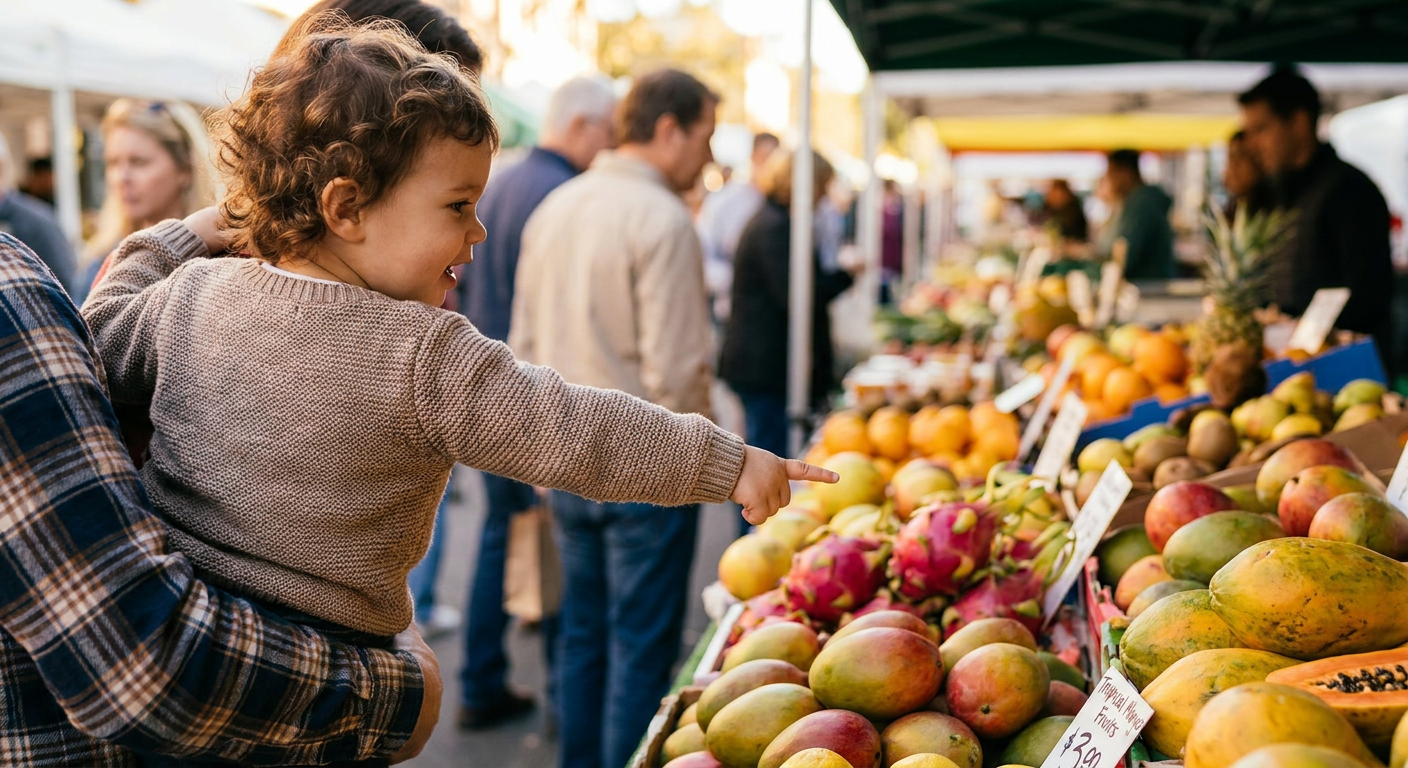
Thinking about swapping your living room for the lively streets of Lisbon or a quiet beach in Thailand? You aren't alone. This guide breaks down exactly how to worldschool with toddlers, turning the big, wide world into the most engaging classroom your little one could ever have, one joyful step at a time.
Quick Answer
Worldschooling with toddlers is a rewarding educational approach that uses global travel for play-based learning and cultural immersion. Success hinges on a flexible mindset, prioritizing your child's routine and safety, and using simple tools to capture learning moments. To start, embrace adaptability, focus on everyday sensory experiences, and let your child's curiosity lead the way, transforming each new destination into an organic lesson.
TL;DR
- Learning is Play-Based: For toddlers, worldschooling isn't about formal lessons. It's about sensory exploration, from tasting new foods to hearing new languages, which builds a strong foundation for future learning. Discover the unique benefits for this age group.
- Flexibility Beats a Rigid Curriculum: A successful toddler 'curriculum' is one that adapts to your environment. Think unit studies based on your current location, not a strict schedule of worksheets. Learn how to craft a flexible learning plan.
- Safety and Budget Are Manageable: With proper planning, you can choose safe, affordable destinations and manage a realistic budget. A typical family of four might spend between $3,000 and $6,000 per month. See a budget breakdown for worldschooling families.
- Socialization Happens Everywhere: Toddlers build crucial social skills by interacting with a diverse range of people in parks, markets, and communities around the world, fostering adaptability and empathy. Understand how worldschooling impacts social development.
In This Article
- What is Worldschooling for the Littlest Learners, Anyway?
- Why Worldschool with Tiny Humans? The Unique Benefits for Toddlers and Preschoolers
- Navigating the Legalities: What Worldschoolers Need to Know in 2026
- Crafting a Flexible 'Curriculum' for Preschoolers on the Move
- Best Worldschooling Destinations for Families with Young Children in 2026
- Essential Gear & Gadgets: Toddler Travel for Worldschoolers
- How Does Worldschooling Impact Social Development in Toddlers?
- Budgeting for Worldschooling: A Family of Four with Toddlers in 2026
- Managing Toddler Tantrums on the Road: Friendly Tips for Nomadic Parents
- Resources and Tools for Worldschooling with Toddlers in 2026
- Conclusion: Your Adventure in Early Learning
- Frequently Asked Questions About Worldschooling with Young Children
What is Worldschooling for the Littlest Learners, Anyway?
Worldschooling for toddlers and preschoolers is about leveraging global travel as the primary learning environment, focusing on play-based, experiential learning, and cultural immersion rather than formal academics. At this age, the world isn't just a backdrop for education; it is the education. It shifts the focus from "what" a child learns to "how" they learn—through their senses, curiosity, and direct interaction with the world around them.
Worldschooling is an educational approach that uses the world as a classroom, facilitating learning through travel, cultural immersion, and real-world experiences. For a toddler, this means that a trip to an aquarium in Lisbon, Portugal, becomes a biology lesson far more potent than any picture book. They don't just see a picture of a fish; they see its vibrant colors, watch how it moves through the water, and feel the cool glass of the tank.
This approach differs profoundly from traditional homeschooling, which often recreates a school-like environment at home. Worldschooling with toddlers throws out the classroom walls entirely. Learning is a seamless part of life, found in the texture of a new fruit at a market in Mexico, the sound of a foreign language in a cafe, or the simple act of navigating a new playground. It’s about cultivating a love for discovery from the very beginning.
Key takeaway: For toddlers, worldschooling isn't a structured curriculum. It's an immersive lifestyle that turns everyday travel experiences into natural, powerful learning opportunities.
Why Worldschool with Tiny Humans? The Unique Benefits for Toddlers and Preschoolers
Worldschooling uniquely benefits toddlers and preschoolers by fostering curiosity, adaptability, and global awareness through direct sensory experiences and exposure to diverse cultures and environments. The period from birth to age five is when the brain develops more rapidly than at any other time in life. Every new sight, sound, and taste helps build neural connections that form the foundation for all future learning.
The key benefits for this age group are deeply developmental:
- Boosts Natural Curiosity: A constantly changing environment feeds a toddler's innate need to explore. Instead of having curiosity confined to a single house or playground, they can touch ancient stones in Rome, feel the spray of a waterfall in Costa Rica, and watch boats in a Vietnamese harbor. This varied stimulation keeps their minds active and engaged.
- Enhances Adaptability and Resilience: Toddlers who travel regularly learn to be flexible. They get used to sleeping in new places, trying different foods, and navigating unfamiliar situations. Based on our analysis, this constant, gentle exposure to change builds remarkable resilience and a "can-do" attitude that serves them for life.
- Accelerates Language Acquisition: Even if they don't become fluent, hearing different languages and accents daily attunes a toddler's ear to diverse phonetic sounds. This early exposure can make learning a second language significantly easier later on. A 2021 study from the University of Washington I-LABS confirmed that exposure to multiple languages in early childhood enhances cognitive flexibility.
- Develops Sensory and Motor Skills: Worldschooling provides endless opportunities for physical development. A toddler learns balance while walking on a cobblestone street, develops fine motor skills picking up seashells on a beach, and improves coordination by climbing on ruins in Greece. For example, a toddler trying new foods in Thailand doesn't just learn about flavor; they're also practicing using different utensils and developing a more adventurous palate.
In our experience, families who worldschool with young children report their kids are not just "book smart" but "world smart." They develop a comfort with the unknown and an appreciation for diversity that simply can't be taught from a textbook.
Navigating the Legalities: What Worldschoolers Need to Know in 2026
Navigating the legalities of worldschooling in 2026 requires understanding truancy laws and educational requirements in both your home country or state and the destinations you visit. These rules vary widely and often require proactive communication and careful documentation to ensure you remain compliant while living your dream.
First, you must address your "home base" legal obligations. In the U.S., for example, every state has different homeschooling laws. Some, like Texas or Oklahoma, have very few requirements. Others, like New York or Pennsylvania, demand detailed curriculum plans and regular assessments. You must officially withdraw your child from their school (if enrolled) and register as a homeschooler according to your state's laws, even if you plan to be out of the country for the entire year.
Next, consider the laws of the countries you plan to visit for extended periods.
- Tourist Visas: For short stays (typically under 90 or 180 days), you are usually considered a tourist, and your home country's education laws apply. Your child isn't subject to the local school system.
- Long-Term Stays & Residency: If you obtain a long-term visa or residency, your legal status changes. Countries like Germany and the Netherlands have strict compulsory education laws that make homeschooling nearly illegal for residents. In contrast, countries like the UK, Australia, France, and Portugal have established legal frameworks for homeschooling, though they may require registration and curriculum approval. For example, as of 2026, France requires an annual inspection and proof that your educational approach aligns with national standards.
⚠️ Caution: Never assume your home country's laws protect you abroad. If you establish residency in another country, you are generally subject to its education laws. Ignorance of the law is not a valid defense and can lead to serious legal issues.
As you plan your global adventures, understanding the legal landscape for education is crucial. Our comprehensive 2026 legal guide on worldschooling requirements by country can provide detailed insights into specific regulations and how to remain compliant.
Crafting a Flexible 'Curriculum' for Preschoolers on the Move
A successful worldschooling 'curriculum' for preschoolers in 2026 prioritizes play-based, emergent learning that leverages the immediate environment for educational opportunities, integrating formal resources minimally and flexibly. Forget rigid lesson plans and checklists; for a toddler, the best curriculum is one that flows with your travels and their ever-changing interests.
Emergent curriculum is a philosophy of teaching and learning that starts with the child's interests rather than a pre-set plan. If your toddler becomes fascinated by the colorful boats in a Greek harbor, that becomes the "lesson." You can count the boats (math), learn their colors (art/language), talk about what fishermen do (social studies), and maybe even build a toy boat later (engineering/imaginative play).
Here’s a practical framework for this approach:
- Observe and Listen: Pay close attention to what captures your child's attention. Is it the geckos on the wall in Thailand? The intricate tiles in Portugal? The way a fountain works in an Italian piazza? Their curiosity is your starting point.
- Create Unit Studies on the Fly: Build mini-lessons around these interests. A fascination with Roman ruins can become a unit study on shapes (arches), history (stories about gladiators), and materials (stone vs. wood).
- Integrate Skills Naturally: Weave foundational skills into daily activities. For example, learning about colors by exploring a vibrant market in Marrakech, Morocco, is far more memorable than using flashcards. Exchanging currency becomes a hands-on counting lesson.
- Use Formal Tools Sparingly: Keep a small stash of resources for quiet moments or travel days. This could include educational apps like Khan Academy Kids, a simple set of magnetic tiles, or a drawing pad. The key is that these tools supplement the real-world learning, not replace it.
Dive deeper into how to structure your learning with a flexible approach for global learners that adapts to your unique journey and your child's emerging interests.
The goal is to create a rich learning ecosystem where education doesn't feel like a separate activity. It’s simply a joyful and intentional way of experiencing the world together.
Best Worldschooling Destinations for Families with Young Children in 2026
The best worldschooling destinations for families with young children in 2026 offer a blend of safety, mild climates, affordable living, family-friendly activities, and welcoming communities. While almost any destination can be educational, some are simply easier and more enjoyable with toddlers in tow. Based on our analysis of travel trends and family feedback, a few locations consistently stand out.
Here are some top-rated destinations for worldschooling families with toddlers:
- Lisbon, Portugal: It's one of Western Europe's safest and most affordable capitals. Lisbon boasts a fantastic public transportation system (including toddler-approved trams), countless parks and playgrounds, and a beautiful coastline just a short train ride away. The city is walkable, the food is delicious and kid-friendly, and there's a large, welcoming community of international families.
- Chiang Mai, Thailand: A long-time favorite for digital nomads, Chiang Mai is incredibly budget-friendly and offers a high quality of life. The culture is warm and family-oriented, healthcare is excellent and affordable, and opportunities for nature-based learning—from visiting elephant sanctuaries to exploring waterfalls—are endless. The abundance of fresh markets makes learning about food a daily adventure.
- Mérida, Mexico: Located in the Yucatán Peninsula, Mérida is renowned for its safety and vibrant cultural scene. The city is full of colorful colonial architecture, leafy plazas, and weekly cultural events. It serves as a fantastic base for exploring Mayan ruins, swimming in cenotes (natural swimming holes), and learning about Mexican history and traditions in a deeply immersive way.
- San Juan del Sur, Nicaragua: For families seeking a slower, beach-town pace, this is an excellent choice. It's one of the most affordable destinations in Central America and has a growing worldschooling community. The main draws are nature and outdoor living: tide pooling on the beach, watching for monkeys in the trees, and enjoying magnificent sunsets. It's a place where learning is simple, barefoot, and connected to the natural world.
Exploring specific destinations is just one part of the journey; learn how to choose the best educational community by understanding the different types of worldschooling hubs available.
2026 Destination Comparison for Toddler-Friendly Worldschooling
| Feature | Lisbon, Portugal | Chiang Mai, Thailand | Mérida, Mexico |
|---|---|---|---|
| Average Monthly Cost (Family of 4) | $4,500 - $6,000 USD | $2,500 - $4,000 USD | $3,000 - $4,500 USD |
| Safety (2026 Global Peace Index) | Very High | High | High |
| Key Attractions for Toddlers | Parks, trams, aquarium, beaches | Elephant sanctuaries, markets, nature | Plazas, cenotes, cultural festivals |
| Healthcare Quality | Excellent | Very Good & Affordable | Good & Affordable |
| Community | Large, established expat/nomad hub | Very large, long-standing expat hub | Growing expat & worldschool community |
Essential Gear & Gadgets: Toddler Travel for Worldschoolers
Essential toddler travel gear for worldschoolers in 2026 focuses on lightweight, multi-functional items that support both comfort and learning on the go, such as adaptable strollers, compact learning aids, and a minimal toy selection. The mantra for packing is: less is more. Every item should earn its place by being versatile, durable, and easy to carry.
In our experience, trying to bring your entire home playroom is a recipe for stress. Instead, focus on a curated kit of essentials.
Mobility & Comfort:
- Lightweight Stroller: A game-changer for navigating airports and city streets. Models like the Babyzen YOYO2 or GB Pockit are famous for folding down small enough to fit in an airplane's overhead bin.
- Versatile Carrier: For hikes, crowded markets, or simply keeping your toddler close, a comfortable soft-structured carrier (like an Ergobaby or Tula) is indispensable.
- Portable Bed/Tent: A lightweight travel crib, such as the Phil&teds Traveller, ensures your child has a familiar and safe sleeping space, which drastically helps with sleep routines in new environments.
Learning & Play:
- A "Busy Bag": A small bag with a rotating selection of compact, engaging toys. Think magnetic tiles, a small set of LEGOs, stackable cups, or Montessori-inspired wooden toys. The key is "open-ended" toys that can be used in many different ways.
- Durable Kids Tablet: Pre-load a device like the Amazon Fire Kids Pro with age-appropriate, ad-free educational apps (Khan Kids, ABCmouse), audiobooks, and downloaded shows for long travel days.
- Art Supplies: A small sketchbook and a set of Twistables crayons or watercolor pens can turn any cafe stop into an art session, allowing them to document what they see.
Practical Must-Haves:
- First-Aid Kit: A comprehensive kit with children's Tylenol/Motrin, bandages, antiseptic wipes, allergy medicine, and any personal prescriptions is non-negotiable.
- Tracking Devices: Placing an Apple AirTag or similar tracker on your luggage and even in a child's pocket or on a wristband can provide immense peace of mind.
- Waterproof Bag: A simple dry bag is a hero item. Use it to protect electronics at the beach, carry wet swimsuits, or even store snacks and toys.
How Does Worldschooling Impact Social Development in Toddlers?
Worldschooling positively impacts social development in toddlers by exposing them to diverse social cues, fostering adaptability, and building confidence in new situations. This happens through interactions with people from various ages and backgrounds in temporary communities, which enhances empathy and communication skills long before they enter a formal school setting.
A common concern for parents considering this lifestyle is socialization. Will my child miss out on making friends if they aren't in a consistent preschool class? Research and anecdotal evidence from thousands of worldschooling families suggest the opposite is often true.
Here's how toddlers develop socially on the road:
- Diverse Social Interactions: A child in a traditional setting might interact primarily with 15 other three-year-olds and a few adults. A worldschooling toddler interacts with the elderly woman selling fruit at the market, the family with older kids at the next Airbnb, the friendly waiter, and the local children at the playground. This teaches them to communicate with a wide range of people, not just their peers.
- Building Adaptability: They learn to quickly assess social situations and adapt. They might play with children in an Italian park one day, where sharing is done with loud, expressive gestures, and with quieter, more reserved children in Japan the next. They become adept at reading non-verbal cues and finding common ground—the universal language of play.
- Fostering Confidence: Successfully navigating a new social setting, even a simple one like asking for a swing at a new park, is a huge confidence booster for a young child. They learn that they are capable of connecting with others, even when they don't share a language or cultural background.
- Intentional Community Building: Worldschooling parents are often very proactive about finding social opportunities. This includes joining local playgroups, connecting with other traveling families through social media groups (like "Worldschoolers" on Facebook), or staying in co-living spaces designed for families.
In practice, we found that the quality of social interactions often outweighs the quantity. A deep, meaningful connection made with one other family over a week in a new city can be just as valuable as fleeting daily interactions in a large classroom. For families with more than one child, fostering these connections is key. Our guide to joyful multi-child learning in worldschooling offers insights into managing diverse needs while traveling.
Budgeting for Worldschooling: A Family of Four with Toddlers in 2026
A worldschooling budget for a family of four with toddlers in 2026 typically ranges from $3,000 to $6,000 USD per month. This figure depends heavily on your choice of destination, travel pace, and accommodation style. While it sounds like a lot, many families find it's comparable to—or even cheaper than—their cost of living at home, especially when factoring in mortgage/rent, utilities, and car payments.
The biggest expenses for a worldschooling family are almost always housing, transportation, and food. Here’s how to think about budgeting for them:
- Accommodation (40-50% of budget): This is your biggest lever. Renting a monthly Airbnb or local apartment is far cheaper than booking hotels nightly. Slow travel (staying in one place for 1-3 months) dramatically reduces accommodation costs.
- Transportation (15-20% of budget): This includes major flights between continents and local transit. Booking flights well in advance, using budget airlines, and traveling overland via trains or buses can save thousands.
- Food (15-20% of budget): Eating like a local is the best way to save. Shop at local markets and cook most of your meals. This is not only cost-effective but also a fantastic learning experience for everyone. Dining out should be a treat, not the norm.
- Activities & Learning (5-10% of budget): Many of the best learning experiences are free: parks, beaches, hiking trails, and local festivals. For paid attractions, look for family passes or free admission days. Educational tools can be a small part of this; for instance, an LearnSpark platform like LearnSpark can suggest free or low-cost learning activities based on your location, optimizing your fun and your budget.
- Healthcare & Insurance (5% of budget): This is non-negotiable. A robust travel medical insurance policy, like those from SafetyWing or World Nomads, is essential for peace of mind. These plans are designed for nomadic families and are surprisingly affordable, often costing around $150-$250 per month for a family.
For a deeper dive into optimizing your finances, check out our ultimate guide to affordable family travel education through worldschooling, offering more extensive budgeting strategies.
Sample Monthly Budget Comparison (2026 Estimates)
| Expense Category | Southeast Asia (e.g., Chiang Mai) | Western Europe (e.g., Lisbon) |
|---|---|---|
| Accommodation (Monthly Rental) | $800 - $1,500 USD | $1,800 - $2,800 USD |
| Food (Mostly Groceries) | $500 - $800 USD | $800 - $1,200 USD |
| Local Transport & Activities | $300 - $500 USD | $400 - $600 USD |
| Insurance & Miscellaneous | $400 - $600 USD | $500 - $800 USD |
| Total Estimated Monthly Budget | $2,000 - $3,400 USD | $3,500 - $5,400 USD |
Managing Toddler Tantrums on the Road: Friendly Tips for Nomadic Parents
Managing toddler tantrums while worldschooling requires a blend of maintaining consistent routines, validating emotions, proactively planning for basic needs, and giving yourself and your child plenty of grace. A tantrum is often just a sign that a little person is overwhelmed, tired, or hungry—all of which are amplified in an unfamiliar environment.
Your goal isn't to prevent all meltdowns (an impossible task!) but to create a supportive framework that reduces their frequency and intensity.
Here are some friendly, road-tested strategies:
- Protect the Routine: While your location changes, key routines should not. Stick to consistent nap times, mealtimes, and bedtime rituals as much as humanly possible. A familiar bedtime story or lullaby can provide powerful comfort and predictability in a new bedroom.
- Prioritize Sleep and Food: A "hangry" or exhausted toddler is a ticking time bomb. Always have familiar, healthy snacks on hand. Don't overschedule your days. A 2024 study in Developmental Psychology confirmed that sleep dysregulation is a primary trigger for emotional meltdowns in children aged 2-4. Plan for downtime and slow travel days, especially after a long flight to combat jet lag.
- Validate, Connect, Then Redirect: When a tantrum hits, get on their level. Acknowledge their feelings ("You are so frustrated that we have to leave the park! I get it.") before you try to solve the problem. A simple hug or moment of connection can de-escalate the situation faster than any logic or threat.
- Keep a Few Comforts from Home: Let your child pack a small, special toy or blanket. This tangible piece of home can be a crucial anchor for them when everything else is new and different.
⚠️ Parental Tip: Don't be afraid to change your plans. If you had a museum visit scheduled but your toddler is clearly on the verge of a meltdown, scrap it. Go to a park, find a quiet cafe for a snack, or just go back to your Airbnb for a nap. Successful worldschooling is about flexibility, not ticking off a sightseeing checklist.
Resources and Tools for Worldschooling with Toddlers in 2026
In 2026, worldschooling families with toddlers benefit from a range of digital and physical resources that make learning on the go easier and more engaging than ever. The right tools can help you find learning opportunities, connect with other families, and keep your little one entertained on long travel days.
Here’s a look at some of the most valuable resources:
Digital Learning & Entertainment:
- All-in-One Educational Apps: Programs like Khan Academy Kids, ABCmouse, and Homer offer structured, game-like learning that is perfect for downtime. They cover early literacy, math, and creative thinking in a fun, self-paced format.
- Language Learning for Littles: Apps like Duolingo Kids or Gus on the Go use fun games and stories to introduce basic vocabulary in new languages, helping your child connect with the places you visit.
- LearnSpark Planning: This is a game-changer for modern worldschoolers. An LearnSpark-driven platform can act as your personalized educational guide. For example, it might generate an age-appropriate scavenger hunt for the Roman Forum or create a simple lesson about marine biology before you visit the Great Barrier Reef. Discover how LearnSpark can be your trusted companion for creating personalized, location-based learning experiences, no matter where your travels take you and your little ones.
Community & Logistics:
- Facebook Groups: Communities like Worldschooling Central, Worldschoolers, and location-specific nomad family groups are invaluable. You can ask for advice, find playdates, and get real-time recommendations for kid-friendly restaurants or doctors.
- Travel Planning Apps: Use apps like TripIt to keep all your flight and accommodation details in one place. Google Maps allows you to download offline maps, which is essential for navigating new cities without a data connection.
- Audiobooks and Podcasts: Subscriptions to services like Audible or free apps like Libby (connected to your home library) provide hours of screen-free entertainment for long car rides or flights.
The best toolkit is a balanced one, combining powerful digital resources with the simplicity of a sketchbook and the irreplaceable value of real-world exploration.
Conclusion: Your Adventure in Early Learning
Embarking on this journey is more than just a travel choice; it's a profound educational philosophy. Answering the question of how to worldschool with toddlers reveals that the key isn't a complex curriculum or a huge budget, but a mindset rooted in flexibility, curiosity, and presence. By embracing play-based learning, prioritizing your child's needs, and seeing every new experience as a lesson, you give them a gift that lasts a lifetime: a deep, intuitive understanding of the world and their place in it. With the right preparation and a spirit of adventure, you can confidently turn the globe into your family's ultimate classroom.
Ready to Plan Your Worldschooling Adventure? Try LearnSpark for Free!
Frequently Asked Questions About Worldschooling with Young Children
Is Worldschooling Safe for Toddlers?
A: Yes, worldschooling can be very safe for toddlers with diligent preparation and common sense. Safety starts with choosing destinations with low crime rates and good healthcare infrastructure. Always have comprehensive travel medical insurance. Before you arrive, research the location of the nearest pediatric clinic or hospital and save the local emergency number. A well-stocked first-aid kit and adherence to basic safety practices (like water safety and strangers) are just as important abroad as they are at home.
How Do Worldschoolers Track Progress for Toddlers and Preschoolers?
A: For toddlers and preschoolers, progress tracking is informal and observational. Forget standardized tests; focus on developmental milestones. You can document their journey through a simple journal, photo logs, or video clips capturing new skills—like their first time ordering a croissant in French or learning to count shells on a beach. While formal tracking is minimal for toddlers, tools like LearnSpark can help you track progress effortlessly by documenting observations and milestones in a digital portfolio.
What are the biggest challenges of worldschooling with very young children?
A: The biggest challenges are often logistical and emotional rather than educational. They include managing travel fatigue (for both parents and kids), dealing with jet lag, maintaining some semblance of a routine in constantly changing environments, and finding consistent social interaction. Another major challenge can be parental burnout. Proactive planning, slow travel, and intentionally building a support network of other traveling or local families are the most effective strategies to mitigate these challenges.