
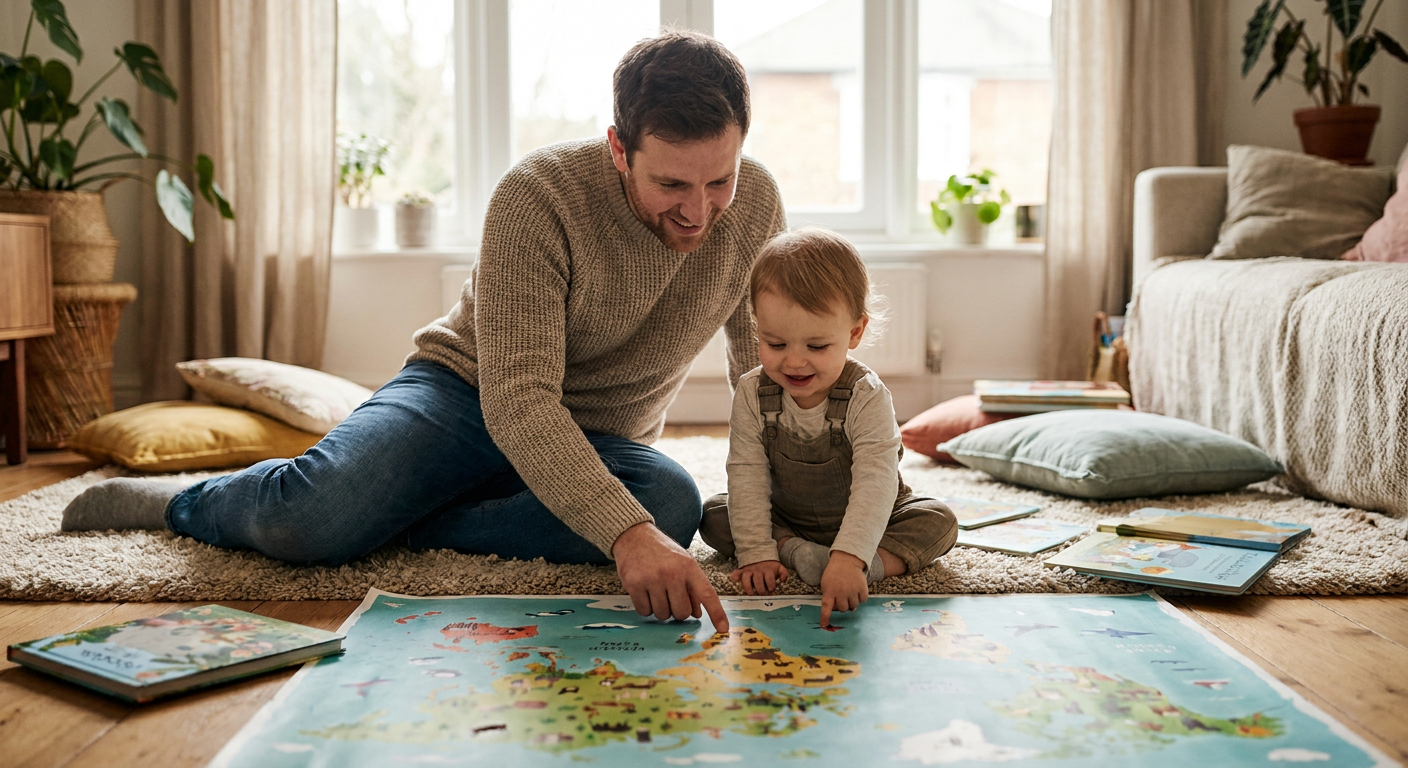
Thinking about traveling the world with your little one but wondering how to handle their education? You’re not alone. Many parents are discovering that the toddler years are a magical time for exploration, and you don’t have to put your travel dreams on hold. This guide will walk you through exactly what is worldschooling with toddlers, showing you how to turn your family adventures into joyful learning experiences, one discovery at a time.
Quick Answer
Worldschooling with toddlers is an educational philosophy that uses travel and real-world experiences as the primary classroom. Instead of formal lessons, toddlers aged 2-5 learn through play, sensory exploration, and cultural immersion. It prioritizes fostering natural curiosity, adaptability, and a love for discovery by engaging with the world directly, whether it's at a local market in Mexico or a park in Japan.
TL;DR
- It's Learning Through Living: Worldschooling for toddlers isn't about academics; it's about turning everyday travel experiences into natural learning opportunities that foster curiosity and development. See what toddler learning looks like
- Huge Developmental Benefits: Early exposure to new cultures, languages, and environments can significantly boost a toddler's adaptability, problem-solving skills, and global awareness from a very young age. Explore the benefits of starting early
- Slow Travel is Key: The best approach is "slow travel," staying in one place for weeks or months. This allows your toddler to adapt, form a routine, and truly absorb the local culture without feeling overwhelmed. Find the best toddler-friendly locations
- Routine and Flexibility Coexist: You can maintain crucial routines like naps and bedtime while embracing the spontaneity of travel. A flexible rhythm, not a rigid schedule, is the secret to happy travels with a little one. Get tips for managing daily life on the road
- Socialization Happens Everywhere: Toddlers can find friends at local parks, libraries, and community playgroups all over the world, building unique and diverse social skills along the way. Learn how to build global friendships
In This Article
- What Exactly is Worldschooling for Toddlers in 2026?
- Why Consider Worldschooling with Such Young Children?
- Worldschooling vs. Homeschooling for Toddlers: Which Path is Right?
- Crafting a Play-Based Curriculum: What Does Toddler Worldschooling Learning Look Like?
- Best Worldschooling Destinations for Toddlers in 2026
- Navigating the Practicalities: Visas, Budgets, and Safety
- Essential Gear for Worldschooling Toddlers: Packing Smart, Learning Light
- How to Navigate Daily Life: Managing Naps, Tantrums, and Routines on the Go
- Socializing Worldschool Toddlers: Building Friendships Around the World
- Your Adventure in Learning Awaits
- Frequently Asked Questions
What Exactly is Worldschooling for Toddlers in 2026?
Worldschooling for toddlers integrates travel and real-world discovery into their earliest learning years, prioritizing hands-on experiences and play-based exploration over any kind of structured academics. It’s a shift in mindset from "taking a toddler on vacation" to "living and learning together in the world." For children aged 2 to 5, this means the 'classroom' might be a bustling market in Thailand, a quiet beach in Costa Rica, or a history museum in Rome.
The core philosophy is that young children learn best through their senses and direct interaction with their environment. Instead of flashcards, a toddler learns colors from the vibrant fruits at a farmer's market. Instead of a video, they learn about animals by watching monkeys play in a national park. We've seen a surge in families exploring this path, realizing that the developmental window for curiosity and language is wide open during these years.
Worldschooling for Toddlers is an educational approach that uses travel to provide a rich, stimulating environment where learning happens organically. It respects the natural developmental stages of early childhood, focusing on emergent, child-led learning rather than a pre-set curriculum. This approach is highly adaptable, making it a powerful foundation for families with children of all ages, including those managing worldschooling with multiple children. The goal isn't to create a tiny scholar, but to nurture an adaptable, curious, and observant little human who feels at home in the world.
Why Consider Worldschooling with Such Young Children?
Worldschooling with a toddler offers profound developmental benefits that can shape their entire lives, transforming travel time into a rich period of growth. At this age, children's brains are like sponges, and exposing them to diverse environments, languages, and cultures provides a unique cognitive and emotional advantage.
The benefits are real and observable:
- Enhanced Adaptability: Consistently navigating new places, foods, and faces teaches toddlers to be flexible and resilient. In our experience, toddlers who travel frequently become exceptionally good at handling change and new situations with confidence rather than fear.
- Accelerated Language Acquisition: Immersing a toddler in a new linguistic environment is one of the most effective ways to build a bilingual brain. A 2022 study from the University of Washington's Institute for Learning & Brain Sciences highlighted that early, varied language exposure builds a foundation for faster learning later on. Hearing and trying to use "gracias" in Spain is a far more memorable lesson than any app can provide.
- Broader Cultural Understanding: Even at a young age, children notice differences in how people live, dress, and interact. This early exposure helps normalize diversity and cultivates a natural empathy and open-mindedness. They learn that "different" is interesting, not scary.
- Boosted Problem-Solving Skills: From figuring out how to communicate with a non-English-speaking playmate to navigating a new playground, worldschooling presents toddlers with constant, low-stakes problems to solve. This builds creative thinking and self-reliance.
Key takeaway: Worldschooling with toddlers isn't about pushing early academics; it's about leveraging their natural neuroplasticity to build foundational skills like adaptability, empathy, and problem-solving in the most stimulating classroom of all—the world.
Worldschooling vs. Homeschooling for Toddlers: Which Path is Right?
While both options empower you to direct your child's education, worldschooling and homeschooling for toddlers differ fundamentally in their environment and approach. Worldschooling inherently integrates global travel and child-led discovery as the primary curriculum, whereas homeschooling can be done from a fixed home base, with or without travel.
The core distinction lies in how learning is sourced. A homeschooling parent might use a play-based curriculum at home, setting up sensory bins and reading books about other cultures. A worldschooling parent facilitates the same learning by taking their toddler to a beach to explore real tide pools or to a local festival to experience a new culture firsthand.
Based on our analysis, here’s how they compare for the toddler years:
| Feature | Worldschooling (Toddler) | Homeschooling (Toddler) |
|---|---|---|
| Learning Environment | The world is the classroom: museums, nature, markets, cities. | Primarily home-based, with local field trips. |
| Curriculum Focus | Emergent & Experiential: Learning arises from the environment and child's interests. | Intentional & Planned: Often follows a play-based curriculum or educational philosophy (e.g., Montessori at home). |
| Daily Structure | Flexible rhythm centered around travel, exploration, and rest. | More predictable routine based at home, with scheduled outings. |
| Social Interaction | Spontaneous interactions with diverse people of all ages; finding community in parks and travel hubs. | Consistent interaction with a local community, playgroups, and family. |
| Parental Role | Facilitator of discovery, guide, and security base in new environments. | Teacher, planner, and curator of the home learning environment. |
| Key Advantage | Builds extreme adaptability, natural global awareness, and deepens family bonds through shared adventure. | Provides stability, deep local community roots, and control over the learning environment. |
A day in the life of a homeschooled 3-year-old might involve a morning walk, a planned craft about seasons, and an afternoon playdate. A day for a worldschooled 3-year-old in Greece might involve exploring ancient ruins (learning about "old" and "new"), trying new foods like olives, and splashing in the Aegean Sea—all while naturally absorbing new sights, sounds, and words.
Neither path is inherently better; the right choice depends on your family's goals, lifestyle, and comfort with change.
⚠️ Important Distinction: Worldschooling is not a vacation. It's a lifestyle that requires a significant mindset shift towards embracing uncertainty and finding learning in the everyday, wherever you are.
Crafting a Play-Based Curriculum: What Does Toddler Worldschooling Learning Look Like?
A worldschooling "curriculum" for a toddler is less about a set of lessons and more about creating an environment ripe for discovery. It’s about recognizing that for a three-year-old, everything is a learning opportunity. The goal is to facilitate their natural curiosity through hands-on, play-based activities that the world provides for free.
Play-based learning is an educational philosophy where children organize and make sense of their world through play. Instead of being told facts, they construct their own understanding through exploration, experimentation, and imagination. When you’re worldschooling, the entire globe becomes the ultimate set of play materials.
Here’s what this looks like in practice:
- Math: Counting steps up a temple in Cambodia, sorting seashells by size on a beach in Portugal, or paying for a croissant with different coins in France.
- Science: Observing animal behavior at a wildlife rescue in Costa Rica, talking about why it rains while waiting out a storm in London, or tasting different tropical fruits at a market in Brazil.
- Language & Literacy: Learning "hello" and "thank you" in every country, "reading" maps together on a train, and telling stories about the day's adventures before bed.
- Art & Culture: Trying to mimic the patterns on tiles in Lisbon with crayons, dancing to street music in New Orleans, or visiting a museum and just talking about which painting is their favorite color.
The parent's role is not to be a formal teacher, but a co-discoverer. You provide the safety and the language to help them process their experiences. Modern tools can also help; platforms with dedicated worldschooling features can help you capture these fleeting moments and connect them to broader learning concepts without creating pressure or structure.
Best Worldschooling Destinations for Toddlers in 2026
Ideal worldschooling destinations for toddlers offer a blend of safety, family-friendly infrastructure, gentle cultural immersion, and plenty of space to play. The key is "slow travel"—staying in one place long enough for your little one to feel secure and for your family to establish a comfortable rhythm. When choosing a location, prioritize simplicity over a packed itinerary.
Here are a few top destinations for families with toddlers in 2026, based on our analysis of safety, cost, and family-friendliness:
- Lisbon, Portugal:
- Why it works: It's incredibly walkable (though a good carrier is a must for hills), filled with beautiful parks (jardins), and has a relaxed, family-centric culture. The food is accessible for picky eaters, and the coastline is a short train ride away.
- Toddler Highlight: Exploring the tiled streets, riding the famous yellow Tram 28, and spending an afternoon at the enormous Lisbon Oceanarium.
- Medellín, Colombia:
- Why it works: Known as the "City of Eternal Spring," the weather is perfect year-round. It has a fantastic, modern public transit system (including cable cars toddlers love), countless playgrounds, and incredibly warm, welcoming locals who adore children. It's also very affordable.
- Toddler Highlight: Visiting Parque Arví via the Metrocable, exploring the interactive exhibits at Parque Explora, and enjoying the Botanical Gardens.
- Chiang Mai, Thailand:
- Why it works: This city offers a gentle introduction to Southeast Asia. It’s affordable, easy to navigate, and has a large community of traveling families. The culture is calm, and there are plenty of elephant sanctuaries (choose ethical ones!), temples, and markets to explore at a slow pace.
- Toddler Highlight: Gently feeding elephants at an ethical sanctuary, exploring the grounds of Wat Umong temple, and sampling kid-friendly snacks at the Sunday Walking Street market.
When picking your destination, use this quick checklist:
- [ ] Safety: Are there safe neighborhoods to stay in?
- [ ] Healthcare: Is quality pediatric care accessible and affordable?
- [ ] Pace of Life: Is the culture relaxed and slow-paced?
- [ ] Play Spaces: Are there plenty of public parks, playgrounds, or beaches?
- [ ] Walkability/Transport: Can you get around easily with a stroller or carrier?
- [ ] Food: Are there simple, familiar food options available?
Navigating the Practicalities: Visas, Budgets, and Safety
Before you pack your bags, it's crucial to tackle the practical side of long-term family travel. Planning for visas, creating a realistic budget, and prioritizing health and safety will set you up for a smoother, more joyful adventure.
How do you handle visas and legal requirements for long-term travel?
Navigating visas is one of the most important parts of planning your worldschooling journey. For most families, this means traveling on tourist visas. A tourist visa is an official document that allows you to enter a foreign country for a limited period. Here’s a simple process:
- Research Entry Requirements: Before you book anything, check the visa requirements for your nationality for every country you plan to visit. Official government embassy or consulate websites are the only reliable sources.
- Understand the "90/180 Rule": Many regions, like Europe's Schengen Area, have rules that limit you to 90 days within any 180-day period. You'll need to plan your travels around these limits, "hopping" out of the zone when your time is up.
- Plan for "Visa Runs": In some countries, you can extend your stay by briefly leaving and re-entering. However, this practice is becoming less reliable, so always have a backup plan and research the specific rules for that country.
- Keep Documents Organized: Have digital and physical copies of passports, birth certificates, and any visa documentation. A cloud-based folder and a waterproof document holder are your best friends.
What does a worldschooling budget for a family with a toddler look like?
Your worldschooling budget can vary dramatically, but it's more manageable than you might think, especially with slow travel. The biggest expenses are typically accommodation, food, and transport.
- Accommodation (30-40%): Slow travel is your friend here. Renting an apartment on a monthly basis is far cheaper than nightly hotel stays. Look at sites like Airbnb, local rental groups on Facebook, or Vrbo.
- Food (20-30%): Eating out for every meal will drain your budget quickly. Renting a place with a kitchen allows you to shop at local markets and cook most of your meals, which is also a fantastic learning experience for your toddler.
- Transport (10-20%): This includes flights between countries and local transit. Booking flights in advance and choosing destinations in the same region can save a lot.
- Activities & Supplies (10-15%): This covers museum tickets, park entries, and any supplies you need to buy locally, like diapers or snacks.
- Insurance & Health (5-10%): Never skip this. A comprehensive family travel insurance plan is essential.
A family of three can often live comfortably in destinations like Southeast Asia or parts of Latin America for $2,500-$4,000 USD per month. In Western Europe, that figure might be closer to $4,000-$6,000+ USD.
How can you ensure your toddler's health and safety while traveling?
Keeping your little one safe and healthy is the top priority. This involves proactive planning and staying vigilant on the road.
- Pre-Trip Health Check: Visit your pediatrician and a travel clinic 4-6 months before departure. Discuss your itinerary and get any recommended vaccinations or medications. (Note: This is not medical advice; always consult a qualified health professional).
- Comprehensive Travel Insurance: Choose a policy that covers your entire family for medical emergencies, including evacuation. Travel medical insurance is a short-term policy designed to cover health care costs incurred while outside of one's home country.
- Child-Proofing on the Go: When you arrive at a new rental, do a quick safety sweep. Look for unsecured furniture, low windows, and accessible cleaning supplies. A small kit with outlet covers and cabinet locks can be very useful.
- Water and Food Safety: In many countries, it's best to stick to bottled or filtered water. Be cautious with street food, opting for vendors that are busy and cook food fresh in front of you. Peelable fruits are always a safe bet for toddlers.
- General Awareness: Always be aware of your surroundings. Keep a hand on your stroller in crowded places and have a plan in case you get separated. A simple ID bracelet for your toddler with your phone number can provide peace of mind.
Essential Gear for Worldschooling Toddlers: Packing Smart, Learning Light
Smart gear for worldschooling toddlers prioritizes safety, comfort, and portability, allowing you to stay nimble while ensuring your child's needs are met. The goal is to pack light with multi-functional items, focusing on open-ended toys that spark imagination rather than bulky, single-purpose educational products.
Here’s our tested list of essential, brand-neutral items:
- Mobility:
- A lightweight travel stroller: Look for one that is compact enough to fit in an overhead bin on a plane and can be steered with one hand.
- An ergonomic toddler carrier: Essential for navigating crowded markets, hiking trails, or ancient ruins where strollers can't go. A soft-structured carrier that works for front and back carries is ideal.
- A lightweight, FAA-approved travel car seat: Safety is non-negotiable. Many new models are surprisingly light and easy to install in taxis or rental cars.
- Sleep & Comfort:
- A portable travel crib/tent: Provides a familiar sleep space no matter where you are. Some models are lightweight pop-up tents that are great for beach naps, too.
- A portable white noise machine: Drowns out unfamiliar city noises or noisy hotel neighbors, preserving that crucial nap schedule.
- Familiar comfort items: Bring that one special stuffed animal or blanket. It provides a powerful sense of security in new places.
- Play & Learning:
- Open-ended sensory toys: Magnetic tiles, stacking cups, or wax craft sticks (like Wiki Stix) are compact and can be used in endless creative ways.
- A toddler-friendly tablet: Pre-load it with favorite shows, educational apps like Duolingo ABC, and digital books for long travel days. A durable kid-proof case is a must.
- A small set of watercolors and a paper pad: Perfect for capturing the colors of a new landscape or just doodling in a cafe.
⚠️ Caution: The Over-packing Trap. The most common mistake new family travelers make is packing too many "just in case" items. Remember, you can buy diapers, wipes, and basic supplies almost anywhere in the world. Focus your luggage space on items that ensure safety and comfort.
How to Navigate Daily Life: Managing Naps, Tantrums, and Routines on the Go
Successfully worldschooling with a toddler, particularly a 3-year-old, is an exercise in managed chaos. The key is to create a flexible rhythm that honors your child's need for predictability while embracing the spontaneity of travel. A rigid schedule will break, but a consistent flow will bend and keep everyone happy. This is essential for building stress-free family adventures.
Follow a simple framework: Anchor, Flex, Anchor.
- Morning Anchor: Start the day consistently. Wake up around the same time, have a familiar breakfast, and enjoy a calm morning routine before heading out.
- Midday Flex: This is your adventure window. Be open to whatever the day brings—exploring a new neighborhood, visiting a museum, or having an impromptu picnic. Be prepared to cut an activity short if your toddler is overstimulated.
- Afternoon/Evening Anchor: Re-establish routine in the late afternoon. Wind down with quiet time (even if a nap doesn't happen), have dinner around the same time, and stick to your familiar bedtime ritual (bath, book, song). This predictability helps them process the day's excitement and sleep well.
Here are some practical strategies for common challenges:
- Protect the Nap: A well-rested toddler is a happy explorer. Plan your big adventures for the morning and aim to be back at your home base or in a carrier/stroller for a nap on the go.
- Embrace the Tantrum: Tantrums will happen, travel or no travel. They are a normal part of toddler development. Instead of seeing them as a disaster, view them as a signal. Is your toddler tired, hungry, or overstimulated? Find a quiet spot, connect with them, and don't worry about what others think. Most people are more understanding than you imagine.
Socializing Worldschool Toddlers: Building Friendships Around the World
One of the biggest worries for parents considering this lifestyle is socialization. But socializing a worldschooled toddler is an active, joyful process that involves seeking out local and traveling communities and turning everyday places into opportunities for connection.
The secret is to redefine "socialization." For a toddler, it's not just about same-age peers; it's about positive interactions with people of all ages, backgrounds, and languages. This builds a unique kind of social confidence.
Here’s how to find your toddler's global village:
- Hit the Local Playground: This is the universal language of childhood. Playgrounds are the easiest place to meet local families and other travelers. A smile goes a long way, even if you don't share a language.
- Visit Libraries and Bookstores: Many local libraries have children's sections and free story times. These are calm, welcoming spaces perfect for a quiet afternoon and meeting other parents.
- Find Local Playgroups: Search on Facebook for "expat moms in [City]" or "family events in [City]." Many communities have informal playgroups that are very welcoming to drop-ins.
- Connect with the Worldschooling Community: Use online hubs to find other families who are in your area. A planned park meet-up with another traveling family can be a lifeline of adult conversation and peer play.
- Embrace Parallel Play: Remember that at this age, much of their "play" with other kids is parallel play—playing alongside them rather than with them. These simple, low-pressure interactions are powerful building blocks for social skills.
Your Adventure in Learning Awaits
Embarking on a worldschooling journey with a toddler is one of the greatest gifts you can give your child and your family. Now that you understand what is worldschooling with toddlers, you can see it's less about a rigid plan and more about a mindset—one of curiosity, flexibility, and finding joy in shared discovery.
It’s about trading flashcards for foreign coins, classroom walls for castle walls, and scheduled lessons for spontaneous life lessons. By embracing slow travel, honoring your child's natural rhythm, and seeing the world through their eyes, you're not just teaching them about the world—you're showing them they are a part of it. Your adventure in learning awaits.
Key Takeaways
- Learning is Living: For toddlers, worldschooling is a play-based, experiential approach that turns travel into the ultimate classroom.
- Slow Down: Slow travel is the most effective and least stressful way to worldschool with young children, allowing for routine and deep cultural immersion.
- Prioritize Flexibility: Use an "Anchor-Flex-Anchor" daily rhythm to provide stability in the morning and evening while allowing for spontaneous adventures during the day.
- Pack Smart, Not Heavy: Focus on multi-functional gear for safety and comfort, and buy consumables like diapers locally to save space.
- Socialization is Everywhere: Toddlers can build diverse social skills by interacting with people of all ages at local parks, libraries, and through connections with other traveling families.
- Profound Benefits: Worldschooling at this age fosters crucial life skills like adaptability, resilience, problem-solving, and a natural global perspective.
Frequently Asked Questions
Is worldschooling good for toddlers?
Yes, worldschooling can be incredibly beneficial for toddlers. It fosters key developmental skills like adaptability, resilience, problem-solving, and curiosity in a rich, real-world environment. The key to success is to travel slowly, prioritize your toddler's need for routine and security, and focus on play-based discovery rather than academics.
How do you handle a toddler's education without a formal curriculum?
For toddlers, life is the curriculum. A worldschooling curriculum for preschoolers is not a set of worksheets but a series of real-world experiences. Learning happens organically when you involve them in your travels. Counting shells on a beach is a math lesson. Listening to a new language at the market is a linguistics lesson. Trying new foods is a science experiment. The parent's role is to be a co-discoverer, providing language and context for what the child is experiencing.
What is the biggest challenge of worldschooling with a toddler?
The biggest challenge is often managing parental expectations and exhaustion. The logistics of travel combined with the constant needs of a toddler (naps, snacks, tantrums) can be draining. The solution is to slow down, simplify your itinerary, and build in plenty of rest days. It's crucial to remember that some days will be more about surviving than thriving—and that is a perfectly normal part of the journey.
How do you find community while worldschooling with a toddler?
Finding community requires a bit of proactive effort. You can connect with other traveling families through social media groups (like "Worldschooling Central" on Facebook), stay in family-focused co-living spaces, or become a regular at local parks, libraries, and playgroups. Even short-term connections can be incredibly meaningful for both parents and toddlers, combating loneliness and creating shared memories.