
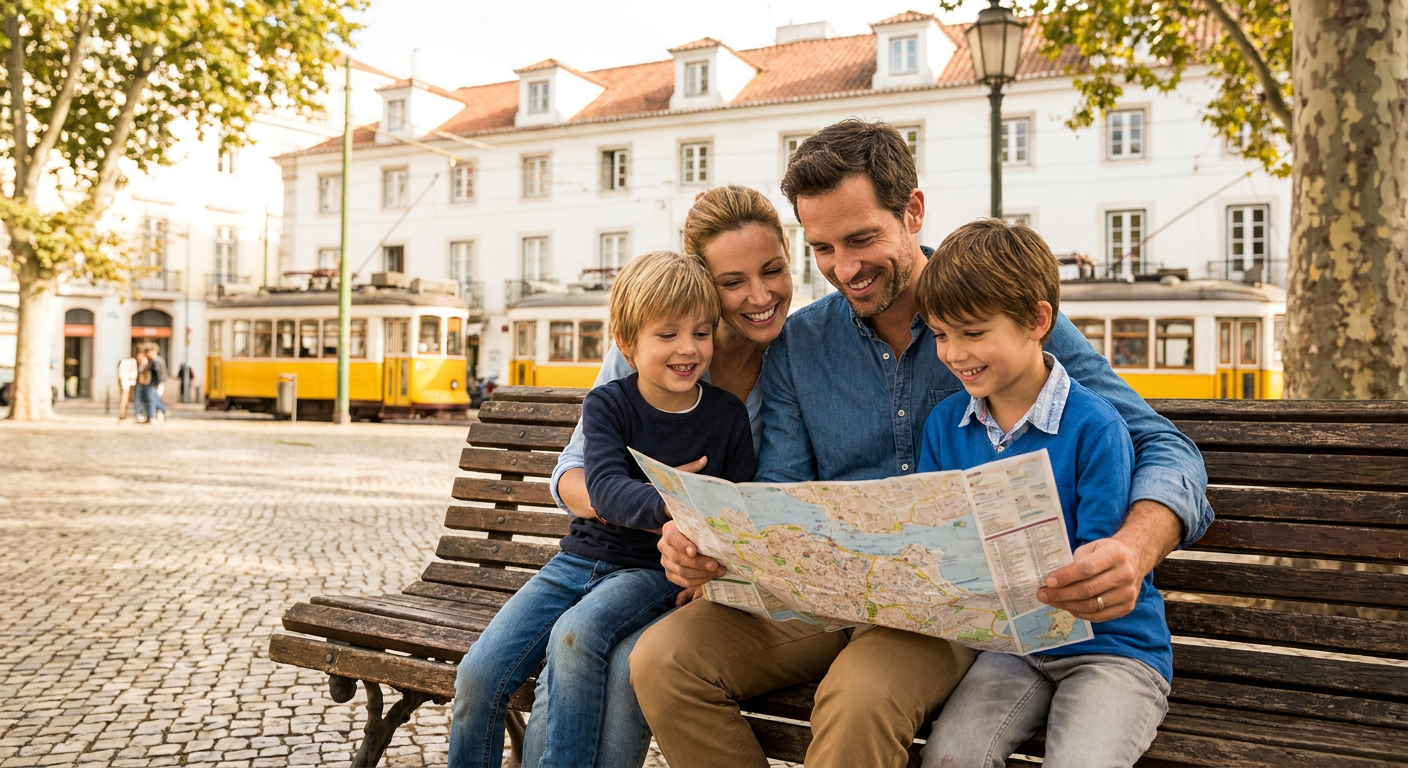
Thinking about trading the school run for a boarding pass? You’re not alone. The dream of exploring the world with your children, turning historical sites into history lessons and local markets into math class, is more achievable now than ever. This comprehensive article is your family guide on how to start worldschooling in 2026, covering everything from the legal fine print to budgeting for adventure and supporting your kids' social and academic development. It’s a roadmap for turning your family's travel dreams into a vibrant educational reality, making joyful learning on the go a part of your daily life.
Quick Answer
To start worldschooling your family in 2026, begin by researching the legal and visa requirements for your chosen destinations. Next, create a flexible budget that accounts for travel, accommodation, and educational resources. Finally, choose a curriculum approach that blends structured learning with real-world exploration, often supported by adaptive platforms that can generate lessons based on your location and your child's interests.
TL;DR
- Worldschooling is defined by experiential learning, using global travel as the primary educational tool, which sets it apart from traditional home-based schooling. Uncover the core philosophy of worldschooling
- Legal requirements are non-negotiable and vary widely by country and your family's citizenship. Researching visas and education laws for each destination is a critical first step. Learn how to navigate worldschooling laws
- A flexible curriculum is key. Blend online resources, project-based learning inspired by your travels, and LearnSpark tools that adapt to your journey. Discover how to build a dynamic curriculum
- Budgeting is about more than plane tickets. Successful worldschooling requires a detailed financial plan covering accommodation, daily expenses, insurance, and educational tools. See a breakdown of how to budget for your adventure
- High school doesn’t have to stop your travels. With careful planning, you can create robust transcripts and portfolios that meet college admission requirements. Find out how to manage high school on the road
In This Article
- What Exactly is Worldschooling in 2026, and is it for Your Family?
- Navigating the Legal Landscape: Worldschooling Laws by Country in 2026
- Crafting Your Worldschooling Curriculum: Balancing Structure and Exploration
- Budgeting for Adventure: How to Plan Your Digital Nomad Family Finances for Worldschooling
- Choosing Your Base and Hubs: Top Worldschooling Destinations for 2026
- Worldschooling vs. Homeschooling: What's the Key Difference for Your Family?
- Ensuring Social Development: How Do Worldschooling Kids Make Friends?
- Mastering the Logistics: Essential Worldschooling Tools & Apps for 2026
- Worldschooling for High Schoolers: Navigating Transcripts and College Applications
- Overcoming Challenges: What are the Common Pitfalls of the Nomadic Family Lifestyle?
- Frequently Asked Questions
- Your Worldschooling Adventure Awaits
What Exactly is Worldschooling in 2026, and is it for Your Family?
Worldschooling is an educational philosophy that combines full-time travel with learning, using the world itself as the primary classroom. Unlike traditional homeschooling that happens at a fixed address, worldschooling is defined by its nomadic nature and its deep commitment to experiential, immersive education. It's the ultimate form of alternative education, where a visit to the Colosseum in Rome becomes a history lesson, a trip to a market in Mexico is a class on currency and culture, and a hike through a Costa Rican rainforest is a hands-on biology lab.
The core idea is that children learn best by doing, seeing, and experiencing. For a worldschooling family, the curriculum is not confined to books and screens but is found in conversations with people from different backgrounds, navigating new public transport systems, and adapting to unfamiliar customs. This approach prioritizes curiosity, resilience, and a global perspective. A family might spend three months in Spain focusing on language immersion and art history, followed by two months in Morocco exploring Islamic architecture and desert ecosystems.
Worldschooling refers to an educational movement where families choose to educate their children while traveling the world. It prioritizes hands-on experience and cultural immersion over a traditional, location-based school system. This approach is not a vacation; it's a dedicated lifestyle choice centered around continuous learning through exploration. For many, it's a reaction to the perceived rigidity of conventional schooling and a desire to prepare children for a globalized future by fostering adaptability and cross-cultural understanding.
Is it for your family? It might be if you:
- Crave more quality time and shared adventures.
- Believe learning is a lifelong, everywhere activity.
- Have location-independent work or are willing to build it.
- Value adaptability, problem-solving, and global citizenship for your children.
- Are prepared to embrace uncertainty and let go of a highly structured routine.
Key takeaway: Worldschooling isn't just "school on the road." It's a fundamental shift to an educational lifestyle where travel, cultural immersion, and real-world experiences become the curriculum itself.
Navigating the Legal Landscape: Worldschooling Laws by Country in 2026
The single most critical step before you book any flights is understanding the legal requirements of worldschooling. Education laws are determined by your country of citizenship and the laws of the countries you plan to visit. Ignoring this can lead to serious complications, from fines to legal disputes, so thorough research is non-negotiable.
For many families, especially from the U.S., Canada, or Australia, the legal framework is often tied to their "home base" state or province's homeschooling laws. You may need to officially register as a homeschooler, submit an education plan, and provide periodic progress reports, even while you're abroad. For example, a family from Texas has very few reporting requirements, making it a legally simple home base for worldschooling. In contrast, a family from New York must comply with much stricter curriculum and reporting standards.
The laws of your destination countries add another layer of complexity.
- "Tourist" vs. "Resident": On short-term tourist visas (typically up to 90 days), you are generally not subject to the host country's compulsory education laws. Your children are seen as visitors.
- Long-Term Stays: If you plan to stay longer on a digital nomad visa or other long-term residency permit, you may fall under local education laws. A Digital Nomad Visa is a specific travel authorization that allows remote workers to reside in a country for an extended period, typically one to two years. Some countries are very friendly to homeschoolers, while others are not.
- Friendly Countries: New Zealand, Ireland, and the UK have historically been flexible, allowing for homeschooling with registration and an educational plan.
- Strict Countries: Germany and Sweden, for example, have very strict compulsory school attendance laws with almost no exceptions for homeschooling, making them challenging for long-term stays.
- Mixed/Complex: Countries like Portugal and Spain are popular hubs, but the laws can be ambiguous. In Portugal, for instance, you are technically required to enroll your child in a local or registered distance learning school after obtaining residency. Many worldschoolers navigate this by enrolling in accredited international online schools based in their home country. A 2025 analysis of digital nomad visas found that only about 40% explicitly mention schooling requirements for dependents, creating a significant legal gray area.
Based on our analysis of worldschooling families' experiences, the safest approach involves a two-pronged strategy:
- Comply with your home country/state's homeschool laws first. This is your primary legal foundation.
- Research visa and education laws for every long-term destination. Join expat and worldschooling social media groups for specific countries to get on-the-ground insights.
⚠️ Warning: Never assume the rules. Visa requirements, especially the newer "digital nomad visas," are constantly evolving. What worked for a family in 2024 may not be valid in 2026. Always check official government immigration and education websites for the most current information.
Crafting Your Worldschooling Curriculum: Balancing Structure and Exploration
A worldschooling curriculum is a living, breathing thing that adapts to your location, your children's interests, and your family's pace. The most common pitfall is trying to replicate a rigid, 8-to-3 school day on the road. This leads to burnout and robs you of the very freedom you sought. Instead, the goal is to create a digital nomad family education plan that weaves learning into the fabric of your travels.
Successful worldschooling families often adopt a blended approach:
- Core Subjects: Use an online, self-paced curriculum for foundational subjects like math and language arts. This provides consistency and a clear measure of progress. Platforms like Khan Academy (free), Beast Academy (math), or comprehensive online schools provide this backbone.
- Interest-Led Projects: This is where the magic happens. A trip to an elephant sanctuary in Thailand becomes a project on conservation, animal biology, and Thai culture. You can use this as an opportunity for making learning fun on the road.
- Location-Based Learning: Intentionally tie your studies to where you are. Before visiting Athens, your kids can study Greek mythology. While in Peru, they can learn about the Inca Empire and the physics of their incredible stone structures.
This is where modern technology becomes a worldschooler's best friend. Trying to manually create lessons that connect your child's math level to the history of your current city is exhausting. LearnSpark tools like LearnSpark can assist with this challenge. You can input a location (e.g., "Kyoto, Japan") and your child's interests ("anime" and "building things"), and the system can suggest a project-based lesson plan that integrates subjects like math, history, and art. It aims to provide support for exploration while helping to maintain focus on core skills.
Creating a truly Flexible Worldschooling Curriculum is about mindset. It means viewing a delayed train not as a disaster, but as an unscheduled lesson in patience, problem-solving, and reading a train schedule in another language. It's about trusting that valuable learning happens outside of a workbook.
Key takeaway: The best worldschooling curriculum is a hybrid model. It uses structured online tools for core skills while leaving ample room for place-based, interest-led projects that make learning meaningful and exciting.
Budgeting for Adventure: How to Plan Your Digital Nomad Family Finances for Worldschooling
The question "how much does worldschooling cost?" has no single answer, but it's not just for the wealthy. With careful planning, a digital nomad family can often live a life of global travel for less than the cost of a stationary life in a major Western city. Your budget will be the engine of your adventure, and creating a realistic one is a vital step in learning how to start worldschooling with a family guide for 2026.
A worldschooling budget typically breaks down into four main categories:
- "The Big 3" (Travel, Accommodation, Food): These will represent the bulk of your spending, often 60-70% of your total budget.
- Travel: Slow travel is the secret to saving money. Staying in one place for 1-3 months reduces transportation costs and allows you to get monthly discounts on accommodation.
- Accommodation: Platforms like Airbnb, Vrbo, and local housing sites are standards. For the more adventurous and budget-conscious, TrustedHousesitters offers free accommodation in exchange for pet/house care.
- Food: Eating out for every meal is a budget-killer. Renting places with kitchens allows you to shop at local markets and cook most of your meals, which is both cheaper and a great cultural experience.
- Education & Enrichment: This includes online curriculum subscriptions, museum tickets, language classes, and tools like LearnSpark. Experts recommend allocating around $100-$400 per child per month, depending on the resources you choose.
- Insurance & Healthcare: This is non-negotiable. You'll need comprehensive global health insurance that covers your family in all your intended destinations. Popular options for nomadic families include SafetyWing and World Nomads.
- Miscellaneous: This covers visas, phone plans (local SIMs or global plans like Google Fi), clothes, and a buffer for unexpected expenses.
Here’s a sample monthly budget comparison for a family of four, showing how dramatically location impacts cost. These figures are based on 2025 data from Nomad List and worldschooling family reports.
| Expense Category | Southeast Asia (e.g., Chiang Mai, Thailand) | Western Europe (e.g., Lisbon, Portugal) |
|---|---|---|
| Accommodation | $800 - $1,500 | $2,000 - $3,500 |
| Food & Groceries | $600 - $1,000 | $1,000 - $1,600 |
| Local Transport | $100 - $200 | $200 - $400 |
| Education & Activities | $200 - $500 | $400 - $800 |
| Insurance & Visas | $400 - $600 | $500 - $800 |
| Miscellaneous | $300 - $500 | $500 - $700 |
| Estimated Monthly Total | $2,400 - $4,300 | $4,600 - $7,800 |
To fund this lifestyle, most families rely on location-independent income. This could be remote work, freelancing, running an online business, or renting out a home back in their country of origin. Budgeting tools like YNAB (You Need A Budget) or Mint are invaluable for tracking expenses across different currencies and staying on target.
Choosing Your Base and Hubs: Top Worldschooling Destinations for 2026
While the point of worldschooling is to see the world, many families find value in spending extended time in "worldschooling hubs." Worldschooling Hubs are cities or regions that have become popular with traveling families, offering a critical mass of community, resources, and infrastructure that make the lifestyle easier and more enriching.
When choosing a hub, families in 2026 are prioritizing several key factors:
- Cost of Living: Affordable destinations allow your budget to stretch further, enabling longer stays.
- Community: The presence of other worldschooling or digital nomad families provides a vital social network for both kids and parents.
- Internet Reliability: Fast, stable internet is a must-have for remote work and online learning.
- Safety and Healthcare: Access to quality, affordable healthcare and a general sense of security are paramount.
- Enrichment Opportunities: A great hub offers a wealth of cultural sites, natural beauty, classes, and activities.
Based on these criteria, here are some of the Top Worldschooling Hubs for 2026:
- Chiang Mai, Thailand: Long considered the original digital nomad capital, it boasts an incredibly low cost of living, fantastic food, a large and welcoming community of traveling families, and countless temples and markets to explore.
- Lisbon, Portugal: Offers the perfect blend of European charm, affordability (compared to other Western European capitals), beautiful coastlines, and a thriving tech and digital nomad scene. The timezone overlap with the Americas is a huge plus for remote workers.
- Playa del Carmen, Mexico: A popular choice for North American families, offering beautiful beaches, Mayan ruins, a lower cost of living, and a large expat community. Its proximity to the US makes trips home easier.
- Medellín, Colombia: Known as the "City of Eternal Spring," it has shed its dangerous reputation to become a hub for innovation, with excellent public transport, a great climate, and a burgeoning nomad community.
- Da Nang, Vietnam: An emerging favorite, offering a relaxed beach city vibe, incredibly low costs, world-renowned cuisine, and friendly locals.
The right hub for your family depends on your unique priorities. In our experience, it's wise to "test drive" a location for a month before committing to a longer stay.
Worldschooling vs. Homeschooling: What's the Key Difference for Your Family?
While worldschooling is a form of homeschooling, there's a fundamental difference in philosophy and practice. Understanding this distinction is key to deciding which path is right for your family. Homeschooling is primarily defined by its location: home. Worldschooling is defined by its lack of a single location.
The core difference lies in the role of the environment. In traditional homeschooling, the home is the base of operations, and learning is structured around a curriculum within that stable environment. Field trips are excursions from home. In worldschooling, the environment is the curriculum. The world is the classroom, and the family is constantly moving through it. Learning is opportunistic and contextual, directly inspired by the changing surroundings.
Here is a simple breakdown of the main differences:
| Feature | Traditional Homeschooling | Worldschooling |
|---|---|---|
| Primary Classroom | A fixed home base. | The world; constantly changing locations. |
| Curriculum Driver | Parent/educator-led, often following a chosen curriculum. | Environment-led, opportunistic, and experiential. |
| Pace & Rhythm | Predictable, often following a school-year calendar. | Unpredictable, dictated by travel plans and opportunities. |
| Socialization | Local co-ops, sports teams, community groups. | Global communities, fellow travelers, local interactions. |
| Key Skill | Mastery of a chosen curriculum. | Adaptability, resilience, and global awareness. |
Many families also explore roadschooling, which is similar to worldschooling but is typically done via an RV or van, often within a single country or continent. It shares the travel-as-education ethos and offers many of the same benefits. You can find excellent roadschooling resources to see if that model is a better fit.
Key takeaway: The choice between homeschooling and worldschooling isn't about which is "better," but which better aligns with your family's goals. Do you want a stable home base with external exploration, or do you want a life where exploration is the foundation of your entire educational approach?
Ensuring Social Development: How Do Worldschooling Kids Make Friends?
One of the most persistent myths about alternative education is the "socialization problem." For worldschooling, this concern is amplified: how can kids build meaningful friendships if they're always on the move? The reality, however, is often the opposite. Worldschooling can foster a unique and powerful form of social intelligence.
Worldschooling children don't just socialize with a classroom of 25 same-age peers. They interact with:
- Other traveling kids from diverse cultural and linguistic backgrounds.
- Adults in a variety of contexts (shopkeepers, guides, hosts, fellow travelers).
- Local children in parks, classes, and communities.
- Family members, strengthening sibling and parent-child bonds through shared challenges.
This variety teaches them to be adaptable communicators, comfortable with people of all ages and backgrounds. In practice, we found that worldschooling children often develop social "fluency"—the ability to quickly find common ground and initiate connections in new environments.
Worldschooling families are proactive about building community. They don't just wait for friendships to happen.
- Hubs and Co-ops: They intentionally travel to worldschooling hubs to connect with other families for shared lessons, park days, and potlucks.
- Online Communities: Facebook groups and dedicated platforms for worldschoolers are used to arrange meetups with families who will be in the same city at the same time.
- Local Activities: They enroll their kids in local sports, art classes, or music lessons. This is a great way to meet local families and dive deeper into the culture.
- Worldschooling Summits: Events like the Worldschooling Pop-Up Hub bring dozens of families together for a month of community and learning in a specific location.
Concerns about socialization are valid, but the idea that worldschooling creates isolated children is largely unfounded. It simply requires a more intentional and creative approach to building connections, often resulting in broader and more diverse social skills. It's a key part of making joyful worldschooling with multiple children a sustainable reality.
Mastering the Logistics: Essential Worldschooling Tools & Apps for 2026
A successful worldschooling journey runs on a well-curated digital toolkit. The right apps and platforms can automate tedious tasks, save money, and streamline learning, freeing you up to be present with your family.
Your toolkit should cover three main areas: education, travel, and communication. Here’s a breakdown of top tools for 2026:
| Category | Tool/App | Why It's Essential for Worldschoolers |
|---|---|---|
| Education | LearnSpark | Generates location-based, interest-led lessons, tracks progress, and adapts on the fly. |
| Khan Academy | Free, high-quality resource for core subjects like math, science, and grammar. | |
| Duolingo/Babbel | Fun, gamified language learning to connect with local cultures. | |
| Travel | Skyscanner/Google Flights | Powerful flight search engines to find the best deals and routes. |
| Airbnb/TrustedHousesitters | For finding family-friendly monthly stays or free accommodation via house-sitting. | |
| Rome2rio | Compares plane, train, bus, and car options between any two points in the world. | |
| Finance & Comms | SafetyWing | Popular travel and medical insurance designed for digital nomads and their families. |
| Airalo/Google Fi | Provides easy eSIMs for data in multiple countries or a global phone plan. | |
| YNAB (You Need A Budget) | A robust budgeting app for tracking multi-currency spending and staying on plan. |
This digital foundation handles the "how" so you can focus on the "wow"—the incredible experiences you're sharing as a family.
Worldschooling for High Schoolers: Navigating Transcripts and College Applications
The idea of worldschooling high schoolers can feel daunting, with college applications looming. But far from being a disadvantage, a worldschooling high school experience can be a massive asset, creating a compelling narrative of independence, resilience, and global competence that makes an applicant stand out.
The key is meticulous record-keeping and a strategic approach.
- Create a Robust Transcript: You are the guidance counselor. Document everything. Combine accredited online courses for core subjects (math, science, literature) with self-designed courses based on your travels. "Modern European History" can be a course that includes visiting the Berlin Wall and the beaches of Normandy. Assign credits based on hours spent (typically 120-180 hours for a full credit).
- Build a Compelling Portfolio: A portfolio is where your teen's unique journey shines. It goes beyond grades to include:
- Project-based work: A research paper on Mayan astronomy written while in the Yucatán.
- Language proficiency: Certificates or video evidence of conversational fluency.
- Volunteer experience: Work done with a sea turtle conservation group in Costa Rica.
- A travel blog or photo journal: Demonstrating writing, photography, and web skills.
- Use Accredited Providers Strategically: For subjects like AP Chemistry or Calculus, using an accredited online school (like a US-based one) can provide an official grade that simplifies the transcript process.
- Prepare for Standardized Tests: Since your curriculum is non-traditional, strong scores on the SAT or ACT can provide a standardized benchmark for admissions officers. Plan to be in a location with a testing center well in advance.
College admissions officers are increasingly looking for students with diverse life experiences. A worldschooling background, when presented thoughtfully, tells a story of a mature, adaptable, and curious learner who is ready for the challenges of university life and beyond.
Key takeaway: Worldschooling through high school is entirely possible and can be a huge advantage for college applications if you diligently document learning, build a rich portfolio, and strategically use accredited online courses.
Overcoming Challenges: What are the Common Pitfalls of the Nomadic Family Lifestyle?
The nomadic family lifestyle is an incredible adventure, but it's not a permanent vacation. Being aware of the common challenges can help you navigate them with grace and keep the journey joyful.
- Travel Burnout: Moving too fast is the number one mistake. The excitement of a new place every week quickly fades into exhaustion. The fix: Embrace slow travel. Stay in one place for at least a month. Schedule "zero days" with no plans other than to rest, do laundry, and just be.
- Decision Fatigue: Constantly choosing where to go, where to stay, and what to do is mentally draining. The fix: Create routines within the chaos. Have a set "planning day" each week. For longer stays, establish a "home base" city and take shorter trips from there.
- Social Instability: While kids become socially adept, they can miss the stability of long-term friendships. The fix: Be intentional about community. Prioritize worldschooling hubs, join online groups for meetups, and maintain connections with friends and family back home through regular video calls.
- Lack of Personal Space: 24/7 family time can be intense. The fix: Build "alone time" into the schedule for everyone, including parents. Renting a two-bedroom apartment instead of a studio can be worth the extra cost for sanity's sake.
Acknowledging these challenges isn't about discouraging the dream; it's about making it sustainable. The most successful worldschooling families are those who are realistic, flexible, and prioritize their well-being as much as their itinerary.
Frequently Asked Questions
What's the best age to start worldschooling?
There's no "perfect" age, as each stage has pros and cons. Preschoolers are highly portable and learn languages easily, but require more hands-on care. Elementary-aged children are often full of curiosity and adapt well. High schoolers can engage more deeply with complex topics but require more planning for transcripts and college prep. Many families find the sweet spot to be the late elementary to middle school years (ages 8-13).
How do you handle healthcare and emergencies abroad?
This is a top priority. First, get comprehensive global health insurance that covers both emergency and routine care in the countries you plan to visit. SafetyWing and World Nomads are popular choices for digital nomad families. Second, for each new location, research the location of the nearest reputable hospital and save the local emergency number. Carry a well-stocked first-aid kit for minor issues.
Is worldschooling legal for US citizens?
Yes, worldschooling is legal for US citizens, but you must comply with the homeschooling laws of your "domicile" state. This is the state you maintain as your legal residence. Some states, like Texas and Oklahoma, have very relaxed laws, requiring no notification or reporting. Others, like New York and Pennsylvania, have strict requirements for curriculum plans and assessments. You must follow your state's laws even while you are outside the country.
Can you worldschool on a tight budget?
Absolutely. The key is slow travel and choosing affordable regions. Staying in Southeast Asia or parts of Latin America can be significantly cheaper than living in the US or Western Europe. You can save money by house-sitting for free accommodation, cooking your own meals, and using free educational resources like Khan Academy and local libraries. A well-planned budget is crucial.
Key Takeaways
Starting a worldschooling journey is a major life decision, but it's more accessible than ever. Here are the key steps to remember from this guide:
- Start with the Law: Your first step is always to research and comply with the homeschooling laws of your home state/country and the visa/residency laws of your destinations.
- Budget Realistically: Create a detailed budget that covers travel, accommodation, food, insurance, and education. Slow travel and choosing affordable hubs are your best tools for saving money.
- Embrace a Flexible Curriculum: Combine a structured online curriculum for core skills with interest-led, location-based projects. Let the world be your main textbook.
- Be Intentional About Community: Proactively seek out other traveling families in worldschooling hubs and online communities to build a social network for you and your children.
- Plan for High School: If traveling with teens, keep meticulous records, build a portfolio, and use accredited online courses to prepare them for college applications.
- Anticipate Challenges: Avoid burnout by traveling slowly, creating routines, and prioritizing rest and personal space for everyone in the family.
Your Worldschooling Adventure Awaits
Embarking on a worldschooling journey is less about having all the answers and more about being brave enough to ask the questions and discover the answers together as a family. It requires planning, flexibility, and a leap of faith, but the rewards are immeasurable: deeper family bonds, a truly global education, and a lifetime of shared memories. This family guide on how to start worldschooling in 2026 is your first step. The world is waiting to be your classroom.