
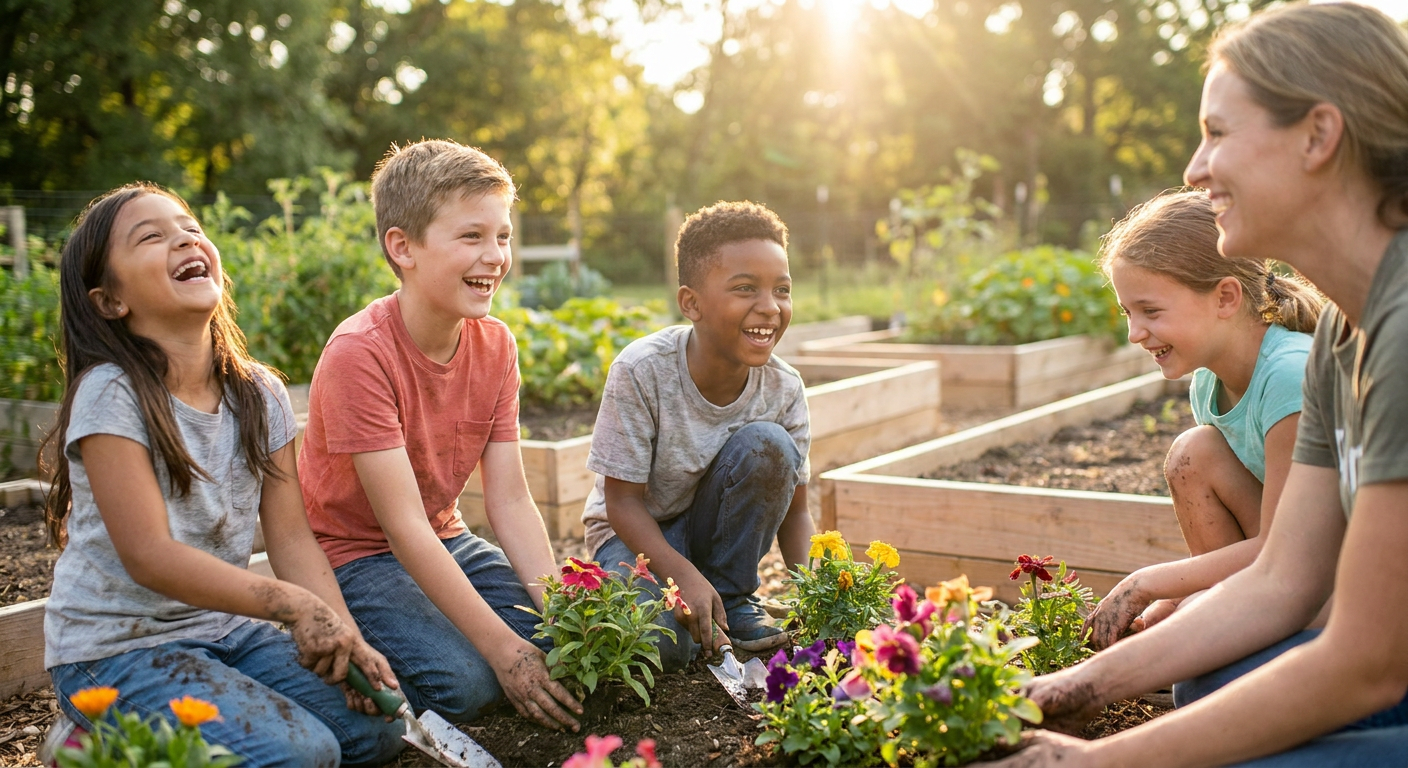
Title: The Socialization Solution: Your Guide to Raising Thriving, Connected Homeschooled Kids
That quiet, nagging question, "But what about socialization?" is the number one worry for parents. In our experience, it's the biggest hurdle holding families back from homeschooling. This guide provides a direct answer to how to socialize homeschooled children, turning that worry into confidence. We'll move beyond the outdated myths and give you a modern, practical framework for raising kids who are not just social, but socially skilled, confident, and deeply connected to their community.
Quick Answer
The best way to socialize homeschooled children is by creating a rich "social ecosystem" that goes far beyond the classroom. This involves a deliberate mix of structured group activities like co-ops and sports, interest-based classes, volunteering, and unstructured, real-world interactions with people of all ages. Effective homeschool socialization prioritizes the quality and variety of social interactions over the sheer quantity of time spent in a peer-only environment.
TL;DR
- Myth Busted: Socialization is about learning to function in society, not just being around kids your own age. Homeschooling offers unique opportunities for this 'real-world' learning. Discover what socialization really means.
- Data-Driven Confidence: Homeschooling may offer opportunities for children to develop social skills and contribute to their growth into engaged, happy adults. [4] Explore perspectives on socialization.
- Avenues for Connection: A thriving social life is built through a variety of channels, including local groups, sports, classes, and even virtual clubs—not just one source. Explore the 7 key avenues for building a social ecosystem.
- It's About Quality, Not Quantity: Focusing on a child's individual needs, especially for introverts, leads to deeper, more meaningful friendships than forced large-group settings. Learn how to support your introverted homeschooler.
In This Article
- Debunking the Biggest Myth: What Does "Socialization" Really Mean?
- Quality over Quantity: What Do Socialization Studies Actually Say?
- How to Socialize Homeschooled Children: 7 Key Avenues for Connection
- What Are the Pros and Cons of Homeschool Socialization?
- What About Introverted Homeschoolers? A Guide to Gentle Socialization
- Do We Need a Formal Social Skills Curriculum?
- Frequently Asked Questions
- Conclusion: Building a Thriving, Social Homeschool Life
Debunking the Biggest Myth: What Does "Socialization" Really Mean?
The fear around homeschool socialization is almost always based on a misunderstanding of the word itself. Many people think it just means "being around other kids," often in a large, age-segregated classroom. In reality, that's only one, very specific type of social exposure. The actual goal is much richer and more profound.
Socialization is the lifelong process of learning the norms, values, skills, and behaviors that allow an individual to function successfully within their society. It’s about learning to talk to the elderly neighbor, order your own food at a restaurant, ask a librarian for help, and collaborate on a project with a mixed-age group. It's learning to navigate conflict, show empathy, and build relationships with people from diverse backgrounds. Homeschooling, far from preventing this, can provide a perfect environment for it to flourish.
In our experience helping many families, this is often a common hurdle when starting your homeschooling journey. Once parents realize they can replace the artificial environment of a 30-kid classroom with authentic, community-based interactions, the fear transforms into excitement. You get to intentionally build a social world for your child that is supportive, diverse, and prepares them for life, not just for the next grade level.
Key takeaway: True socialization isn't about being confined with 30 same-aged peers; it’s about learning to effectively and confidently interact with the diverse world all around you.
Quality over Quantity: What Do Socialization Studies Actually Say?
Research on homeschool socialization often explores various aspects. While the myth of the isolated homeschooler persists, research from sources like the NHERI Homeschooling Socialization Fact Sheet suggests that homeschooled adults may demonstrate civic engagement and report life satisfaction.
Research synthesized by sources like the National Home Education Research Institute (NHERI) suggests several potential findings. Adults who were homeschooled may exhibit community involvement, self-esteem, and leadership. For example, homeschool graduates may participate in ongoing community service activities, and research also suggests they may vote and attend public meetings, be more tolerant of others' viewpoints, and report levels of happiness and life satisfaction.
Findings from the NHERI Homeschooling Socialization Fact Sheet suggest that homeschooled children may not be socially isolated, and may develop social skills and emotional maturity through family and chosen community structures. This environment can provide opportunities for more practice interacting with adults and children of different ages.
Research explores various social outcomes. Here are some general observations discussed in homeschooling research, including the NHERI Homeschooling Socialization Fact Sheet:
| Social Outcome Metric | Observed Trends for Homeschooled Adults | Observed Trends for Public-Schooled Adults |
|---|---|---|
| Civic Engagement (Voting, Volunteering) | Reported in some studies | Reported in some studies |
| Self-Esteem (as young adults) | May be Observed | Common |
| Community Involvement (Participation in local groups) | May be Observed | Common |
| Leadership Skills (Reported holding leadership roles) | May be Observed | Common |
| Life Satisfaction (Happiness & Overall well-being) | May be Observed | Common |
| Tolerance of Others' Viewpoints | May be Observed | Common |
Note: These trends are based on a synthesis of research reviewed in the NHERI Homeschooling Socialization Fact Sheet.
When socialization is intentional and occurs in diverse settings, the results may be very positive. You are offering your child a different social foundation.
How to Socialize Homeschooled Children: 7 Key Avenues for Connection
The key to great homeschool socialization is creating a varied and robust "social ecosystem" for your child. Think of it not as a single destination but as a network of trails. You don't have to follow every path, but knowing they exist gives you endless options. Many families find it beneficial to engage in a few of these avenues consistently.
Here are seven powerful avenues to explore.
1. Homeschool Groups & Co-ops
These are the backbone of many homeschool communities. A Homeschool Co-op is a group of families who join together to share in the education of their children. This can range from a casual weekly park day to a structured cooperative where parents teach classes in their areas of expertise (e.g., one mom teaches art, a dad teaches science labs).
For example, a parent-led co-op might meet every Friday morning. One parent with a science background could teach a hands-on biology lab for middle schoolers, another could lead a Shakespeare discussion for teens, and a third could run a nature-based playgroup for the younger kids. Well-known models include these parent-led groups and more formal structures like Classical Conversations or local Wild + Free groups. These groups offer consistent interaction with a dedicated group of peers, allowing for the development of deep and lasting friendships. They are also a fantastic source of support and friendship for you, the parent! To find one, start by searching on Facebook or Meetup.com for "[Your Town] Homeschool Group" or "[Your County] Homeschool Co-op." Ask for recommendations and visit a few to find the one that best fits your family's vibe.
2. Local Classes & Activities
One of the great joys of homeschooling is the ability to build a social life around your child's actual interests, not just a pre-assigned classroom. This is where local classes shine. Whether it's martial arts, ballet, a robotics club like Code Ninjas, pottery, or guitar lessons, these activities bring your child together with other kids who share their passions. Think beyond the usual: a local farm might offer a "junior farmer" program, a museum could have a history club, or a community theater might hold auditions for a children's play. Don't forget traditional organizations like 4-H clubs or Scouts (BSA or Girl Scouts), which offer fantastic structured social and skill-building opportunities.
These interactions are often powerful because they are built on a foundation of shared enthusiasm. Check the websites for your local Parks & Recreation department, YMCA, community art center, or local library. You will likely find local classes and activities that can fill your child's social and educational cup.
3. Homeschool Sports Leagues
"But what about P.E. and team sports?" is another frequent question. Homeschool sports options continue to expand in many areas, including dedicated leagues and public school participation policies. From dedicated homeschool sports leagues like the HSAA (Home School Athletic Association) to policies that allow homeschoolers to play for their local public school teams, the options are plentiful. Team sports teach invaluable skills like collaboration, sportsmanship, and resilience.
Finding a homeschool sports league follows a clear process. Following these steps can help you get your child on a team where they can thrive.
Here's how to navigate it:
- Step 1: Search Online: Use targeted terms like "homeschool sports leagues," "[Your State] homeschool athletics," or "Christian homeschool sports near me" like Upward Sports.
- Step 2: Check State Laws: Some states have "Tebow Laws" that grant homeschoolers the right to try out for their local public school teams. Check your state's Department of Education website for details.
- Step 3: Inquire with Leagues: Once you find a potential league, reach out. Ask about their philosophy, competitiveness level, practice schedule, and fees.
- Step 4: Register and Participate: Find the right fit? Sign up! This is a fantastic way for active kids to burn off energy and build strong bonds with teammates.
4. Volunteer Opportunities
Volunteering is one of the most powerful and often overlooked avenues for socialization. It accomplishes multiple goals at once: it develops empathy, teaches real-world skills, builds a sense of community responsibility, and provides interaction with a wide range of ages.
Think beyond kid-centric activities. For younger kids, this could be as simple as helping to weed a community garden, making holiday cards for a local nursing home, or running a lemonade stand for a cause. For teens, it could involve becoming a junior docent at a museum, helping with tech support at a senior center, or volunteering at an animal shelter. Working at a local food bank or participating in a community clean-up day puts your child in contact with seniors, college students, and working adults. Organizations like Habitat for Humanity often have opportunities for older children and teens. Even helping deliver for a program like Meals on Wheels with a parent can be a powerful experience. These volunteer opportunities for homeschooled kids can help build character and strengthen social connections.
5. Virtual Clubs & Online Communities
Socialization isn't limited by geography. For kids with niche interests—or for families who live rurally or travel—virtual clubs are a game-changer. These platforms offer safe, moderated environments where kids can connect with peers from around the world who love the same things they do.
Platforms like Outschool offer thousands of live online classes, from Minecraft building clubs and D&D campaigns to creative writing workshops for teens. Other excellent options include Synthesis, which offers complex problem-solving games for kids, or virtual schools like Prisma and KaiPod Learning that create cohort-based social opportunities.
For older kids, moderated Discord or Guilded servers dedicated to specific hobbies can be a great resource. The key is safety: parents should always vet the platform, check moderation policies, and maintain an open dialogue with their teens about online interactions. These virtual homeschool clubs for teens can be a lifeline, especially for kids who feel different from their local peers.
6. Everyday 'Real-World' Interaction
Not all socialization needs to be scheduled. Some of the most important social learning happens organically during the course of daily life. Homeschooling provides the time and space for these interactions to occur naturally.
This includes:
- Chatting with the cashier at the grocery store.
- Discussing a book with the librarian.
- Asking a park ranger a question on a hike.
- Helping an elderly neighbor bring in their trash cans.
- Playing with kids of all ages at the neighborhood playground.
For instance, when you go to the post office, let your child buy the stamps and ask the clerk questions. When you order at a café, let them place their own order. This simple, two-minute interaction builds confidence and communication skills in a low-stakes environment. These small, consistent interactions teach politeness, respect, and the confidence to speak with adults and strangers in a safe context. They are the stitches that weave a child into the fabric of their community.
⚠️ A word of caution: It can be tempting to fill every moment with a scheduled activity. Resist this urge. Down time is crucial for kids to process, imagine, and just be. Over-scheduling can contribute to parent burnout and child exhaustion.
7. Leveraging Your Public Library
Your local library is a powerhouse of free social opportunities. It is a welcoming, low-pressure environment perfect for kids of all ages and temperaments. Libraries are no longer just quiet buildings full of books; they are vibrant community hubs.
Look for programs such as:
- Story Time: For toddlers and preschoolers, this is a gentle introduction to group settings.
- Summer Reading Challenges: These often feature kick-off parties, weekly events, and a sense of shared purpose.
- Teen Book Clubs: A fantastic way for teens to discuss ideas and connect with other readers.
- LEGO Clubs & STEAM Workshops: Hands-on activities that encourage natural collaboration.
Make visiting the library a regular part of your weekly rhythm. It's an easy, free, and incredibly effective way to keep your child connected.
Key takeaway: A successful social life for a homeschooled child comes from a blend of structured activities (co-ops, sports), interest-driven classes, and unstructured real-world community engagement.
What Are the Pros and Cons of Homeschool Socialization?
Making an informed choice means looking at both sides. While the benefits of homeschool socialization are significant, it's a different path and requires a more intentional approach from parents. Understanding the pros and cons of homeschooling socialization helps you maximize the advantages while proactively managing the challenges.
| Aspect | Pros of Homeschool Socialization (The Upside) | Cons of Homeschool Socialization (The Challenges) |
|---|---|---|
| Peer Group | Real-World Age Mixing: Children interact with a variety of ages, better preparing them for life in workplaces and communities. | Requires Effort to Find Peers: You must actively seek out groups, co-ops, and activities. Friends won't just appear in a classroom. |
| Social Pressures | Reduced Negative Peer Pressure: Less exposure to bullying, cliques, and pressure to conform. Children can mature at their own pace. | Potential for a "Bubble": If not careful, you could create an environment that is less diverse than you'd like. Proactive effort is needed. |
| Type of Interaction | Quality Interactions: Focus is on shared interests and genuine connection rather than forced proximity. Deeper friendships may result. | Fewer Large-Group Events: Your child might have fewer experiences with things like pep rallies, large school dances, or navigating huge crowds of peers. |
| Parental Role | Positive Role Modeling: You have more opportunities to model and guide social behavior in real-time. | It's All on You: The parent is the primary facilitator, planner, and chauffeur for social activities. This requires time and energy. |
| Skill Development | Confidence with Adults: Frequent interaction with adults in various settings leads to greater poise and communication skills. | Isolation is a Real Risk (If Not Proactive): Without a deliberate plan, a child can become isolated. This is the primary risk to manage. |
In our experience, the "cons" are not failures of the model, but simply a to-do list for the parent. If you are willing to be the "Director of Social Activities," the pros almost always outweigh the cons.
What About Introverted Homeschoolers? A Guide to Gentle Socialization
The best way to socialize an introverted homeschooler is to honor their nature, not try to change it. The goal isn't to turn them into an extrovert; it's to help them build the deep, meaningful connections they crave in a way that fills their energy cup instead of draining it.
Large, loud groups are often overwhelming for introverts, causing them to withdraw. The beauty of homeschooling is that you can skip that entirely, focusing on quality over quantity.
Focus on quality over quantity:
- One-on-One Playdates: A single, trusted friend is more valuable to an introvert than a room full of acquaintances. Arrange for regular one-on-one time with a compatible friend.
- Small, Quiet Groups: A small book club, a two-person art lesson, or a hike with another family can feel much safer than a large co-op class.
- Parallel Play: Sometimes, just being near other kids is enough. Activities like a LEGO club or a drawing session allow introverts to engage side-by-side without pressure for constant conversation.
- Shared Interests: Connect them with another child who shares their deep passion, whether it's building model rockets or studying Japanese. The shared interest will fuel the conversation.
Introverted children may find homeschooling beneficial because it can offer an alternative to the social demands of a traditional school. You can tailor their social life to fit their personality, which is a powerful gift. Aligning their social opportunities with your family's homeschooling style creates an environment where they feel safe and confident to be themselves.
Do We Need a Formal Social Skills Curriculum?
For many homeschooled children, a formal social skills curriculum may be unnecessary. Social skills—like listening, sharing, taking turns, and resolving conflicts—are learned organically and effectively through the diverse social avenues we've already discussed. When you are with your child, you can gently coach them through these situations in real-time, which can be a highly effective learning method.
However, for some children, particularly those who may be neurodivergent or who struggle to pick up on social cues, a structured program can be a fantastic tool. A Social Skills Curriculum is a program designed to explicitly teach social-emotional skills through direct instruction, role-playing, and guided practice. These programs break down complex social interactions into understandable steps.
If you notice your child consistently struggling with making friends, understanding non-verbal cues, or managing social anxiety, a curriculum might be helpful. Programs like Michelle Garcia Winner's "The Social Thinking Methodology" or "The Zones of Regulation" can offer valuable support. Another popular option is the "Everyday Speech" platform, which uses videos to model social skills. Think of it as a supplemental tool, not a primary requirement. If you do use one, it's wise to track all these social and extracurricular activities in your records to show progress and comprehensive education.
Frequently Asked Questions
How many hours of socialization does a homeschooled child need?
There is no magic number of hours for socialization, and this is where many parents can relax. The focus should be on the quality of interactions, not the quantity. A one-hour playdate with a close friend where a child practices sharing, problem-solving, and communication can be more valuable than five hours in a chaotic environment. Observe your child. Do they seem happy, connected, and confident? Are they building friendships? Their individual temperament is your best guide. An extrovert might need daily activities, while an introvert might thrive with two meaningful social events a week.
What is the difference between socialization and socializing?
This is a crucial distinction. Socializing is the act of interacting with others—going to a party, playing a game, or having a conversation. It's the "what" you do. Socialization, on the other hand, is the much broader, lifelong process of learning how to function in your culture. It includes understanding social norms, values, and behaviors. While socializing is a part of socialization, the latter also includes things like learning to be a good neighbor, a responsible citizen, and a competent employee. Homeschooling allows parents to be intentional about both.
Can my homeschooled teen be prepared for college and the "real world"?
Homeschool graduates can succeed academically in college and may adjust well to the independence of university life, according to the NHERI Homeschooling Socialization Fact Sheet. Because they are used to managing their own time, interacting with adults, and pursuing their interests proactively, many homeschooled teens report feeling prepared for university life. The mix of structured learning and real-world interaction in homeschooling can be good preparation for both higher education and a career.
How do I find the best homeschool co-ops near me?
Finding the right co-op is about finding the right fit for your family. Start by searching on social media platforms like Facebook with terms like "[Your City] homeschool co-op" or "[Your County] homeschool group." Ask for recommendations in local parenting groups. Many co-ops have websites or Facebook pages outlining their philosophy, schedule, and fees. It's always a good idea to ask if you can visit for a day to see if the atmosphere is a good match for your child's personality and your family's educational goals.
Conclusion: Building a Thriving, Social Homeschool Life
The old perception of the lonely, isolated homeschooler is often challenged by current experiences. Homeschooling offers a unique and powerful path to raising socially adept, confident, and well-rounded individuals. The key is intentionality.
By moving beyond the confines of the "socialization" question and embracing a proactive approach, you can build a rich social ecosystem for your child. This involves a mix of homeschool groups, interest-based classes, sports, volunteering, and the simple, everyday interactions that build a confident and capable person. You are not just your child's teacher; you are the architect of their social world. And that is an exciting and empowering role to play.