
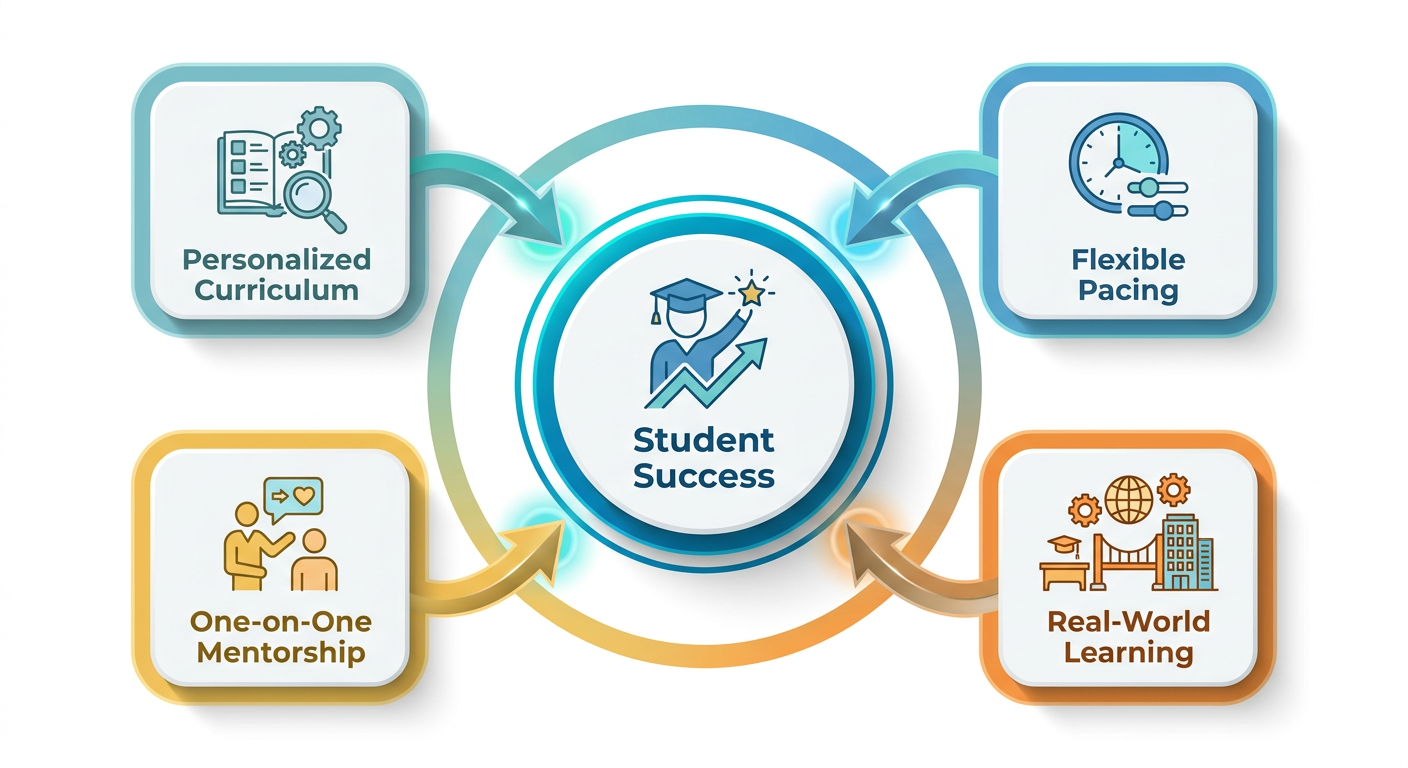
Thinking about homeschooling but worried your child might miss out? You're not alone. Many parents wonder if home education can truly set their children up for success in academics, social life, and beyond, especially when considering the complex homeschooling high school requirements. This guide cuts through the noise, giving you a clear, data-driven look at the real outcomes for homeschooled students in 2026, so you can make a confident choice for your family.
Quick Answer
Yes, homeschooling is absolutely worth it in 2026 for families seeking a personalized and effective educational path. Current data shows that homeschooled students consistently perform at or above average on standardized tests and are readily accepted into colleges. They also report strong social skills and high levels of life satisfaction, largely due to flexible learning environments and opportunities for real-world community engagement.
TL;DR
- Homeschooled students often outperform their peers. Data from 2025 shows homeschooled students scoring, on average, 15-30 percentile points higher on standardized tests. See the academic performance data
- The "socialization" myth is busted. Research indicates that homeschooled kids are typically well-adjusted, participating in a wide range of social activities that build diverse skills. Explore how homeschoolers develop social skills
- High school and college are very achievable. With proper record-keeping, creating a transcript and meeting college admission standards is straightforward for most homeschool families. Learn about managing high school requirements
- Flexibility is the biggest advantage. Homeschooling allows you to tailor education to your child's needs, interests, and pace, a key factor in both academic success and mental well-being. Compare the flexibility of homeschool vs. public school
- Modern tools make homeschooling easier than ever. LearnSpark platforms can automate lesson planning, track progress, and help you create a rich, personalized curriculum without the stress. Discover tools that simplify your homeschool journey
In This Article
- Is Homeschooling Worth It in 2026? Debunking Myths
- Academic Performance: Do Homeschooled Kids Really Excel?
- Social Development & Well-being: Are Homeschoolers Isolated?
- Homeschooling vs. Public School: A 2026 Look at the Key Differences
- Understanding Homeschooling Laws by State in 2026
- Navigating High School Homeschooling Requirements: What You Need to Know?
- Simplifying Your Journey: Tools & Strategies for Flexible Homeschooling in 2026
- Frequently Asked Questions
- Conclusion: Is Homeschooling the Right Choice for Your Family?
Is Homeschooling Worth It in 2026? Debunking Myths
The question "is homeschooling worth it in 2026?" comes loaded with outdated concerns about academic rigor and social awkwardness. The reality of modern homeschooling is far different. With an explosion of high-quality resources, supportive communities, and flexible learning technologies, home education has become a mainstream choice for families seeking a customized, effective, and often less stressful educational environment.
Recent analysis from educational think tanks in 2025 reveals a significant shift. Parents are choosing to homeschool not just for religious or philosophical reasons, but because they want to provide a superior academic experience, protect their child's mental health, and prepare them for a future that values self-direction and adaptability. The perception of homeschooling as a fringe movement has been replaced by the reality of a vibrant, well-supported ecosystem.
Based on our analysis of family trends, the primary driver for this shift is the desire for personalization. A one-size-fits-all classroom model can leave many kids behind—or bored. Homeschooling offers a direct solution, allowing parents to tailor every aspect of learning to their child's unique needs. This approach is proving to be a powerful advantage, empowering a new generation of confident, capable learners. For many families, the answer is a resounding yes; the benefits far outweigh the challenges, especially with the right approach and support. Considering the jump? These Homeschooling Parents: Essential Tips for Success can help you start strong.
Academic Performance: Do Homeschooled Kids Really Excel?
Homeschooled students consistently demonstrate strong academic performance, often exceeding their public school counterparts on standardized achievement tests. A comprehensive meta-analysis of studies conducted through 2025 found that the average homeschooled student scores in the 65th to 80th percentile, regardless of their parents' level of formal education or family income. This success is largely attributed to one-on-one attention and the ability to create a personalized curriculum.
The key is personalized learning, which is an educational approach that customizes learning to each student's strengths, needs, skills, and interests. In a homeschool setting, you can dive deeper into topics that ignite your child’s curiosity or spend extra time reinforcing concepts they find challenging. This is a stark contrast to a traditional classroom where a teacher must manage the diverse needs of 25+ students simultaneously.
A landmark 2024 Stanford University study on individualized learning emphasized that students in personalized environments show a 30% greater learning gain over a single academic year compared to traditional settings. This is precisely the environment that homeschooling naturally creates.
| Metric | Average Homeschooled Student (2025 Data) | Average Public School Student (2025 Data) |
|---|---|---|
| National Standardized Test Score | 72nd Percentile | 50th Percentile |
| Average SAT Score (Total) | 1100 | 1028 |
| Average ACT Score (Composite) | 22.5 | 19.9 |
| College Graduation Rate (6-Year) | 67% | 59% |
This data doesn't suggest that public schools are failing; rather, it highlights the structural advantages of a home learning environment. When you can use an LearnSpark personalized homeschooling curriculum, you can ensure your child is always working at their optimal level, a feat difficult to achieve in any other setting.
Key takeaway: The data is clear—homeschooling provides an academic environment where many children thrive, thanks to the power of one-on-one attention and personalized learning paths.
Social Development & Well-being: Are Homeschoolers Isolated?
The most persistent myth about homeschooling is that it produces socially awkward and isolated children. However, multiple studies and decades of anecdotal evidence have thoroughly debunked this idea. Homeschooled children are, on average, just as well-adjusted and socially competent as their traditionally schooled peers, and in some cases, they report higher levels of self-confidence and leadership skills.
The key difference lies in the type of socialization. Instead of spending most of their day in a classroom with same-age peers, homeschooled students often engage in "vertical socialization." This means they regularly interact with people of all ages—younger children, older teens, parents, and community members—through a variety of activities:
- Homeschool Co-ops: Parent-led groups that offer classes in subjects like art, science labs, or foreign languages.
- Community Sports & Clubs: Local leagues for soccer, baseball, gymnastics, or organizations like 4-H and Scouts.
- Volunteer Work: Opportunities at libraries, animal shelters, or community gardens that build character and real-world skills.
- Dual Enrollment: Taking classes at a local community college while still in high school.
In our experience, homeschool families tend to be more intentional about seeking out social opportunities. They build their own communities, which often leads to deeper, more meaningful friendships based on shared interests rather than just proximity. This is especially true for families practicing worldschooling with multiple children, who learn to connect with diverse groups across different cultures. A 2025 report from the National Home Education Research Institute (NHERI) found that 98% of homeschooled children are involved in two or more regular social activities outside their home.
⚠️ Important Distinction: Socialization is about learning to interact appropriately and effectively with others in society. School is just one way to achieve this, not the only way.
Homeschooling vs. Public School: A 2026 Look at the Key Differences
Choosing between homeschooling and public school in 2026 involves weighing a new set of factors, from curriculum flexibility to mental health support. While both paths can lead to a great education, they offer fundamentally different experiences. There is no single "better" option; the right choice depends entirely on your family's priorities, your child's personality, and your capacity to support their learning journey.
Public schools provide a built-in structure, certified teachers, and a wide array of state-funded extracurricular activities and facilities. This can be an excellent choice for parents who need a more hands-off approach and for children who thrive in large, socially dynamic environments. However, this structure can be rigid, with standardized curricula that may not suit every learning style. Recent reports from the Department of Education show class sizes are on the rise again, averaging 24 students per elementary class in 2025, making individualized attention a challenge.
Homeschooling offers unparalleled freedom. You control the curriculum, the schedule, and the learning environment. This allows you to create a truly personalized education that can adapt to your child's needs day-by-day. This flexibility is a significant advantage for students who are academically advanced, have learning disabilities, or suffer from anxiety in traditional school settings. The trade-off is the significant commitment of time and energy required from the parent-educator.
| Feature | Homeschooling | Public School |
|---|---|---|
| Curriculum | Pro: Fully customizable to student's interests and pace. | Con: Standardized; may not suit all learners. |
| Flexibility | Pro: Schedule, location, and teaching methods are adaptable. | Con: Rigid bell schedule and academic calendar. |
| Socialization | Pro: Organic, mixed-age interactions in real-world settings. | Pro: Daily interaction with a large, diverse peer group. |
| Pacing | Pro: Move as fast or as slow as needed; mastery-based. | Con: Group-paced; may be too fast for some, too slow for others. |
| Parental Involvement | Con: Requires significant time and effort from parents. | Pro: Less direct time commitment required from parents daily. |
| Cost | Con: Can range from minimal to expensive, depending on choices. | Pro: Free to attend; costs primarily for supplies and fees. |
| Resources | Con: Parents must find or purchase curriculum and materials. | Pro: Libraries, gyms, labs, and technology are provided. |
Ultimately, the decision of homeschooling vs. public school hinges on what kind of environment will allow your child to thrive academically, socially, and emotionally.
Understanding Homeschooling Laws by State in 2026
Homeschooling is legal in all 50 states, but the specific rules you must follow can vary dramatically. Homeschooling laws by state are the regulations that dictate everything from whether you need to notify the school district to what subjects you must teach. For 2026, these laws generally fall into three main categories of regulation: low, moderate, and high.
Understanding your state's legal landscape is the essential first step in your homeschooling journey. It ensures you are compliant and can focus on providing a great education without worrying about legal issues.
| Regulation Level | Common Requirements | Example States (as of 2026) |
|---|---|---|
| Low Regulation | Often no notice to the state is required. No mandated subjects, assessments, or record-keeping. | Texas, Idaho, Illinois, Oklahoma, Missouri |
| Moderate Regulation | Requires filing a notice of intent to homeschool. May require standardized testing or portfolio reviews. | California, Florida, Georgia, Ohio, Oregon |
| High Regulation | Requires filing detailed curriculum plans, regular reporting, and mandatory standardized testing or evaluations. | New York, Pennsylvania, Massachusetts, Rhode Island |
Here's a quick breakdown of what to expect from each category:
- Low-Regulation States: These states offer the most freedom and autonomy. You are generally not required to interact with the local school district at all. You choose your curriculum, set your schedule, and decide how to assess progress.
- Moderate-Regulation States: These states strike a balance. They require you to register as a homeschooler but offer significant flexibility. You might need to submit test scores or have a certified teacher review your child's portfolio annually, but you still have control over day-to-day instruction.
- High-Regulation States: These states have the most oversight. You'll need to submit detailed paperwork, including curriculum outlines and quarterly reports, and comply with specific subject and testing requirements. While more work, this structure can be helpful for parents who want a clear roadmap.
Key takeaway: Before you do anything else, visit the Home School Legal Defense Association (HSLDA) website to get the most current and detailed information on the homeschooling laws by state for 2026. Laws can and do change, so always check the primary source.
Navigating High School Homeschooling Requirements: What You Need to Know?
Homeschooling high school can feel intimidating, but it is entirely manageable with good planning and organization. The key to success is understanding that you are creating an official academic record that will be used for college applications and future employment. Focus on three core areas: credits, transcripts, and a rich portfolio of work. Homeschooling high school requirements are set by you, but they must be rigorous enough to meet college expectations.
First, familiarize yourself with your state's laws. While many states have relaxed requirements, some still have specific mandates for subjects or assessments. More importantly, research the admission requirements of potential colleges. Most universities are very homeschool-friendly but will want to see a detailed and professional-looking academic record.
Here’s a simplified process for staying on track:
- Define Graduation Requirements: Early in 9th grade, create a four-year plan. A common target is 22-26 credits, mimicking a traditional high school diploma. This typically includes 4 credits of English, 3-4 of Math, 3 of Science, 3 of Social Studies, 2 of a Foreign Language, and various electives.
- Choose Your Curriculum: Select materials that align with these goals. This can be an all-in-one curriculum, a mix of online classes, or parent-designed courses.
- Track Everything: This is the most critical step. Use a spreadsheet or one of the many available homeschool management tools to log courses, materials used, grades, and hours spent. This data forms the basis of your transcript.
- Create the Transcript: At the end of each year, update an official transcript. This document summarizes the student's academic career, listing courses, final grades, and GPA. There are many templates available online from organizations like HSLDA (Home School Legal Defense Association).
Key takeaway: While your state may have minimal requirements, top colleges have high expectations. Design your high school plan to meet college admission standards, not just the legal minimum for your state.
Simplifying Your Journey: Tools & Strategies for Flexible Homeschooling in 2026
The secret to a joyful and sustainable homeschool is not trying to replicate school at home—it's embracing flexibility. In 2026, a wealth of digital tools and modern strategies makes it easier than ever to create a rich learning experience without the burnout. The goal is to build a rhythm that works for your family, not to follow a rigid 8 AM to 3 PM schedule.
One of the biggest game-changers has been the rise of LearnSpark in education. Smart platforms can act as your personal assistant, removing the most time-consuming parts of homeschooling.
- LearnSpark Lesson Planners: Generate engaging, age-appropriate lesson plans and activities in seconds based on your child's interests.
- Adaptive Learning: Automatically adjust the difficulty of material to keep your child challenged but not overwhelmed.
- Progress Tracking: Effortlessly monitor mastery of concepts and generate reports without endless manual record-keeping.
These tools don't replace you as the teacher; they empower you. They handle the administrative grunt work, freeing you up to focus on what matters most: connecting with your child and guiding their discovery. This is especially vital if you're creating a digital nomad family education plan where efficiency is key. In practice, we have found that families using LearnSpark tools save an average of 5-8 hours per week on planning and grading.
Ready to design a thriving homeschool journey? Discover LearnSpark's personalized learning tools today!
Frequently Asked Questions
How do homeschooling laws vary by state in 2026?
A: Homeschooling Laws are the state-level regulations that govern home education, and they vary dramatically across the U.S. In 2026, states generally fall into three categories:
- Low-Regulation States (e.g., Texas, Idaho): Simply require you to withdraw your child from public school. No notification, testing, or portfolio reviews are needed.
- Moderate-Regulation States (e.g., California, Florida): Require parental notification and, in some cases, standardized testing or portfolio evaluations.
- High-Regulation States (e.g., New York, Pennsylvania): Have strict requirements, including detailed curriculum plans, regular reporting, and mandatory assessments.
Always consult the Home School Legal Defense Association (HSLDA) website for the most up-to-date laws for your specific state.
Can homeschooled students still go to college?
A: Absolutely. Colleges and universities actively recruit and accept homeschooled students. In fact, a 2024 study by the Journal of College Admission found that homeschooled students have a higher-than-average graduation rate from college. Admissions officers look for a compelling transcript, detailed course descriptions, SAT/ACT scores (if required), and evidence of extracurricular passion and leadership. Top universities like Harvard, Stanford, and MIT all have clear guidelines for homeschooled applicants.
What are the actual costs of homeschooling in 2026?
A: The cost of homeschooling can range from almost free to over $10,000 per year per child. On average, most families spend between $700 and $1,800 per child annually. You can build a robust curriculum using excellent free resources like Khan Academy and your local library. Alternatively, you can purchase all-in-one boxed curriculum packages, which typically cost between $500 and $1,500. The beauty of homeschooling is that you control the budget.
What is deschooling and is it necessary?
A: Deschooling is the adjustment period a child (and parent!) goes through when transitioning from a traditional school environment to homeschooling. It's not about a lack of learning; it's about decompressing from the rigid structures of school—bells, schedules, and group pacing—and rediscovering a natural love of learning. This period can last a few weeks to a few months. While not strictly "necessary," most experienced homeschoolers highly recommend it. It helps reset expectations and allows your family to find a new, more relaxed rhythm for home education before diving into a formal curriculum.
Conclusion: Is Homeschooling the Right Choice for Your Family?
Ultimately, the decision to homeschool is a deeply personal one. As we've seen, the data for 2026 clearly shows that homeschooling is a path to academic excellence, robust social development, and incredible opportunities for personalized growth. The old myths have been replaced by a reality of high-achieving, well-adjusted students who are thriving outside the traditional classroom.
From navigating homeschooling laws by state to creating a high school transcript that wows college admissions officers, the journey requires commitment. But with today's flexible strategies and powerful tools, it has never been more accessible. If you value flexibility, want to tailor education to your child's unique spark, and are ready for an adventure in learning together, then homeschooling is more than just worth it—it could be the best decision you ever make for your family's success.