
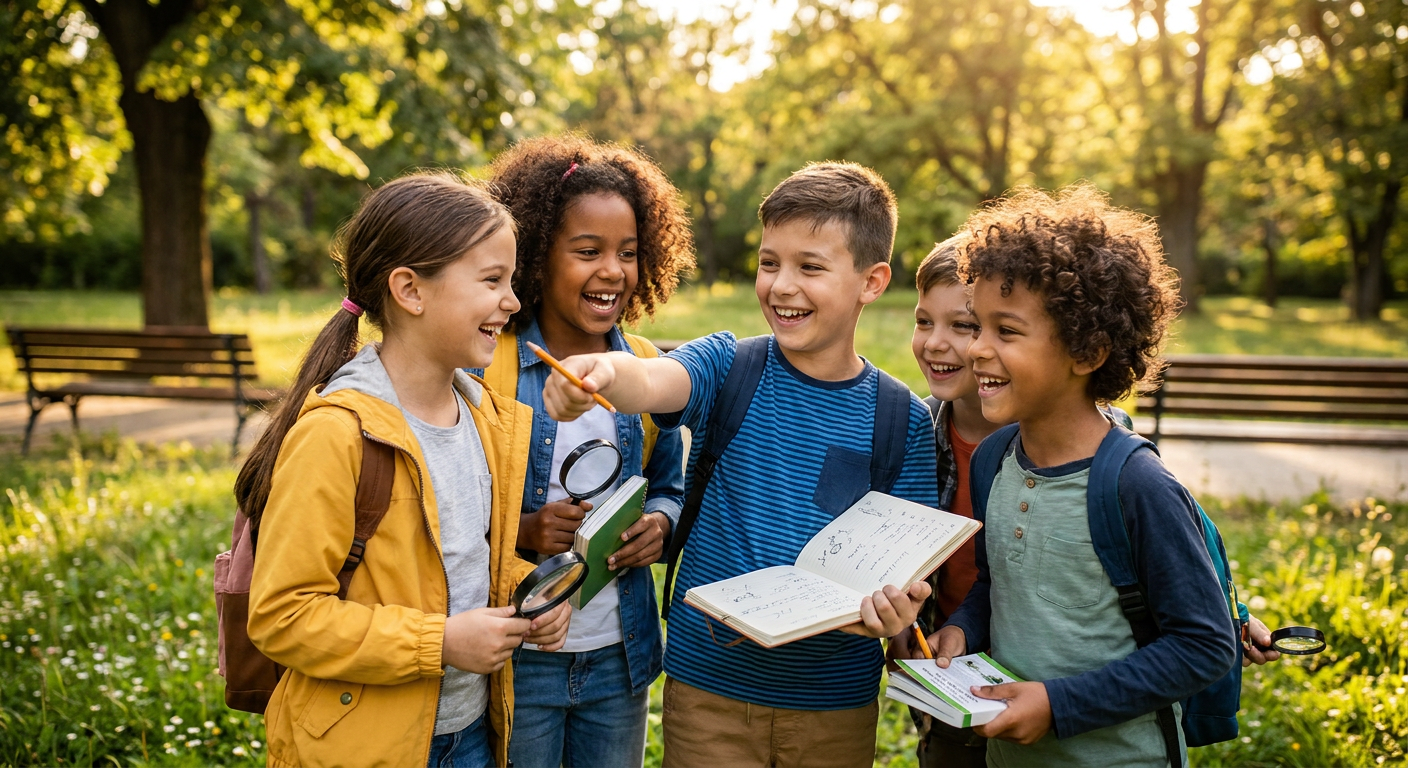
Worrying about how to socialize homeschooled children is one of the most common concerns for new and veteran homeschooling parents alike. The great news is that in 2026, creating a rich, vibrant social life for your child is more achievable than ever. This guide will walk you through practical, friendly strategies to bust the socialization myth and help your child build lasting friendships and a strong sense of community.
Quick Answer
The key to how to socialize homeschooled children effectively is to be intentional about creating a variety of social opportunities. This means actively seeking out homeschool co-ops, enrolling in extracurricular activities like sports or arts, engaging with local community events, and leveraging safe online platforms. The goal is to move beyond simple exposure to other children and foster environments where they can build meaningful connections and develop real-world social skills.
TL;DR
- The "socialization myth" is outdated. Homeschooled children can develop strong social skills and interact effectively with diverse age groups. Learn why the biggest homeschool myth is wrong.
- Quality interactions matter more than quantity. True socialization isn't about being in a crowded classroom; it's about learning cooperation, empathy, and conflict resolution in meaningful contexts. Understand what quality socialization looks like.
- Your community is packed with opportunities. From dedicated homeschool groups and co-ops to public library programs and local sports leagues, countless chances for connection are available right in your neighborhood. Discover how to find local groups.
- The parent's role is a social architect, not a cruise director. You can guide your child by modeling good social skills, creating opportunities, and providing gentle coaching through social challenges. See how to become your child's social architect.
In This Article
- Does Homeschooling Mean No Social Life? Busting the Biggest Myth of 2026
- What Does 'Socialization' Really Mean for Homeschoolers?
- Finding Your Tribe: Unlocking Local Homeschool Communities
- Beyond the Classroom: Extracurricular Activities That Spark Connection
- Comparing Socialization Avenues: What's the Best Fit?
- Virtual Connections & Online Communities in 2026: Friendships Without Borders
- How to Socialize Homeschooled Children in Your Community: Everyday Opportunities
- Nurturing Social Skills: The Parent's Role as a Social Architect
- Frequently Asked Questions
Does Homeschooling Mean No Social Life? Busting the Biggest Myth of 2026
Absolutely not; homeschooling does not mean social isolation, and this is the most persistent myth that families face. The idea of lonely children learning at the kitchen table is an outdated stereotype that doesn't reflect the vibrant reality of modern homeschooling in 2026. In fact, Homeschooled children can develop strong social skills and interact effectively with diverse age groups. Homeschooled students can foster strong social and emotional development, especially with family involvement.
The key difference is that homeschool socialization is intentional, not incidental. Instead of just being near 20-30 same-aged children all day, homeschooled kids often engage with a wider variety of people. Vertical interaction is a key benefit of homeschooling socialization, where children regularly engage with a mix of people—younger children, older peers, and adults—in real-world settings. This helps them develop confidence and communication skills across different age groups. With the explosion of homeschool networks, online communities, and accessible local programs, the resources for building a rich social life are more abundant than ever.
Key takeaway: Homeschooling offers a different model for socialization, one based on intentional, high-quality interactions in diverse community settings rather than passive exposure in a single-age classroom.
What Does 'Socialization' Really Mean for Homeschoolers?
For homeschoolers, socialization is the process of learning to behave in a way that is acceptable to society, involving communication, empathy, and cooperation through varied and intentional interactions. It’s far more than just being physically present with other kids. It's about developing the nuanced skills required to build and maintain healthy relationships, work collaboratively, and navigate complex social situations.
While traditional schools provide constant peer exposure, much of that time is unstructured or passively managed. Homeschool socialization flips this model by focusing on quality over quantity. Key components include:
- Cooperation: Working together on a homeschool co-op project or building a fort at the park.
- Conflict Resolution: Learning to talk through a disagreement over the rules of a game with a friend, often with a parent available to guide.
- Empathy: Understanding another person's feelings during a group volunteer activity or a book club discussion.
- Communication: Practicing conversation with the librarian, the cashier at the grocery store, or a new friend at a robotics class.
For example, when a group of homeschooled children decides to put on a play, they must negotiate roles, collaborate on scripts, listen to each other's ideas, and give constructive feedback—all vital social skills learned in a deeply engaging context. These focused, interest-driven activities can build social confidence effectively.
⚠️ Don't fear the "bubble child." A common worry is that you'll create a child who can't handle the "real world." In reality, by curating a variety of positive social experiences and teaching skills directly, you equip your child to handle diverse social situations with more confidence and competence, not less.
Finding Your Tribe: Unlocking Local Homeschool Communities
The most direct way to find your local homeschool community is by leveraging online resources and local institutions. In 2026, digital platforms make finding your people easier than ever, but don't underestimate the power of in-person connections at places you already frequent. These groups offer everything from academic support and shared classes to park days and field trips.
A Homeschool Co-op (Cooperative) is a group of homeschooling families who come together to share teaching responsibilities, resources, and social opportunities. One family might teach a science lab for a semester, while another leads an art history class. This not only gives your child access to group learning and different teaching styles but also provides instant, consistent friendships.
Here’s a quick plan for finding a local group:
- Start Online: Search Facebook for "[Your City/County] Homeschoolers" or "Homeschooling in [Your State]." These groups are often the most active hubs for local information.
- Check National Directories: Websites like The Homeschool Mom and local state homeschool association sites often have directories of support groups.
- Ask a Librarian: Your local children's librarian is a fantastic resource. They frequently know about homeschool groups that meet at the library or in the community.
- Visit Community Hubs: Leave a note on the bulletin board at community centers, recreation departments, or even local craft stores that offer kids' classes.
By joining one of these groups, you might find your child participating in a student-led robotics club, a Shakespeare in the Park performance, or a weekly nature walk—all incredible settings for building friendships. Start your search by checking out our dedicated guide to finding homeschool co-ops and support groups.
Beyond the Classroom: Extracurricular Activities That Spark Connection
For homeschoolers, extracurricular activities are organized pursuits outside of the core academic curriculum that allow children to connect with peers over a shared passion. These settings naturally foster teamwork, discipline, and friendship with a diverse mix of children, including those from traditional school backgrounds. The key is to follow your child's interests.
Start by exploring what your community has to offer. Opportunities are everywhere, including:
- Sports Leagues: Local YMCA teams, Little League, gymnastics clubs, and homeschool athletic associations offer fantastic opportunities for physical activity and learning sportsmanship.
- Arts & Performance: Enroll your child in a community theater program, a local choir, dance classes, or music lessons. These build confidence and collaborative skills.
- Clubs & STEM: Look for Boy or Girl Scouts, 4-H clubs, or dedicated STEM centers offering coding, robotics, or engineering classes. These are perfect for project-based collaboration.
- Volunteering: Working at an animal shelter, a community garden, or a local food bank teaches empathy and responsibility while interacting with people from all walks of life.
For example, a child who joins a martial arts dojo not only learns self-defense but also practices respect for their sensei and peers, partners with others for drills, and celebrates their friends' achievements during belt tests. These mixed environments can be powerful for building robust social skills and lasting bonds. The shared goal of the activity becomes the foundation for friendship.
Key takeaway: Centering socialization around your child's genuine interests transforms it from a "task" into a joyful and natural part of their life.
Comparing Socialization Avenues: What's the Best Fit?
Choosing the right mix of social activities depends on your child's personality, your family's schedule, and your goals. There's no one-size-fits-all answer, and a blend of different types of interaction can create a well-rounded social experience. This table breaks down the most common avenues to help you decide where to focus your energy.
| Social Avenue | Structure Level | Age Diversity | Parent Involvement | Best For... |
|---|---|---|---|---|
| Homeschool Co-ops | High | Mixed (within homeschool community) | High (often requires teaching/volunteering) | Consistent friendships, academic group work, and a built-in parent community. |
| Extracurriculars | Medium | Mixed (includes schooled peers) | Low to Medium (drop-off is common) | Developing specific skills (sports, arts), building friendships based on shared interests, and interacting with the broader community. |
| Local Events | Low | High (all ages) | High (parental supervision) | Practicing real-world social skills (ordering food, asking questions), low-pressure interactions, and fostering a sense of community belonging. |
| Online Communities | Medium | Mixed (global peers) | Medium (requires safety oversight) | Connecting with peers over niche interests, developing digital literacy, and overcoming geographical limitations. |
Key takeaway: Use this table to create a balanced "social diet" for your child, combining structured activities like co-ops with unstructured community engagement to build a wide range of social skills.
Virtual Connections & Online Communities in 2026: Friendships Without Borders
In 2026, online platforms and virtual clubs provide invaluable opportunities for homeschooled children to connect with peers who share their unique passions, regardless of geography. For a child obsessed with ancient Roman history or competitive chess, finding local friends with the same niche interest can be tough. The digital world can help reduce that barrier, connecting them with a global community.
These are not passive, screen-time activities. The best online communities are highly interactive and collaborative. Consider options like:
- Educational Gaming Servers: Moderated Minecraft servers where kids collaborate to build historical sites or solve STEM challenges.
- Virtual Clubs: Online debate clubs, creative writing workshops, and virtual book clubs hosted on platforms like Outschool.
- Collaborative Learning: Children can join coding bootcamps where they work in teams to build an app or participate in online worldschooling communities to share travel experiences. For example, a teen on a worldschooling journey in Italy might connect with another teen studying the same topic in Brazil.
Parental oversight is crucial for ensuring safety. It's important to choose reputable platforms, review privacy settings, and have open conversations with your child about online etiquette and safety.
How to Socialize Homeschooled Children in Your Community: Everyday Opportunities
Everyday errands and local events are fantastic, low-stress ways for homeschooled children to practice social skills in organic, real-world settings. These "incidental" interactions build comfort and confidence in speaking with people of all ages and backgrounds, which is a key part of how to socialize homeschooled children effectively. True social fluency isn’t just about making friends; it's about navigating daily life with ease.
Think of your week as a series of small social opportunities. Your role is to facilitate these moments, not force them. Encourage your child to:
- Order their own food at a cafe.
- Ask the librarian for help finding a book.
- Pay the cashier at the grocery store and say thank you.
- Chat with the instructor before or after a class.
Look for a variety of activities that integrate your child into the broader community:
- Library Programs: Story times, Lego clubs, and teen advisory boards are free and full of potential friends.
- Local Classes: Sign up for a cooking class at a community center, a pottery workshop, or a coding camp run by a local business.
- Community Events: Attend local festivals, farmers' markets, and park cleanup days.
- Scouting & Youth Groups: Organizations like Boy Scouts, Girl Scouts, or Camp Fire have been building friendships and character for over a century.
For instance, a child who regularly attends a nature club at a local park learns to interact with the adult leader, older teen volunteers, and younger kids, all while exploring a shared interest. These multi-generational interactions are a unique advantage of homeschooling.
Nurturing Social Skills: The Parent's Role as a Social Architect
A social architect, in the context of homeschooling, is a parent who intentionally designs their child's environment to promote positive social development. This is less about being a constant activities director and more about being a coach, model, and facilitator. You can actively teach and reinforce the skills your child needs to build healthy relationships.
This hands-on approach involves a few key strategies:
- Model good behavior: Let your children see you interacting politely with others, showing empathy, and resolving conflicts calmly. Your actions are their first and most powerful lesson.
- Role-play scenarios: Before a party or a new class, practice introductions or how to join a group that's already playing. This can dramatically reduce anxiety.
- Teach conflict resolution: When disagreements happen on a playdate, resist the urge to immediately intervene. Instead, guide the children to use "I feel" statements, listen to each other, and brainstorm a compromise. Being present but not intrusive during social play can be very helpful.
- Provide gentle feedback: After a social outing, talk about what went well and what was challenging. "I noticed you shared your Lego set with Leo. That was very kind and made him feel included."
Using tools for homeschooling can help free up planning time, giving you more bandwidth to focus on these crucial coaching moments. By tailoring your approach to their needs with personalized learning plans for social skills, you're not just hoping for socialization to happen—you're actively building it.
Spark Joyful Learning & Connections with LearnSpark!
Frequently Asked Questions
Q: How many hours a week should homeschooled children socialize?
A: The quality and consistency of social interactions are often considered more important than a specific hourly goal. Aim for a few varied social opportunities each week, such as a co-op class, a sports practice, and a park playdate. A good rule of thumb is to ensure your child has regular, positive interactions that leave them feeling energized and connected.
Q: Is homeschool socialization different for introverted versus extroverted children?
A: Yes, your approach should absolutely be tailored to your child's unique personality. For an introverted child, focus on smaller, calmer settings like a one-on-one playdate, a small book club, or an art class. For an extroverted child, provide more frequent and diverse opportunities like team sports, theater groups, and larger co-op gatherings where they can thrive on the energy of the group.
Q: How can I make sure my child is exposed to diverse perspectives?
A: Intentionally seek out diversity in your curriculum, community, and activities. Join multicultural homeschool groups, participate in community events celebrating different cultures, and read books featuring a wide range of characters and viewpoints. Engaging in educational travel or even joining a global online pen pal program are excellent ways to broaden your child's worldview and help them appreciate people from all backgrounds.
Q: How do I help a shy child with socialization?
A: Helping a shy child involves patience and creating a sense of safety. Start with low-pressure environments like one-on-one playdates with a familiar friend. Focus on interest-led activities (like an art class or coding club) where the activity itself is the focus, not the social interaction. As their social architect, you can role-play situations at home to build confidence and always honor their need for downtime after social events.
Q: What about socializing homeschooled teens vs. younger children?
A: Socialization needs evolve with age. For younger children (ages 4-8), focus on parallel play and simple group activities like park days, library story times, and unstructured playdates. For older children (ages 9-12), structured activities like team sports, co-op classes, and scouting are excellent. For teens, it's crucial to facilitate independence. Encourage them to take the lead in organizing hangouts, getting a part-time job, volunteering, or joining clubs based on deep interests like debate, coding, or theater.
Q: How do I handle criticism from family about my child's socialization?
A: This is a common challenge. First, be confident in your approach—you know your child best. Arm yourself with the facts: homeschoolers have many opportunities for quality socialization. You can calmly share examples of your child's active social life (co-op, sports, clubs). Sometimes, inviting the skeptical family member to a homeschool event or performance can be the most effective way to show them the vibrant reality. Ultimately, your child's happiness and thriving friendships are the best answer.
Conclusion: Building a Thriving Social Life
Ultimately, learning how to socialize homeschooled children is less about replicating a school environment and more about embracing the freedom to create a custom-fit social world. By being intentional, focusing on quality connections, and acting as a supportive social architect, you can give your child all the tools they need to build meaningful friendships and navigate the world with confidence. Remember, you are not alone on this journey. For more tips and encouragement, check out our complete homeschooling parents guide.