
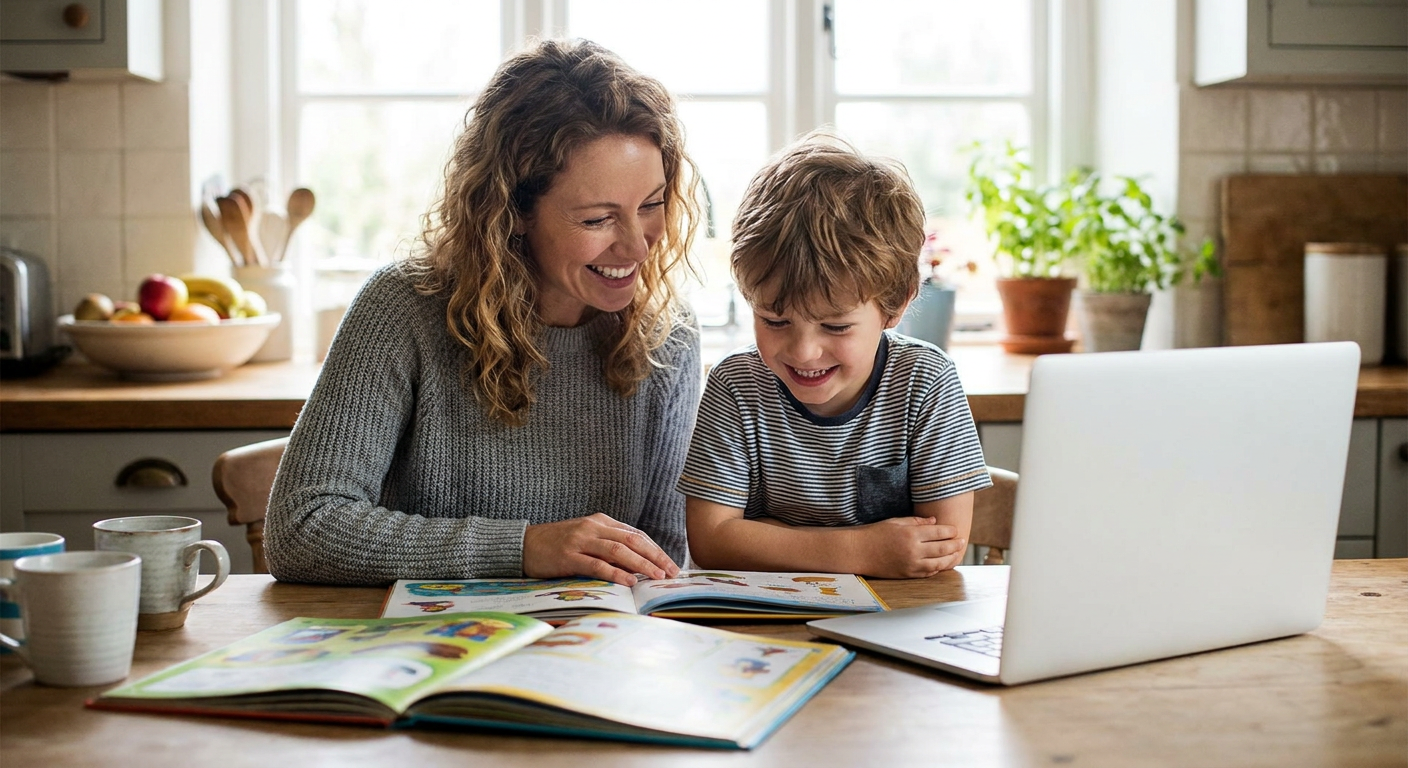
Saving money on your child's education without sacrificing quality is a top priority for most homeschooling families. The cost of curriculum can add up quickly, but knowing where to buy used homeschool textbooks online can dramatically lower your expenses, freeing up your budget for field trips, supplies, and other enriching experiences. This guide will walk you through the best places to find pre-loved curriculum, what to look for, and how to make your dollars stretch further.
Quick Answer
The best way to save money is to buy used homeschool textbooks online from a mix of sources. Large marketplaces like Amazon and eBay offer wide selections, while specialized sites and Facebook swap groups often have the best deals on specific curriculums like Abeka or Saxon Math. For maximum savings, compare prices across platforms, buy textbooks (non-consumables) used, and consider selling them back at the end of the year.
TL;DR
- Used Beats New for Most Books: You can save 50-80% on textbooks by buying them used. Only purchase new for consumable workbooks that your child will write in. Learn when used curriculum is the best choice.
- Marketplaces Offer Variety: Websites like Amazon, eBay, and Rainbow Resource Center are excellent starting points with vast inventories of used homeschool materials. See the top online marketplaces for used books.
- Community Swaps Provide Big Savings: Facebook groups and local co-ops are goldmines for trading or buying curriculum directly from other homeschooling families, often at the lowest prices. Find out how to join homeschool curriculum swap groups.
- Buyback Programs Recoup Costs: Don't let old books gather dust. Use online buyback programs to sell your gently used curriculum and get cash back for next year's purchases. Discover how homeschool textbook buyback programs work.
In This Article
- Why Budgeting for Homeschool Textbooks Matters in 2026
- Buying Used vs. New: When is 'Pre-Loved' Curriculum the Best Choice?
- Top Online Marketplaces to Find Used Homeschool Textbooks
- Specialized Sites for Discounted Brand-Name Curriculum
- Homeschool Curriculum Swap Groups 2026: Community & Savings
- Genius Ways to Save Even More: Beyond Buying Used
- How Do Homeschool Textbook Buyback Programs Work?
- Key Takeaways: Your Strategy for Affordable Homeschool Textbooks
- Frequently Asked Questions
Why Budgeting for Homeschool Textbooks Matters in 2026
Budgeting for homeschool textbooks is crucial because curriculum costs continue to rise. A single comprehensive, all-in-one curriculum package for one child can easily top $500-$700, and that figure multiplies quickly if you're teaching more than one student. In the economic climate of 2026, making every dollar count is more important than ever for homeschooling families.
Thankfully, a high-quality education does not require buying everything brand new. By being strategic, you can build an amazing library of resources for a fraction of the sticker price. Smart shopping allows you to allocate more of your family's budget toward hands-on learning experiences, extracurricular activities, and technology that supports your educational goals. Mastering a few frugal homeschooling tips is one of the superpowers of veteran homeschoolers.
Buying Used vs. New: When is 'Pre-Loved' Curriculum the Best Choice?
Buying used curriculum is almost always the smartest choice for non-consumable textbooks, offering significant cost savings with little to no downside. For materials your child won't write in—like literature books, science textbooks, or teacher's manuals—a used copy functions identically to a new one but at 30-70% of the cost. Brands with durable, non-consumable components like Sonlight or the core textbooks from Abeka have a thriving resale market for this reason.
The primary exception is for consumable workbooks, which are materials designed for a single student to write, draw, or tear pages out of. Buying these new ensures your child has a fresh, clean book to work in. You might also consider buying new for subjects where information changes rapidly, like technology or current events, though even then, a slightly older edition is often perfectly fine for core concepts.
Here's a quick breakdown to help you decide:
| Curriculum Type | Buy New or Used? | Why? |
|---|---|---|
| Textbooks (Math, Science, History) | Used | Content is reusable. High cost new, high savings used. |
| Literature Anthologies & Readers | Used | These are standard books. Minor wear doesn't affect usability. |
| Teacher's Manuals & Guides | Used | Essential for you, but no need for a pristine copy. |
| Workbooks & Activity Books | New | Designed to be written in. A used copy is often unusable. |
| Lab Kits & Science Supplies | New | For safety and to ensure all components are present and unexpired. |
Key takeaway: The rule of thumb is simple: if your child writes in it, buy new. If your child reads from it, buy used and save.
Top Online Marketplaces to Find Used Homeschool Textbooks
General marketplaces are fantastic one-stop shops where you can find a massive variety of used homeschool books from countless sellers. After testing several platforms, we found that pricing and shipping can vary wildly, so it pays to compare before you buy.
1. Amazon (Used) Amazon is a go-to for many because of its enormous selection and familiar interface. Many listings for popular textbooks have a "Used" buying option, often fulfilled by third-party sellers.
- Pros: Huge inventory, user reviews on the product itself (not the used copy), and potential for Prime shipping on some offers.
- Cons: Condition descriptions can sometimes be vague ("Good," "Acceptable"). You're buying from many different sellers, so quality can be inconsistent.
- Best for: Finding specific editions of popular books quickly.
2. eBay eBay is excellent for finding entire curriculum bundles or "lots." You can often buy a whole grade's worth of science or history from another family who just finished using it.
- Pros: "Buy It Now" and auction formats, strong buyer protection, and the ability to find complete sets.
- Cons: Shipping costs can be high for heavy book lots. You need to read seller reviews carefully.
- Best for: Buying multi-piece curriculum sets from a single seller.
3. Rainbow Resource Center (Used) While primarily a retailer of new homeschool materials, Rainbow Resource Center has a robust used section that is a hidden gem. Because it's a dedicated homeschool supplier, the inventory is highly relevant.
- Pros: Curated for homeschoolers, reliable grading of book conditions, can combine new and used items in one order.
- Cons: Inventory is smaller than Amazon or eBay and popular items sell out fast.
- Best for: A trusted, homeschool-focused shopping experience.
Here’s how these top platforms compare at a glance:
| Feature | Amazon (Used) | eBay | Rainbow Resource Center (Used) |
|---|---|---|---|
| Selection | Massive | Very Large (especially bundles) | Good, but curated |
| Best For | Specific ISBNs, quick finds | Full-year curriculum "lots" | A trustworthy, homeschool-centric experience |
| Pricing | Competitive, varies | Can be very low (auctions) | Fair, clearly stated |
| Buyer Protection | Strong (A-to-z Guarantee) | Strong (Money Back Guarantee) | Excellent customer service |
Specialized Sites for Discounted Brand-Name Curriculum
If you’re hunting for a specific (and often pricey) curriculum like Saxon Math, Singapore Math, or Abeka, turning to specialized sellers can yield the best results. These sites know their audience and often get trade-ins of the most popular homeschool brands.
When you want to buy used homeschool textbooks online that are part of a specific, well-known program, check out these spots:
- Homeschool Classifieds: This long-standing site is like a digital bulletin board for homeschooling families. You can find listings for nearly every major curriculum publisher. Because you're buying directly from another homeschooler, you can ask specific questions about the materials.
- Second Harvest Curriculum: This online consignment shop specializes exclusively in used homeschool resources. Their inventory is well-organized by publisher, making it easy to find exactly what you're looking for.
- AbeBooks: Owned by Amazon, AbeBooks is a massive marketplace for new, used, and rare books from thousands of independent sellers worldwide. It's an incredible resource for finding older editions or specific components of a curriculum set you might be missing.
⚠️ Pro Tip: When buying a math curriculum, double-check that you are getting all the necessary parts: the student text, the solutions manual, and the tests/worksheets booklet. Finding effective math resources often means getting the complete set.
Homeschool Curriculum Swap Groups 2026: Community & Savings
For families wondering how to save money on homeschooling textbooks, homeschool curriculum swap groups 2026 are one of the best-kept secrets for deep savings. These communities, found both online and locally, allow you to buy, sell, or even trade materials directly with other families. The sense of community is a huge bonus!
Facebook Groups are the most popular online option. Simply search for "homeschool curriculum swap," "used homeschool books," or add your state/region for local results. Groups like "Homeschool Curriculum Sell/Swap" have tens of thousands of members posting items daily. In our experience, this is where you'll find some of the lowest prices because there's no middleman.
Local Homeschool Co-ops and Support Groups often host in-person curriculum sales or swaps at the end of the school year. This is a fantastic way to see the books before you buy and connect with your local community. Checking with local homeschool co-ops is a great first step.
To participate safely and effectively:
- Understand the Lingo: "PPD" means postage paid, "ISO" means in search of, and "EUC" means excellent used condition.
- Pay Securely: Always use a service with buyer protection, like PayPal Goods & Services, never "Friends & Family."
- Check Seller History: On Facebook, look at the seller's profile and see if they have recommendations from other buyers in the group.
- Ask Questions: Don't be shy! Ask if the book comes from a smoke-free home or if there is any writing in it.
Genius Ways to Save Even More: Beyond Buying Used
Buying used is a great start, but you can stretch your budget even further with a few clever strategies. This combination of buying used and borrowing free is the secret to finding cheap used textbooks for homeschoolers without compromising on quality. Combining these methods can sometimes reduce your curriculum spending to nearly zero.
- Embrace Your Library: Don't underestimate the power of your local library. Many libraries can get you books from other branches through an interlibrary loan, a system that lets libraries share resources. This is perfect for literature, history readers, and research books.
- Go Digital with Rentals: Services like OverDrive and Hoopla, which partner with local libraries, allow you to borrow ebooks and audiobooks for free with your library card. This is ideal for literature-based curriculums.
- Integrate Free Online Resources: High-quality educational content is abundant online. Khan Academy is a nonprofit that offers free, world-class lessons in math, science, and more. CK-12 provides free digital textbooks that are customizable and standards-aligned. Supplementing with free homeschool curriculum is a smart way to cover a topic without buying a dedicated book.
- Look for Older Editions: For subjects like literature or history, the content rarely changes significantly between editions. An older teacher's manual might have a different cover but contain 99% of the same information for a fraction of the price. In practice, checking the ISBN is the single most important step to avoid buying the wrong edition if you need it to match a specific workbook.
Key takeaway: A blended approach works best. Buy used textbooks for core subjects, borrow literature from the library, and use free online platforms to supplement learning.
How Do Homeschool Textbook Buyback Programs Work?
Homeschool textbook buyback programs are services that purchase your gently used curriculum, helping you recoup some of your initial investment. Think of it as the final step in the lifecycle of a textbook, funding the next year's purchases.
The process is generally straightforward. A homeschool textbook buyback program is a service where you can sell back used curriculum. Here’s how it usually works:
- Enter the ISBN: You visit a buyback website, like Textbooks.com or SellBackYourBook.com, and enter the ISBN of the book you want to sell. The ISBN (International Standard Book Number) is a unique 13-digit code, usually found on the back cover near the barcode, that identifies a specific book and edition.
- Receive an Instant Quote: The website will immediately offer you a price based on demand for that title.
- Ship for Free: If you accept the offer, the company provides a prepaid shipping label. You just box up your books and drop them off.
- Get Paid: Once the company receives and inspects the books to confirm their condition, they pay you via check or PayPal.
To get the best buyback price, keep your books in good condition. Avoid writing in them (unless they're workbooks), keep them away from food and drink, and store them properly.
Key Takeaways: Your Strategy for Affordable Homeschool Textbooks
Finding affordable homeschool curriculum doesn't have to be overwhelming. By being a savvy shopper, you can save hundreds of dollars each year. Here’s a summary of your game plan:
- Prioritize Used for Non-Consumables: Always opt to buy used homeschool textbooks for readers, teacher's manuals, and core subject books. Only buy new for workbooks your child will write in.
- Shop a Mix of Platforms: Start with large marketplaces like Amazon and eBay for variety, then check specialized sites like Homeschool Classifieds for specific brands. Don't forget to compare prices.
- Join Community Swap Groups: For the deepest discounts and a chance to trade, join Facebook groups and local co-ops. These are goldmines for cheap used textbooks for homeschoolers.
- Supplement with Free Resources: Use your library, interlibrary loans, and free online platforms like Khan Academy to supplement your curriculum and reduce the number of books you need to buy.
- Sell Back What You Don't Need: At the end of the year, use homeschool textbook buyback programs online to sell your gently used books and earn money for next year's curriculum.
Ready to Simplify Your Homeschool Curriculum Planning? Try LearnSpark for Free!
Frequently Asked Questions
Is it legal to buy used homeschool curriculum?
A: Yes, it is absolutely legal and extremely common to buy and sell used homeschool curriculum. The "first-sale doctrine" in copyright law gives the owner of a physical book the right to sell, lend, or give away that copy. The only exception is photocopying entire books, which is a copyright violation.
What's the best time of year to buy used homeschool textbooks?
A: The best time to buy is typically from late May to July. This is when most homeschooling families are finishing their school year and listing their old materials for sale. You'll find the largest selection during this period. The best time to sell is right after, from July to August, when other parents are actively shopping for the upcoming year.
How do I ensure the used curriculum is complete?
A: To avoid surprises, always read the seller’s description carefully. Look for terms like "complete set." If you're unsure, message the seller and ask for a photo of all the included components. Reputable sellers on eBay, Homeschool Classifieds, and Facebook will be happy to provide extra details to make a sale.
Can I buy discounted Abeka curriculum used?
A: Yes, finding discounted Abeka curriculum used is very common. Because Abeka is so popular, there is a large and active resale market. Facebook swap groups and Homeschool Classifieds are often filled with listings for Abeka materials, from individual textbooks to full grade-level kits, often at 50% off the retail price or more.
How can I avoid scams in online homeschool curriculum swap groups?
A: To avoid scams, always use PayPal Goods & Services for payment, as it offers buyer protection. Never use Friends & Family, Zelle, or Venmo for purchases with strangers. Before buying, check the seller's profile for history and ask for recent, time-stamped photos of the books if you're suspicious. If a deal seems too good to be true, it probably is.
By leveraging these strategies to buy used homeschool textbooks online, you can provide a rich and engaging education for your children while being a good steward of your family's finances. It's a win-win that smart homeschoolers have been using for years. For more guidance on your journey, check out these essential tips for homeschooling parents.