
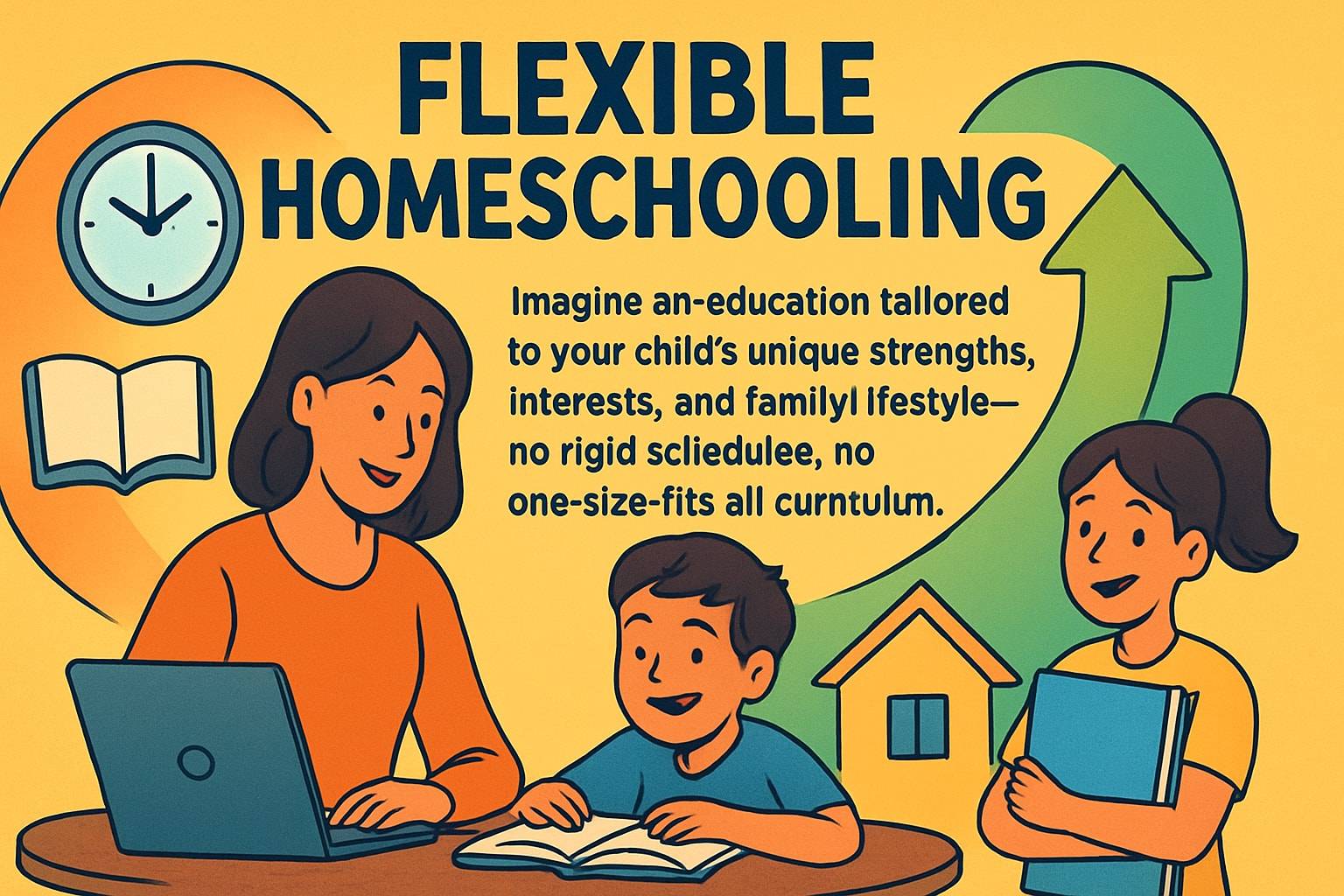
Imagine an education that celebrates your child’s individuality, supporting their passions, strengths, and family lifestyle. Picture learning without rigid schedules or a single curriculum, but with true freedom and adaptability.
This guide explores how flexible homeschooling is revolutionizing education in 2026. Families now have the power to shape learning journeys that match modern needs and prepare children for a changing world.
Inside, you will find a practical roadmap: what flexible homeschooling is, its benefits and challenges, how to get started, essential resources, legal steps, and real stories from families. Discover why more parents are choosing this path, how it fosters confidence and creativity, and what steps you can take to begin your own journey.
Ready to reimagine education? Flexible homeschooling opens the door to a new era of personalized learning.
Understanding Flexible Homeschooling in 2026
Flexible homeschooling in 2026 is transforming education for families seeking a more personalized path. This approach adapts to each learner's needs, interests, and environment, creating opportunities beyond traditional schooling. With the rise of digital tools and global connectivity, more families are finding flexible homeschooling both accessible and rewarding.
Defining Flexible Homeschooling
Flexible homeschooling is an educational model that prioritizes adaptability, individualized pacing, and diverse environments over rigid curricula. Unlike traditional schooling, it allows families to tailor learning to each child's strengths and interests. This can include structured lessons, project-based activities, or even spontaneous explorations.
Popular approaches within flexible homeschooling include blended learning, unschooling, worldschooling, and hybrid models. For example, blended learning mixes online and in-person experiences. Unschooling emphasizes learner autonomy, while worldschooling turns global travel into daily lessons. For a deeper look at worldschooling, see Worldschooling Pros and Cons.
Flexible homeschooling empowers families to choose what works best for their unique circumstances, ensuring learning is both meaningful and relevant.
Trends Driving Flexible Homeschooling
The shift toward flexible homeschooling has accelerated since the early 2020s. In 2023, 11% of U.S. families chose homeschooling, reflecting a significant rise (NHERI). This growth is fueled by global mobility and the increase in remote work, as families seek education that fits their lifestyles.
Digital nomadism has also encouraged flexible homeschooling, allowing education to happen anywhere. Advances in AI-driven adaptive learning and the emergence of micro-schooling provide even more options for personalized instruction. These trends make flexible homeschooling a dynamic and future-ready choice for families worldwide.
Key Benefits for Families and Learners
Flexible homeschooling offers families the chance to customize education according to each child's learning style, pace, and passions. This means lessons can be adjusted to suit visual, auditory, or kinesthetic learners, and can progress as quickly or slowly as needed.
Another key benefit is the integration of real-world experiences, such as travel or community projects, which brings learning to life. Flexible homeschooling often leads to stronger family connections and supports mental well-being, as students experience less stress and more autonomy in their education.
Common Challenges and Misconceptions
While flexible homeschooling brings many advantages, it is not without challenges. One common misconception is that homeschooled children lack socialization opportunities. In reality, families often join local groups, clubs, or co-ops to foster friendships and teamwork.
Balancing structure with freedom can also be a challenge, as some families struggle to find the right mix. Additionally, skepticism from relatives or authorities may arise, but clear communication and documentation help address these concerns. Flexible homeschooling requires intentional planning to overcome these hurdles and ensure a positive experience.
Who Flexible Homeschooling Is For
Flexible homeschooling is ideal for families seeking alternatives to traditional, standardized education. It suits worldschoolers, expats, children with special needs, and gifted learners who benefit from individualized approaches.
Parents do not need formal teaching backgrounds to succeed with flexible homeschooling. Instead, a willingness to facilitate learning, adapt to change, and embrace new experiences is key. This inclusive model welcomes diverse families, making it a viable option for many in 2026.
Steps to Launching Your Flexible Homeschooling Journey
Starting your flexible homeschooling journey can feel exciting yet overwhelming. By breaking the process into clear, manageable steps, you can build a learning environment that truly fits your family's needs. Here is a practical roadmap to help you get started with confidence.
Step 1: Define Your Family’s Educational Philosophy and Goals
Begin your flexible homeschooling experience by clarifying your family's core values and learning priorities. Do you value academic rigor, hands-on experiences, or holistic growth? Consider approaches such as Montessori, Charlotte Mason, unschooling, or project-based learning.
- List your top educational goals.
- Decide which philosophies resonate with your beliefs.
- Involve your children in the discussion to spark motivation.
By defining your philosophy, you lay the foundation for a flexible homeschooling plan tailored to every member of your family.
Step 2: Research Legal Requirements and Registration
Understanding the legal aspects of flexible homeschooling is essential before you begin. Each region, whether in the U.S., UK, Australia, or the EU, has its own regulations. Review local laws on registration, documentation, and assessments.
- Check your state's or country's homeschool requirements.
- Gather necessary forms and keep records organized.
- Connect with local authorities if questions arise.
Staying compliant ensures your flexible homeschooling journey proceeds smoothly and avoids unnecessary challenges.
Step 3: Design a Personalized Curriculum Framework
A strong curriculum framework is at the heart of flexible homeschooling. Choose subjects and skills that align with your child's interests and future goals. Balance core academics with life skills, arts, and physical activity for a well-rounded approach.
- Select interdisciplinary themes or projects.
- Use sample schedules or planning templates for structure.
- Refer to resources like the Homeschool Lesson Plans Guide for practical planning support.
This step helps you create a flexible homeschooling path that adapts as your children grow and their interests evolve.
Step 4: Select Learning Resources and Tools
Flexible homeschooling thrives on diverse resources. Blend textbooks, online platforms, hands-on kits, and field trips to support different learning styles. Explore curriculum providers and open educational resources (OER) for variety.
- Try digital tools and educational apps.
- Incorporate science kits, art supplies, or maker materials.
- Plan outings to museums, parks, or historical sites.
Mixing resources keeps flexible homeschooling engaging and responsive to each child's needs.
Step 5: Create a Flexible Daily/Weekly Routine
Building routines is crucial for successful flexible homeschooling. Structure learning blocks around your family's natural rhythms, allowing for breaks and spontaneous exploration.
- Schedule focused work periods and relaxation times.
- Include outdoor activities and independent projects.
- Adjust routines as seasons or interests change.
A flexible homeschooling routine supports productivity and well-being without rigid constraints.
Step 6: Establish Assessment and Progress Tracking Methods
Tracking progress in flexible homeschooling can be creative and meaningful. Use portfolios, self-assessments, and project presentations instead of relying solely on traditional tests.
- Document achievements with photos, journals, or digital tools.
- Set milestones and reflect on growth regularly.
- Share progress with family or support networks.
Personalized assessment methods reinforce the strengths of flexible homeschooling and celebrate each learner's journey.
Step 7: Connect with Support Networks and Communities
No flexible homeschooling journey is complete without community. Join local homeschool groups, online forums, or co-ops for support, resources, and social opportunities.
- Attend meetups, workshops, or virtual events.
- Exchange ideas and materials with other families.
- Build friendships that enrich your homeschooling experience.
Connecting with others ensures your flexible homeschooling adventure is collaborative, sustainable, and full of encouragement.
Tools and Resources for Personalized Learning
Flexible homeschooling thrives on access to diverse, adaptable tools that support unique educational journeys. The right resources empower families to tailor instruction, nurture curiosity, and foster lifelong learning. Below, explore essential tools and platforms that can transform your flexible homeschooling experience in 2026.
Digital Platforms and Apps for Flexible Homeschooling
Technology has revolutionized flexible homeschooling, making high-quality education accessible anywhere. Adaptive learning platforms like Khan Academy offer personalized lesson paths, while Outschool connects students with live, interest-driven classes. Prodigy Math turns math practice into an engaging game.
For families seeking project-based approaches, resources like Project-Based Learning Strategies provide curated lesson plans and activities that foster critical thinking. These platforms support a variety of learning styles, ensuring that flexible homeschooling remains dynamic and effective.
Hands-On Learning Kits and Materials
Tactile experiences are vital in flexible homeschooling. STEM kits from brands like KiwiCo and MEL Science deliver hands-on experiments to your doorstep, sparking curiosity and problem-solving skills. Art supply boxes encourage creativity, while science experiment kits make abstract concepts tangible.
Subscription options simplify planning, offering monthly projects that align with your child’s interests. These tools allow families to blend academic learning with practical skills, making flexible homeschooling both engaging and memorable.
Community and Social Learning Opportunities
Flexible homeschooling extends beyond the home. Local co-ops organize group classes, park days, and field trips, providing essential social interaction. Museums and maker spaces often host workshops tailored for homeschoolers, enriching the curriculum with real-world experiences.
Online forums and support groups connect families globally, sharing advice and resources. Leveraging community programs ensures flexible homeschooling supports both academic growth and social development, fostering well-rounded learners.
Tracking and Organization Tools
Staying organized is key to successful flexible homeschooling. Digital planners like Trello or Notion help structure daily lessons and long-term projects. Portfolio apps enable students to showcase work, track progress, and set goals.
Progress dashboards provide visual summaries of achievements, making it easier for families to monitor learning milestones. Maintaining detailed records supports both personal reflection and compliance, ensuring flexible homeschooling remains structured yet adaptable.
LearnSpark: AI-Powered Adaptive Learning for Worldschooling Families
LearnSpark stands out as an innovative solution for flexible homeschooling families, especially those on the move. Its AI-powered system creates personalized lesson plans that adapt to each child’s interests, abilities, and location.
Key benefits include offline access for travel, multi-child management, and customizable curricula. Parents gain intuitive guidance and collaborative tools to support student growth. LearnSpark empowers families to make flexible homeschooling seamless, effective, and inspiring across diverse contexts.
Navigating Legal, Social, and Assessment Considerations
Families choosing flexible homeschooling in 2026 must navigate a landscape that is both empowering and complex. Understanding legal, social, and assessment considerations helps ensure your child’s education is recognized, enriching, and future-ready. This section explores the core aspects every flexible homeschooling family should master.
Homeschooling Laws and Compliance in 2026
Legal compliance is a cornerstone of flexible homeschooling. Regulations differ widely by country and even state, so it is vital to stay updated. In the United States, requirements may include submitting intent to homeschool, maintaining attendance records, and periodic assessments. The UK, Australia, and EU countries each have their own registration and oversight processes.
Recent years have seen more streamlined digital reporting and increased acceptance of alternative learning models. For the latest data and trends, consult resources like Fast Facts on Homeschooling. Staying informed helps you confidently meet legal obligations while preserving the flexibility that defines your homeschooling journey.
Socialization and Community Building
A common question about flexible homeschooling is how children develop social skills. In reality, learners benefit from diverse social opportunities. Co-ops, park days, sports teams, and group classes provide regular peer interaction. Many families also join online communities and attend local events.
Flexible homeschooling encourages deep friendships through shared interests rather than age-based classrooms. Parents can tailor social experiences to their child's personality. By actively participating in community activities, families address socialization concerns while enjoying the freedom to choose meaningful connections.
College Admissions and Future Readiness
Flexible homeschooling prepares students for higher education and beyond. Many colleges now welcome homeschooled applicants, recognizing the value of unique portfolios and diverse experiences. Admission processes often include submitting transcripts, standardized test scores, and detailed project records.
Portfolio-based applications highlight creativity, independent learning, and initiative. Dual enrollment and online courses further strengthen academic profiles. For a closer look at current trends and acceptance patterns, see A look at homeschooling in the U.S.. Flexible homeschooling equips learners with adaptability and confidence for future success.
Supporting Neurodiverse and Special Needs Learners
Flexible homeschooling is especially beneficial for neurodiverse and special needs students. Customizing pace, environment, and materials allows for individualized support. Parents can integrate therapies, sensory breaks, and alternative communication tools.
Access to online specialists, inclusive resources, and peer networks enhances the learning journey. Collaboration with therapists and educators ensures that each child’s strengths are celebrated. By removing the barriers of traditional settings, flexible homeschooling empowers every learner to thrive.
Assessing Progress Without Standardized Testing
Assessment in flexible homeschooling moves beyond traditional tests. Families use portfolios, project presentations, and narrative evaluations to track growth. Digital tools help organize work samples, reflections, and milestones.
Self-assessment encourages learners to set goals and recognize achievements. Regular feedback from parents and mentors provides guidance without pressure. This holistic approach ensures that progress reflects true understanding and skills, supporting each child's unique learning journey.
Real-World Flexible Homeschooling in Action
Flexible homeschooling is more than a concept—it is a living, evolving practice seen in families across the globe. From city apartments to mountain cabins, families are designing flexible homeschooling routines that reflect their values, cultures, and dreams. Let us explore how this approach comes alive in daily life, how schedules adapt to family rhythms, and what experienced parents and learners have to say.
Case Studies: Diverse Family Journeys
Meet the Parkers, a family of four who embraced flexible homeschooling after relocating internationally for work. Their children, ages 9 and 12, thrive with a blend of online classes, hands-on science kits, and local museum visits. The Parkers value the ability to adjust pacing during travel seasons and immerse in new cultures.
Another example is the Ahmed family, who practice unschooling and project-based learning. They credit Understanding Unschooling Methods for helping them trust their children's natural curiosity. The Ahmeds integrate coding, baking, and community volunteering into their weekly routine.
Flexible homeschooling also supports children with special needs. The Rivera family, whose son has ADHD, use movement breaks and outdoor lessons to foster focus and joy. Each journey illustrates how flexible homeschooling adapts to unique family dynamics and empowers learners.
Sample Flexible Homeschool Schedules
A hallmark of flexible homeschooling is the ability to tailor daily and weekly rhythms. Let us look at two sample schedules for different age groups:
| Time | Elementary (Age 8) | Teen (Age 15) |
|---|---|---|
| 9:00–10:00 | Reading and storytelling | Online math course |
| 10:00–10:30 | Nature walk | Creative writing |
| 10:30–11:30 | Science experiment | Language study |
| 11:30–12:00 | Snack and music break | Yoga or outdoor exercise |
| 12:00–1:00 | Art or passion project | Independent research |
| 1:00–2:00 | Family lunch | Group discussion/project |
Families adjust these blocks based on energy levels, travel, and interests. Flexible homeschooling routines are not fixed; instead, they ebb and flow with family life, enabling deeper learning and well-being.
Integrating Travel and Life Experiences into Learning
Flexible homeschooling opens doors to learning that extends far beyond textbooks. Many families incorporate travel, turning destinations into living classrooms. For example, exploring ancient ruins in Rome becomes a hands-on history lesson, while snorkeling at the coast introduces marine biology concepts.
Worldschoolers often map out themes based on travel plans—studying local language, cuisine, and geography before each trip. Even short excursions, like visiting a farmer's market or hiking a nature trail, enrich the flexible homeschooling experience. These real-world adventures build curiosity and resilience, making education meaningful and memorable.
Voices from the Community: Parent and Student Insights
Parents consistently report that flexible homeschooling fosters confidence and adaptability in their children. One parent shares, "My daughter used to dread school mornings. Now she wakes up excited to explore her own interests." Students echo this enthusiasm, noting how flexible homeschooling lets them dive deep into topics they love.
Many families highlight the strong connections formed within local co-ops and online groups. Learners develop social skills through group projects, sports, and collaborative art. The flexible homeschooling community is vibrant and supportive, offering encouragement and shared wisdom for every stage of the journey.
Lessons Learned and Tips for Newcomers
Experienced families recommend starting small when transitioning to flexible homeschooling. Focus on building a routine that feels right for your household, and do not be afraid to adjust as you go. Embrace experimentation—what works for one child may not suit another.
Common tips include keeping open communication, celebrating progress, and seeking support from other flexible homeschooling families. Avoid comparing your journey to others, and trust the process. With patience and adaptability, flexible homeschooling can nurture lifelong learners and foster a love of discovery.
As you consider how flexible homeschooling can unlock your child’s full potential—whether through travel, hands-on projects, or personalized lessons—remember that you don’t have to navigate this journey alone. LearnSpark brings the tools and support you need to confidently guide your family’s unique learning path, from adaptive lesson planning to easy progress tracking, wherever life takes you. If you’re ready to take the next step and explore how personalized, AI-driven learning can fit your family’s lifestyle, it’s simple to get started. Create Your Free Account and discover a new world of education possibilities.