
Artificial intelligence is rapidly changing the way educators approach lesson planning, offering new possibilities for classroom innovation. As ai lesson plans become more sophisticated, teachers can streamline preparation, personalize instruction, and focus on what matters most—student success.
This guide explores how to create and use ai lesson plans effectively in 2026. You will learn the fundamentals of AI integration, practical strategies for classroom use, solutions to common challenges, inspiring real-world examples, and the future trends shaping education.
Ready to transform your teaching with actionable insights and proven tools? Let’s begin.
Understanding AI in Lesson Planning
Artificial intelligence is transforming the way educators design and deliver lessons. With the advent of ai lesson plans, teachers now have access to automation, adaptation, and optimization tools that streamline planning and boost instructional quality.
Defining AI-Powered Lesson Planning
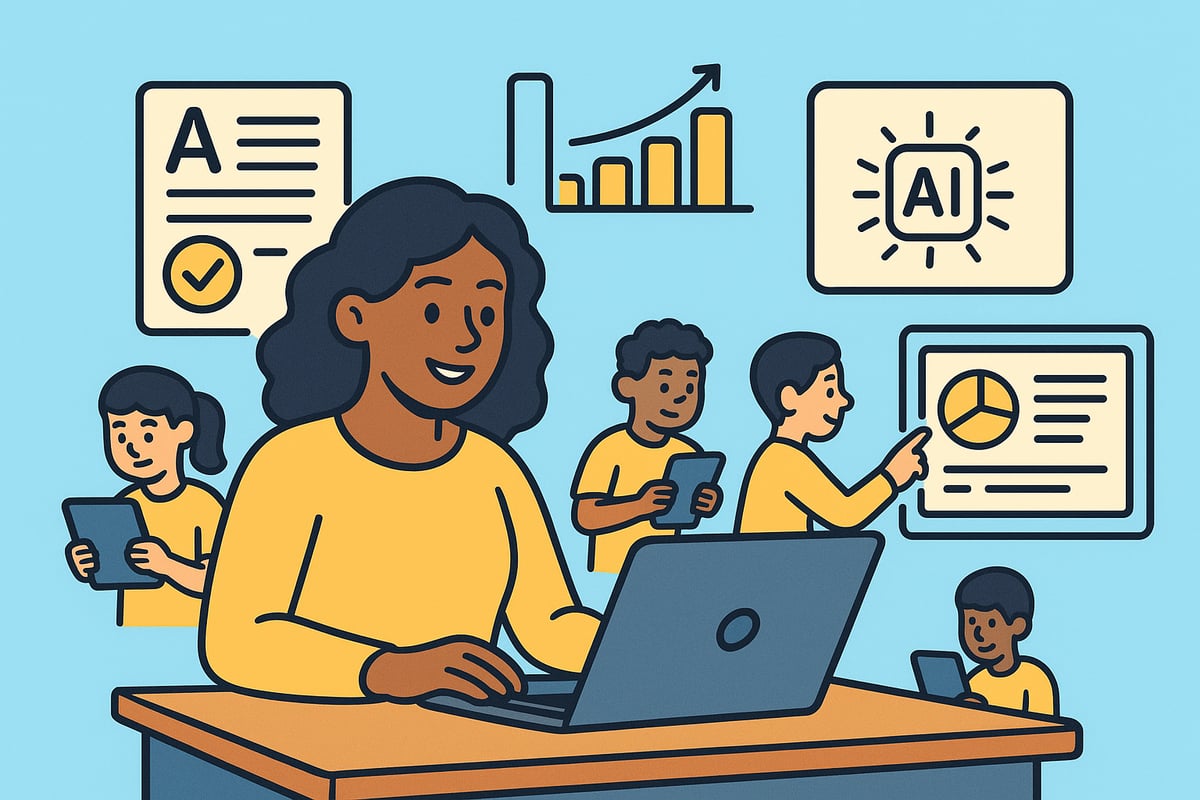
AI-powered lesson planning involves using artificial intelligence to automate time-consuming tasks, adapt lesson content for diverse learners, and optimize instructional strategies. Unlike traditional planning, which often relies on manual resource gathering and one-size-fits-all approaches, ai lesson plans leverage algorithms to generate content, differentiate activities, and provide actionable insights.
Core functionalities include:
- Content generation for multiple learning modalities (text, video, interactive).
- Differentiation based on student performance and learning profiles.
- Data-driven recommendations to refine teaching approaches.
For example, AI tools can instantly create reading passages or math problems tailored to specific skill levels, offering multimodal and differentiated resources. According to EdWeek (2022), teachers spend an average of five hours per week on lesson planning, and 58% report they would benefit from more planning support. Importantly, AI enhances teacher expertise rather than replacing it, serving as an intelligent assistant that empowers educators to focus on engaging instruction and student connection.
Core Benefits of AI for Teachers
The adoption of ai lesson plans brings a range of practical benefits to educators. The most significant is time savings, as AI can generate comprehensive lesson plans in seconds. This allows teachers to devote more energy to instruction and student support.
Additional benefits include:
- Personalization: Lessons automatically adjust to individual student needs and levels.
- Engagement: AI recommends interactive, gamified learning activities.
- Standards alignment: Ensures that all lessons meet district, state, or national requirements.
- Differentiation: Content is modified in real time based on student data.
For example, some AI tools integrate with district resources, providing teachers with customized instructional materials. Importantly, educators remain in control, using AI as a support to enhance, not override, their professional judgment.
| Benefit | Traditional Planning | AI-Powered Planning |
|---|---|---|
| Time Efficiency | Low | High |
| Personalization | Limited | Extensive |
| Standards Alignment | Manual | Automated |
| Differentiation | Challenging | Seamless |
Key AI Tools and Platforms in 2026
In 2026, a variety of leading platforms support ai lesson plans for K-12 and beyond. Top tools offer features such as pre-built prompts, research-backed content, and seamless integration with learning management systems. Secure, district-aligned platforms are essential, especially when handling sensitive student data and ensuring compliance with educational standards.
A standout feature is the ability to match reading passages and assignments to students' abilities, creating a more equitable and effective classroom experience. Data privacy and transparency remain top priorities, with platforms enabling responsible, auditable decision-making.
To understand how these platforms generate personalized plans and integrate with global learning needs, educators can explore the Lesson Plan AI Generator Overview.
Addressing Concerns: AI as a Support Tool
While ai lesson plans offer clear advantages, concerns about data privacy, security, and bias must be addressed. Educational AI systems must comply with strict privacy regulations, protecting student information and ensuring transparency.
Teachers play a vital role in reviewing AI-generated content to safeguard against bias or misinformation. Districts are increasingly focused on aligning AI outputs with pedagogical best practices. As demand for AI literacy grows among educators, ongoing professional development ensures that teachers remain informed and empowered.
Ultimately, AI serves as a powerful support tool, amplifying teacher effectiveness while preserving the irreplaceable human touch in education.
Step-by-Step Strategies for Implementing AI Lesson Plans
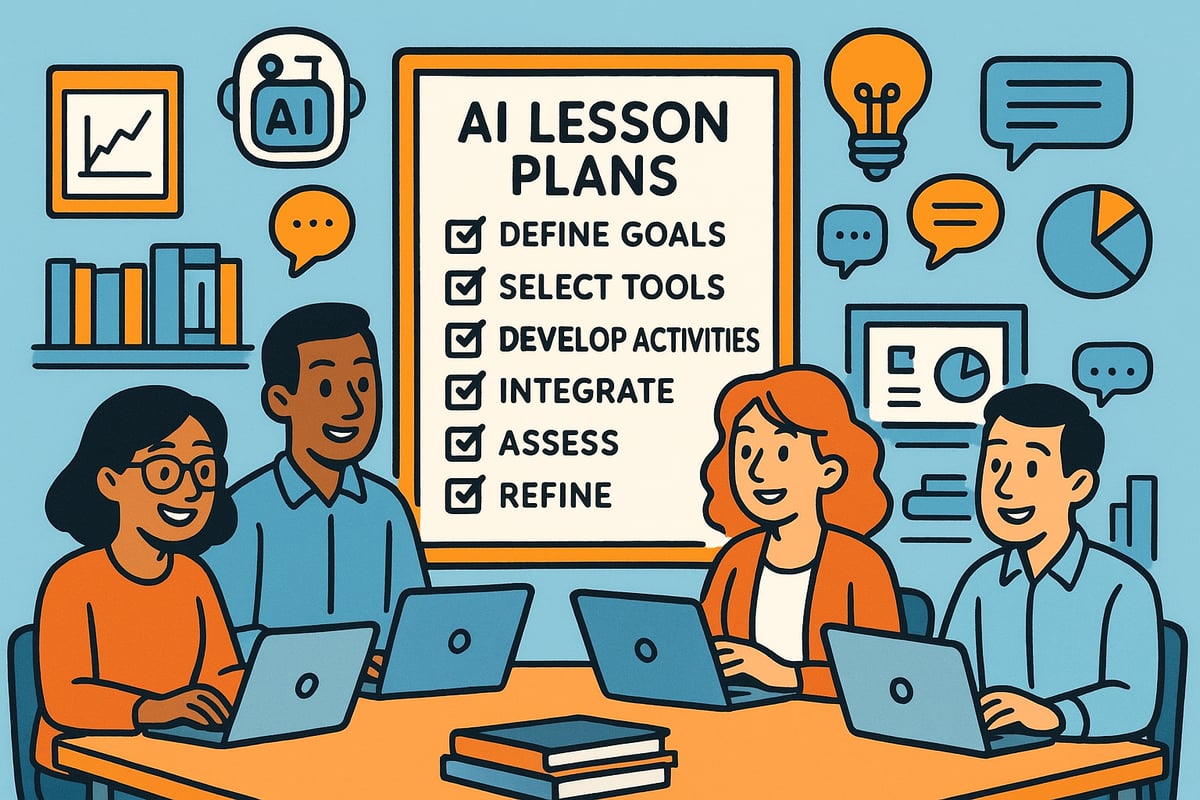
Integrating ai lesson plans into your teaching routine requires a systematic, reflective approach. By following these six essential steps, educators can harness AI’s full potential for streamlined, effective instruction. Here’s how to get started and maximize results.
Step 1: Define Learning Objectives and Standards
Every successful ai lesson plans process begins with clearly defined learning objectives. Articulate what you want students to achieve, referencing district, state, or national standards as your foundation.
Inputting these standards into your chosen AI tool is crucial. Most platforms allow you to upload curriculum documents or select standards directly from a database. For example, you might upload state math standards to receive feedback aligned with those criteria.
When setting up ai lesson plans, ensure the AI-generated lessons align with your curriculum. Your expertise as a subject specialist guides the AI prompts, ensuring outcomes remain relevant and rigorous.
Remember, the clarity of your objectives directly impacts the effectiveness of your ai lesson plans. Let your subject knowledge steer the AI toward meaningful, standards-driven instruction.
Step 2: Input Key Details and Customize Prompts
The next step in creating impactful ai lesson plans is to provide detailed input. Specify the grade level, subject area, and any differentiation needs. The more context you share, the more tailored your lesson suggestions become.
Customizing prompts is essential. Many platforms allow you to upload past lesson plans or student data, which helps the AI generate lessons that reflect your unique classroom context. For instance, by sharing previous units, you can prompt the AI to build upon existing knowledge.
Specificity is key for effective ai lesson plans. Detailed instructions lead to more relevant outputs and reduce the need for extensive revisions. For educators seeking guidance on which platforms best support prompt customization and detailed input, the Best AI Lesson Planning Tools resource provides valuable comparisons.
Your context and insights remain central—AI amplifies your planning but does not replace your professional judgment.
Step 3: Review and Refine AI-Generated Lesson Plans
After generating ai lesson plans, thorough review is essential. Examine each lesson for accuracy, cultural relevance, and appropriateness for your students.
Refining AI outputs ensures lessons fit your classroom context. Adjust activities, resources, and assessments based on your students’ interests and engagement levels. For example, if an AI suggests a group project but your class prefers individual tasks, adapt accordingly.
Always verify that ai lesson plans are inclusive and contextually appropriate. Use your expertise to modify language, examples, and references as needed.
Remember, AI suggestions are a starting point. Your critical eye shapes the final lesson, ensuring it meets both educational standards and student needs.
Step 4: Integrate Student Data and Feedback
Personalization is a defining strength of ai lesson plans. Incorporate student performance data to tailor lessons to individual strengths and challenges.
AI systems can adapt based on formative assessments and ongoing feedback. For example, if students are struggling with reading comprehension, prompt the AI to adjust lesson difficulty or suggest additional practice activities.
Regularly update ai lesson plans with new student data. This continuous feedback loop allows for dynamic, responsive instruction.
Integrating assessment results ensures your lessons remain relevant and effective, supporting student growth at every stage.
Step 5: Combine AI Plans with Existing Resources and Strategies
To maximize the impact of ai lesson plans, blend AI-generated content with your own materials and teaching strategies. This combination creates a balanced, engaging learning environment.
Incorporate traditional resources, such as textbooks and hands-on activities, alongside digital AI suggestions. For example, you might use an AI-recommended interactive game together with your favorite classroom discussion prompts.
Avoid relying solely on ai lesson plans. Maintaining a diverse range of instructional strategies ensures students experience varied and meaningful learning opportunities.
View AI as a powerful complement to your creativity, not a substitute for your expertise.
Step 6: Monitor, Evaluate, and Iterate
Effective ai lesson plans require ongoing monitoring and refinement. Collect student feedback and track learning outcomes to assess lesson impact.
Use AI analytics to identify trends and areas for improvement. For example, after a unit, analyze assessment data to determine which concepts need reinforcement.
Adjust ai lesson plans as needed, using insights from both AI tools and classroom experiences. This iterative process supports continuous improvement and ensures lessons remain dynamic and effective.
By evaluating and evolving your approach, you create a responsive, student-centered learning environment.
Overcoming Challenges and Ensuring Responsible AI Use
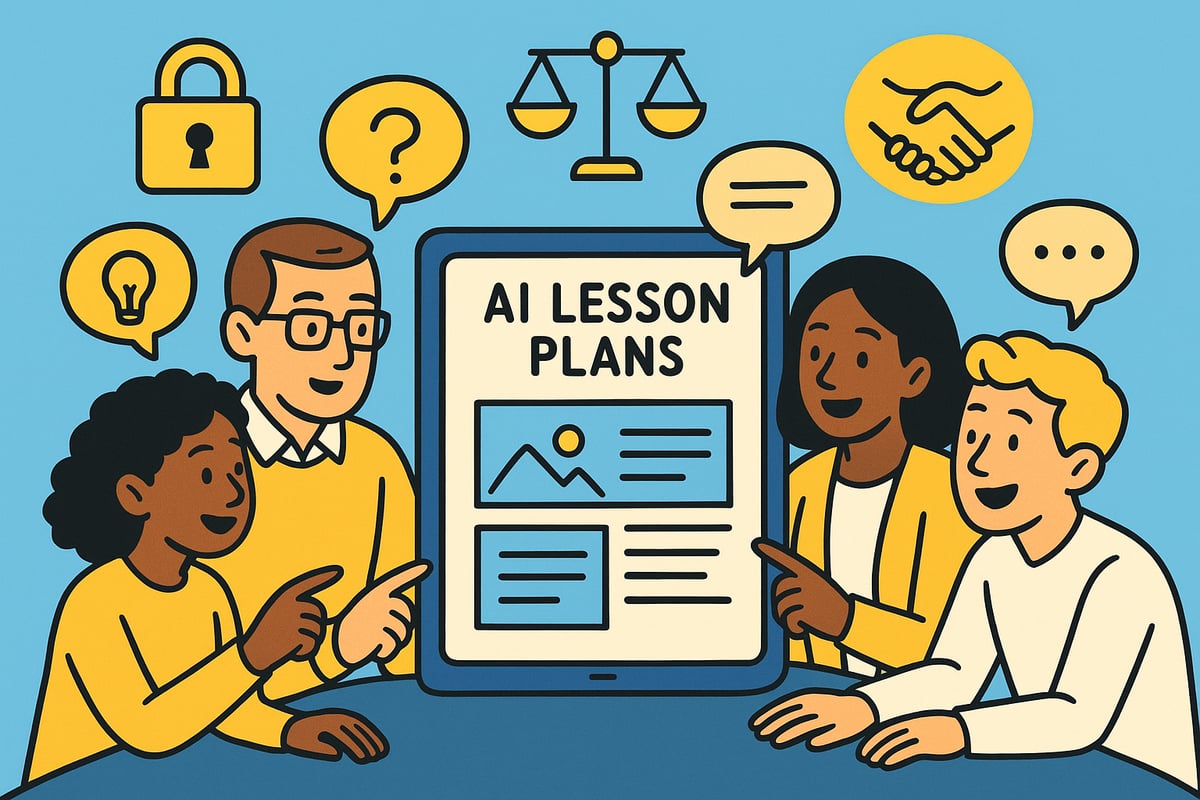
Effectively implementing ai lesson plans requires a thoughtful approach to privacy, bias, teacher agency, classroom balance, and equity. By addressing these challenges, educators can ensure AI supports rather than undermines the learning environment.
Data Privacy and Security in AI Lesson Planning
When using ai lesson plans, safeguarding student data is essential. Educational technology must comply with strict privacy regulations, such as FERPA and COPPA. Districts are increasingly demanding platforms that offer transparent, auditable systems. This ensures that sensitive information remains protected.
Data breaches remain a top concern for educators and parents. Schools can build trust by selecting platforms that undergo regular security reviews and provide clear data usage policies. Teachers should stay informed about how ai lesson plans handle, store, and process data.
Maintaining privacy is not just a technical requirement. It is a foundation for responsible AI adoption and the long-term success of ai lesson plans in the classroom.
Addressing Bias and Misinformation in AI Outputs
Bias and misinformation are significant risks in ai lesson plans. AI-generated content may unintentionally reflect biases present in training data or produce factually incorrect information. Teachers must review all materials produced by AI for accuracy and inclusivity.
Developing critical evaluation skills is vital for educators. Regular training helps teachers recognize and correct bias or errors before lessons reach students. For example, a teacher might cross-check AI-generated reading passages to ensure they align with classroom values.
Ongoing professional learning in AI literacy enables teachers to confidently use ai lesson plans while minimizing the risk of spreading misinformation or perpetuating stereotypes.
Fostering Teacher Agency and Professional Development
With ai lesson plans becoming more prevalent, teacher agency remains crucial. Educators should be empowered to lead instruction, make final decisions, and adapt AI suggestions to fit their students' needs. Professional development opportunities focused on AI integration are vital.
Districts can offer free certification courses or workshops to help teachers understand and master ai lesson plans. This investment increases teacher confidence and retention. When educators feel supported, they are more likely to embrace AI as a valuable tool.
Ultimately, teacher expertise guides the responsible and effective use of ai lesson plans, ensuring technology enhances instruction rather than dictating it.
Balancing Automation and Human Touch
While ai lesson plans automate many tasks, the human touch remains irreplaceable. Teachers bring empathy, creativity, and real-time judgment to the classroom. AI can handle repetitive tasks, allowing educators to focus on building meaningful relationships with students.
The risk of over-automation is real. To prevent this, schools should encourage teachers to blend AI support with traditional methods. As highlighted in Why AI Still Needs a Teacher's Touch, maintaining human oversight ensures ai lesson plans serve as helpful aids, not substitutes for teacher engagement.
A balanced approach leverages technology's strengths while preserving the unique value of human interaction in education.
Building an Inclusive, Equitable AI Lesson Planning Ecosystem
Equity must be at the heart of ai lesson plans. AI tools should be adaptable to diverse learning styles, backgrounds, and educational philosophies. For example, platforms that allow customization can support Montessori, unschooling, or other approaches.
Educators should evaluate whether ai lesson plans address the needs of all students, including those with disabilities or language differences. When AI is tailored to individual needs, research shows positive outcomes across achievement and engagement.
By prioritizing inclusion and fairness, schools can ensure ai lesson plans benefit every learner, creating a more just and effective educational ecosystem.
Real-World Applications: Case Studies and Success Stories
The transformative power of ai lesson plans is best understood through real-world examples. Across districts and diverse learning communities, educators are leveraging AI to streamline planning, personalize instruction, and empower both teachers and students. The following case studies highlight how ai lesson plans are driving innovation and improving outcomes in 2026.
District-Wide AI Integration for Lesson Planning
A large urban district recently rolled out ai lesson plans across its schools, aiming to reduce teacher workload and boost lesson quality. Teachers reported that AI platforms generated aligned, standards-based plans in minutes, freeing up time for direct student engagement. Administrators noted a 30% reduction in planning hours and a measurable rise in student participation. According to AI's Impact on Classroom Teaching, over 60% of U.S. K-12 public school teachers used AI tools during the 2024-2025 school year, underscoring the growing adoption of ai lesson plans in mainstream education.
Personalized Learning Through AI in Diverse Classrooms
In a multilingual elementary school, ai lesson plans were used to adapt reading materials and activities for students at varying proficiency levels. Teachers uploaded class rosters and student data, prompting AI to suggest differentiated resources. The result was a more inclusive classroom, where every student accessed content tailored to their needs. AI-generated reading passages at multiple levels helped bridge learning gaps. Teachers observed improved student performance, higher engagement, and increased satisfaction among families, making ai lesson plans essential for supporting diversity.
Teacher Collaboration and Community Building with AI
A district’s professional learning community embraced ai lesson plans as a foundation for collaboration. Educators shared AI-generated resources, lesson templates, and feedback, refining plans collectively to fit their unique classroom contexts. This approach fostered a sense of shared purpose and reduced isolation, as teachers built on each other’s expertise. Data showed a steady increase in teacher confidence and willingness to experiment with new instructional strategies. The collaborative refinement of ai lesson plans led to more innovative and effective teaching across the district.
Supporting New and Non-Traditional Educators
For homeschoolers and non-certified teachers, ai lesson plans provide vital structure and support. One homeschooling network adopted AI platforms to help parents design daily lessons, manage pacing, and track student progress. New educators, often lacking formal training, reported increased confidence and improved learning outcomes for their children. Resources like the AI Homeschool Software Guide help families select tools tailored to their educational philosophy. Ai lesson plans are democratizing access to quality instruction for all types of learners.
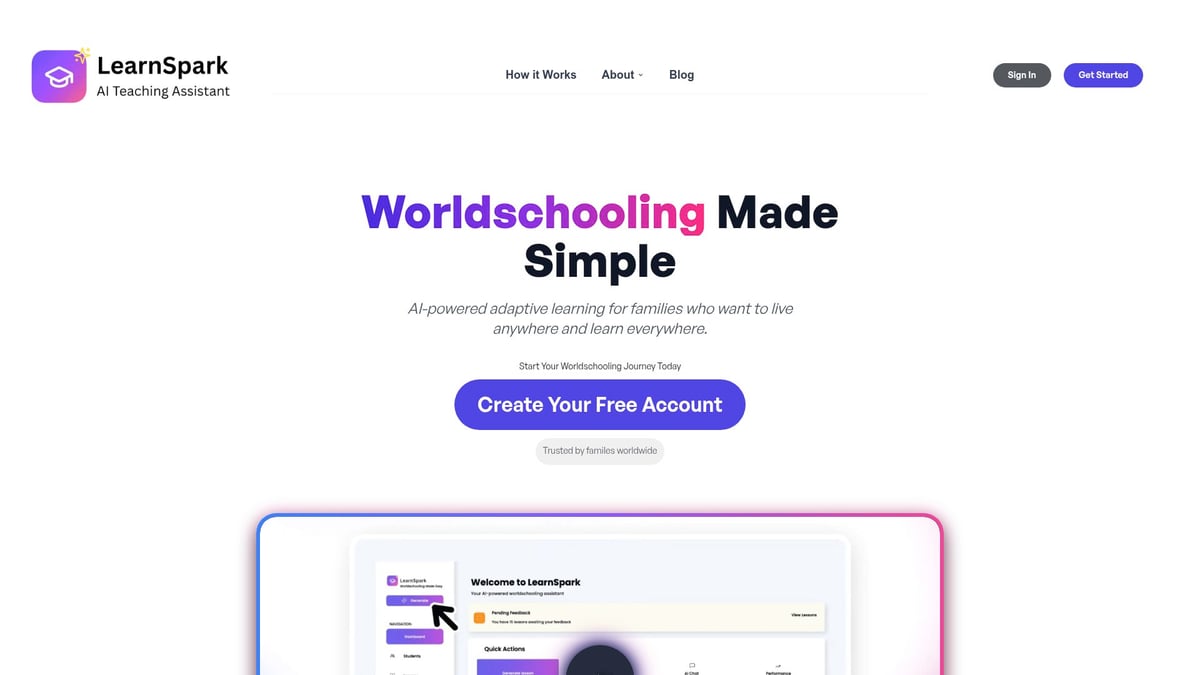
LearnSpark: Personalized Adaptive Learning for Worldschooling Families
LearnSpark is an innovative platform that brings ai lesson plans to worldschooling and homeschooling families. Its AI-driven system personalizes lessons based on location, student interests, and progress data. Parents, regardless of teaching experience, use LearnSpark to deliver engaging, structured learning anywhere in the world. The platform offers customizable content, progress tracking, and adaptability for multiple learning styles. Families traveling globally maintain consistency and curiosity in education, proving that ai lesson plans can bridge the gap for non-traditional educators seeking flexibility and high-quality support.
Future Trends: The Evolution of AI Lesson Plans in 2026 and Beyond
The landscape of ai lesson plans is rapidly evolving, bringing new technologies, policies, and teaching strategies into classrooms around the world. Educators, policymakers, and students alike are navigating these changes together. Let us explore what the future holds for ai lesson plans through four key trends.
Emerging Technologies Enhancing Lesson Planning
Next-generation ai lesson plans are powered by advanced tools that adapt in real time to student needs. Features like multimodal content, voice assistants, and seamless integration with virtual and augmented reality are transforming how lessons are delivered.
For example, AI can now personalize learning by providing interactive simulations or immersive VR field trips that bring abstract concepts to life. According to recent research, platforms such as EduPlanner: AI in Instructional Design showcase how AI-driven customization can align lesson content to specific instructional goals and student profiles.
As interoperability improves, ai lesson plans can easily connect with other edtech tools, allowing teachers to build rich, adaptive learning environments.
The Role of Educators in Shaping AI’s Future
Teachers play a central role in the evolution of ai lesson plans. Their expertise and feedback guide the development of ethical, effective AI solutions. Increasingly, educators are co-designing templates and collaborating with developers to ensure these tools meet classroom realities.
Initiatives like the AI Training Initiative for Educators highlight the importance of professional development, empowering teachers to confidently integrate AI into their instructional practices. Districts are piloting educator-driven customization, enabling teachers to refine AI outputs based on real-world teaching experiences.
Human judgment remains vital, ensuring ai lesson plans support, not overshadow, pedagogical wisdom.
Policy, Ethics, and Equity Considerations
As ai lesson plans become mainstream, clear policies and ethical guidelines are essential. Anticipated regulations will focus on transparency, data privacy, and accountability, ensuring AI decisions are explainable and fair.
National standards are emerging to govern how AI is used in schools, protecting both students and teachers. Responsible innovation requires that ai lesson plans are designed with equity in mind, so every learner benefits regardless of background or learning style.
Proactive policymaking supports the sustainable and ethical adoption of these technologies in education.
Preparing Students for an AI-Enhanced World
Integrating AI literacy and digital citizenship into ai lesson plans prepares students for future challenges. Lessons now include activities that teach students to critically evaluate AI-generated information, fostering analytical thinking and responsible technology use.
As demand for digital and AI skills grows in the global workforce, schools are equipping learners with the abilities they need to thrive. By embedding these competencies, ai lesson plans ensure students are not just consumers of technology but also informed, capable contributors in an AI-driven world.
If you’re ready to put these AI lesson planning strategies into action and truly personalize your family’s learning journey, there’s never been a better time to explore adaptive tools. With platforms like LearnSpark, you can create engaging, location-based lessons that adapt to your child’s unique interests and progress—no matter where in the world you are. You don’t need a traditional teaching background to guide your child with confidence or to bring curiosity and flexibility into every lesson. Start experiencing the future of education for worldschooling families—Create Your Free Account and see how effortless, inspiring learning can be.
See how LearnSpark can help → View pricing.