
Thinking about adding a new learning tool to your homeschool lineup can feel like a big decision, especially when it comes to the budget. If you're exploring gamified learning platforms, you've likely come across AdaptedMind and are wondering about the real AdaptedMind cost 2026 and if it's a worthwhile investment for your family. This guide breaks down every aspect of AdaptedMind's pricing, from monthly and family plans to how it stacks up against competitors, so you can decide with confidence.
Quick Answer
In 2026, the cost for an AdaptedMind subscription is typically $9.95 per month for one child, covering both math and reading. The annual plan offers a significant discount, usually priced around $79.95 per year, which breaks down to about $6.66 per month. Family plans provide additional savings for multiple children, with the price per child decreasing as you add more learners to your account.
TL;DR
- Standard Pricing: A single-child subscription costs about $9.95 monthly or a discounted rate of around $79.95 annually. View the full 2026 price breakdown.
- Best Value: The annual plan consistently offers the best value, saving families over 30% compared to paying month-to-month. Compare monthly and annual subscription value.
- Family Plans Save More: AdaptedMind offers tiered discounts for multiple children, making it more affordable for larger families. See how family plan discounts work.
- Free Trial is Key: A generous 30-day free trial lets you fully test the platform's math and reading programs before committing. Get tips to maximize your free trial.
- Value Depends on Engagement: Its gamified, reward-driven approach is highly effective for many K-8 learners, but the ultimate value depends on if it clicks with your child. Read our analysis on if AdaptedMind is worth it.
In This Article
- What is AdaptedMind and How Does It Teach?
- AdaptedMind Pricing 2026: A Clear Breakdown for Parents
- Monthly vs. Annual Subscriptions: Which Offers Better Value?
- How Do AdaptedMind Family Plans Work?
- Is AdaptedMind Worth the Cost in 2026? An Honest Look at Value
- AdaptedMind vs. Adventure Academy & Other Competitors: A Cost-Benefit Analysis
- How to Maximize Your AdaptedMind Free Trial in 2026?
- Finding AdaptedMind Discount Codes & Promotions for 2026
- Managing Your AdaptedMind Subscription: Login & Cancellation Tips
- How Does AdaptedMind Math Curriculum Align with Standards in 2026?
- The Parent Dashboard: Tracking Progress & Customizing Learning
- Frequently Asked Questions About AdaptedMind Pricing & Value
What is AdaptedMind and How Does It Teach?
AdaptedMind is a gamified online learning platform designed to make K-8 math and reading fun and engaging. Instead of static worksheets, it presents standards-aligned curriculum through interactive games, challenges, and a reward system where kids earn points to "shop" for virtual items for their avatar or room. Parents often turn to it as a supplement to their core curriculum or as a tool to help a child catch up or get ahead in specific subjects.
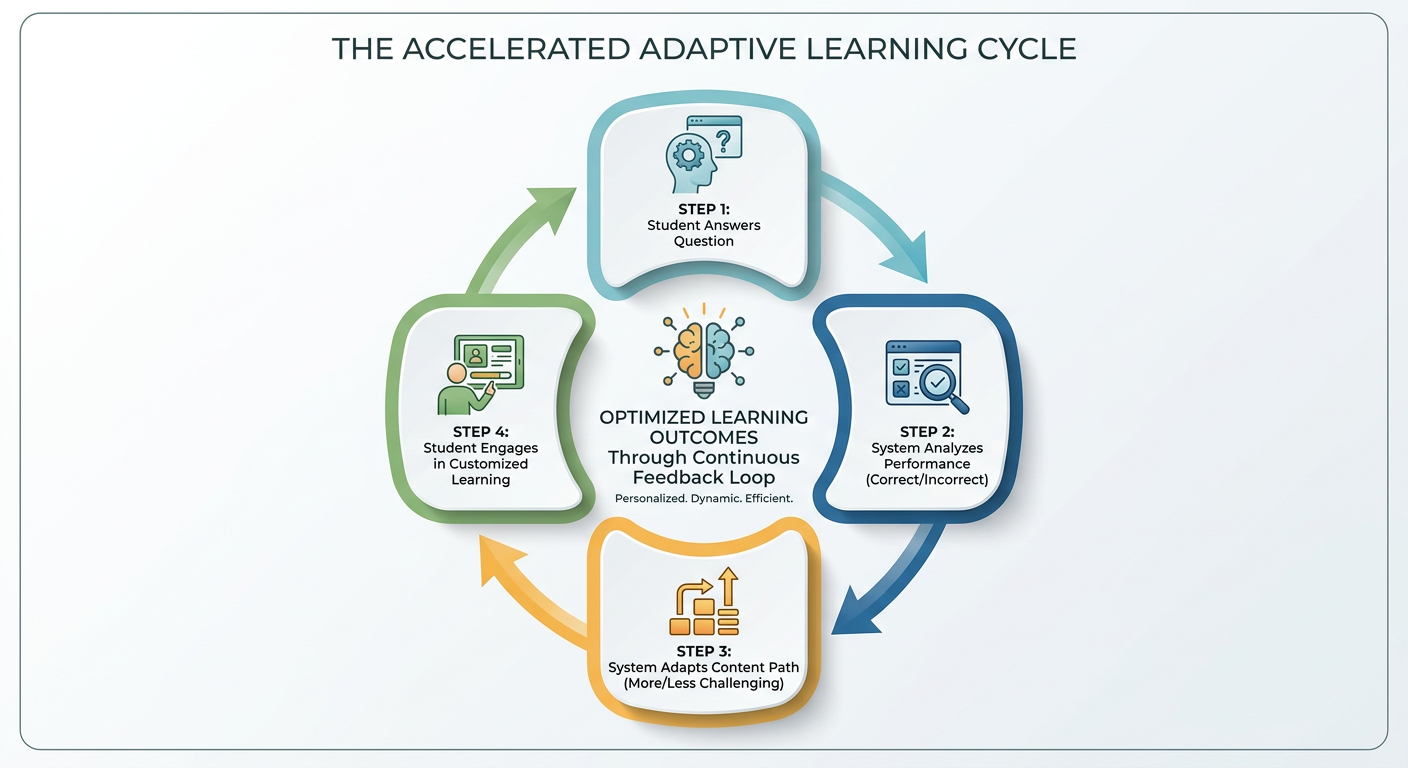
The core of its teaching method revolves around adaptive learning. Adaptive learning refers to technology that automatically adjusts the difficulty of problems in real-time based on a student's performance. If your child is acing fractions, the system will move them on to more challenging concepts. If they're struggling with long division, it will provide easier problems and instructional videos to help build foundational skills before moving forward. This creates a personalized learning path for each child, ensuring they are always working at their optimal level of challenge. After testing the platform, we found this feedback loop to be quite responsive.
This process helps prevent the frustration of material being too hard and the boredom of it being too easy, which is a common challenge in homeschooling multiple ages.
AdaptedMind Pricing 2026: A Clear Breakdown for Parents
Understanding the AdaptedMind cost 2026 is straightforward, as the platform maintains a simple pricing structure. There are no hidden fees or complicated tiers to navigate. The price includes full access to both the math and reading curriculum for all grade levels (K-8), so you don't have to buy separate subjects.
As of early 2026, here is the typical pricing you can expect:
- Monthly Subscription: $9.95 per month for one child. This plan is billed automatically each month and offers the flexibility to cancel at any time.
- Annual Subscription: $79.95 per year for one child. This option requires paying for the full year upfront but provides a substantial discount, working out to just $6.66 per month.
These prices are for a single learner. If you are homeschooling more than one child, AdaptedMind's family plan offers even better value, which we'll cover in detail below. While AdaptedMind doesn't typically run promotions on its homepage, it's common to find introductory offers, like a lower price for the first month, when signing up through partner links or during specific promotional periods.
Monthly vs. Annual Subscriptions: Which Offers Better Value?
Choosing between a monthly and an annual subscription depends on your budget and how you plan to use the platform. For families who want to test the waters beyond the free trial or only need a supplement for a few months, the monthly plan's flexibility is ideal. There's no long-term commitment, so you can easily cancel if it's not the right fit for your child.
However, for those planning to use AdaptedMind as a consistent part of their homeschool curriculum for a year or more, the annual plan offers undeniable savings. Based on our analysis, an annual subscription for AdaptedMind can save families over 30% compared to paying month-to-month across a year.
Here’s a quick comparison to illustrate the difference:
| Plan Type | Cost Per Child | Total Annual Cost | Best For |
|---|---|---|---|
| Monthly | $9.95/month | $119.40 | Short-term use, maximum flexibility, trying it out after the free trial. |
| Annual | $79.95/year ($6.66/mo) | $79.95 | Long-term use, best value, families committed to the platform for a full school year. |
Key takeaway: Annual subscriptions almost always offer the best long-term value, but monthly plans provide crucial flexibility for families who are still evaluating their learning tools or need a short-term boost in a specific subject.
How Do AdaptedMind Family Plans Work?
AdaptedMind's pricing is particularly friendly for homeschooling families with multiple children. Instead of charging the full price for each child, they offer a discounted family plan that reduces the cost per learner as you add more members. This makes it an economical choice for keeping siblings engaged on the same platform.
Here's how the family plan pricing typically works in 2026:
- First Child: $9.95 per month
- Second Child: An additional $5.00 per month (approx.)
- Each Additional Child: An additional $2.50 per month (approx.)
For example, a family with three children would pay roughly $17.45 per month ($9.95 + $5.00 + $2.50). This unified billing simplifies managing your educational expenses. The AdaptedMind family plan price ensures that each child gets their own individual account, personalized learning path, and separate progress reports, all accessible under a single parent login. This structure scales affordably, and in our experience, it's one of the more competitive multi-child pricing models among gamified learning apps. If you're building a curriculum for multiple kids, be sure to check out our Family Lesson Plan Guide for Engaging Learning | LearnSpark for more tips.
Is AdaptedMind Worth the Cost in 2026? An Honest Look at Value
The question "Is AdaptedMind worth it?" is one we hear often from parents, and the answer truly depends on your child's needs and your family's educational goals. At around $80-$120 per year, it's a relatively low-cost supplement, but the true value isn't just in the price—it's in the engagement.
Where AdaptedMind Shines:
- Engagement for Reluctant Learners: The platform's greatest strength is its gamification. The points, rewards, and silly monsters are highly motivating for many kids in the K-5 age range, especially those who find traditional practice boring or frustrating.
- Targeted Skill Practice: The adaptive algorithm is effective at identifying and addressing learning gaps. If your child needs to shore up specific skills in math or reading, AdaptedMind provides focused, repetitive practice in an enjoyable format.
- Independent Learning: Because the platform guides children from one activity to the next, it can foster independence and free up parent time. Many parents use it for 20-30 minutes of daily practice while they work with another child.
Where It May Fall Short:
- Not a Full Curriculum: AdaptedMind is best viewed as a practice and reinforcement tool, not a complete, stand-alone curriculum. It doesn't teach concepts with the depth that a full program or a dedicated teacher would.
- Limited Subject Range: The focus is strictly on math and reading. Families looking for an all-in-one platform with science, social studies, and art will need to look elsewhere.
- Can Become Repetitive: While gamified, the core loop of answering questions to earn points can become repetitive for some older students or those who don't respond to extrinsic rewards.
In our experience, parents often find the investment worthwhile when their primary goal is to boost engagement and confidence in math and reading fundamentals. The joy a child feels when they finally master a concept they've struggled with is hard to put a price on. For a more detailed breakdown, our comprehensive AdaptedMind Review 2026 offers deeper insights.
Key takeaway: The value of AdaptedMind largely depends on your child's engagement and learning style. Its gamified approach excels for children who benefit from interactive, reward-driven learning, making it a strong supplemental tool for fundamental skills.
AdaptedMind vs. Adventure Academy & Other Competitors: A Cost-Benefit Analysis
When considering the AdaptedMind cost in 2026, it's helpful to compare it to other popular online learning platforms. Two of the most common comparisons are with Adventure Academy and the always-free Khan Academy Kids. Each serves a different purpose and appeals to a different type of learner.
Adventure Academy is often seen as a direct competitor, but it offers a much broader, MMO-style (Massively Multiplayer Online) world for kids aged 8-13. It integrates learning across multiple subjects—including science and social studies—into a single immersive game. In contrast, AdaptedMind is more of a focused, drill-and-practice tool for math and reading.
Here's how they stack up on key features and cost:
| Feature | AdaptedMind | Adventure Academy | Khan Academy Kids |
|---|---|---|---|
| Primary Focus | Gamified Math & Reading Practice | Immersive, Quest-Based Learning | Playful Foundational Skills |
| Age Range | Grades K-8 | Ages 8-13 | Ages 2-8 |
| Subjects Covered | Math, Reading | Reading, Math, Science, Social Studies, etc. | Reading, Writing, Math, Logic, Creative |
| 2026 Monthly Cost | ~$9.95 | ~$12.99 | Free ($0) |
| 2026 Annual Cost | ~$79.95 | ~$59.99 | Free ($0) |
| Best For | Targeted skill-building and closing gaps | Kids who love immersive game worlds and broad topics | Younger learners and budget-conscious families |
Based on our analysis, if your goal is targeted practice to improve specific math and reading scores, AdaptedMind's focused approach is more direct. If you're looking for a broader educational "world" that encourages exploration across subjects for an older child, Adventure Academy is a strong contender, often at a lower annual price. And for preschoolers and early elementary students, the completely free, high-quality content from Khan Academy Kids is an unbeatable starting point.
How to Maximize Your AdaptedMind Free Trial in 2026?
AdaptedMind typically offers a generous 30-day free trial, which is more than enough time to determine if it's a good fit for your child. Rushing through it or forgetting to explore all the features is a common mistake. To get the most value out of this trial period, it's best to go in with a plan.
Here is a quick checklist to guide you during your trial:
- Set a Specific Goal: Before you even sign up, decide what you want to achieve. Is it to improve multiplication fluency? Boost reading comprehension? Have a clear goal to measure against.
- Schedule Consistent Use: Have your child use the platform for 15-20 minutes a day for at least one full week. This helps you gauge their sustained interest, not just their excitement on day one.
- Test Both Subjects: Make sure your child spends time on both the math and reading sections to see which one resonates more. You might find it's a perfect fit for one subject but not the other.
- Explore the Parent Dashboard: Log in to the parent dashboard a few times during the trial. Check the progress reports. See what insights it provides. Can you easily see where your child is struggling or excelling?
- Let Your Child "Shop": Encourage your child to use their earned points in the virtual store. This reward system is a core part of the motivational loop, and seeing if it "works" on your child is a key part of the evaluation.
- Set a Cancellation Reminder: Mark the end date of your trial on your calendar with an alert for two days before. This ensures you have time to make a decision and cancel if needed without being charged.
Finding AdaptedMind Discount Codes & Promotions for 2026
While the standard AdaptedMind pricing is already quite affordable, who doesn't love a good deal? Finding a legitimate AdaptedMind discount code 2026 is possible if you know where to look. The company doesn't typically splash coupon codes across its homepage, but it does offer savings through a few reliable channels.
Here’s where to look for promotions:
- Seasonal Sales: The most common times for discounts are during major sale seasons. Keep an eye out around Back-to-School (August/September) and Black Friday/Cyber Monday (November). These sales often feature a reduced price on the first year of an annual subscription.
- Homeschool Blogger Reviews: AdaptedMind often partners with homeschool bloggers and influencers. They may be given special affiliate links that offer a discount or an extended free trial to their readers. Searching for recent reviews may lead you to one of these offers.
- Email Newsletter: When you sign up for the free trial, you'll likely be added to their email list. Don't unsubscribe right away! Companies often send "win-back" offers or special promotions to their email subscribers.
⚠️ A word of caution: Be wary of third-party coupon aggregator websites that claim to have dozens of active codes. Many of these are expired or fake. Stick to official channels and trusted partners to avoid scams.
Managing Your AdaptedMind Subscription: Login & Cancellation Tips
Once you're a subscriber, managing your account is done through the AdaptedMind login parent dashboard. This central hub is where you can update billing information, add or remove children from your family plan, and monitor your child's learning journey.
If you decide the platform is no longer a fit, knowing how to cancel your AdaptedMind subscription is crucial to avoid unexpected charges. The process is designed to be straightforward. In our testing, we found you can typically cancel in just a few clicks.
A typical cancellation process looks like this:
- Log In: Go to the AdaptedMind website and log in to your parent account.
- Navigate to Settings: Look for a "Parent Settings," "My Account," or similar section in your dashboard.
- Find Subscription Management: Within the settings, there should be a clear link or button for "Manage Subscription" or "Billing."
- Initiate Cancellation: Follow the on-screen prompts to cancel your plan. You will likely be asked for a reason for your cancellation.
- Confirm: Make sure you click the final confirmation button and receive a confirmation email. Your access should continue until the end of your current billing period.
For a broader look at organizing your educational resources, check out our guide on the best homeschool management tools.
How Does AdaptedMind Math Curriculum Align with Standards in 2026?
For parents considering AdaptedMind as a math supplement, a key question is whether its content is robust and aligned with what kids are expected to learn. The AdaptedMind math curriculum is designed to align with the Common Core State Standards (CCSS), which are used by a majority of states. This means the topics and skills your child practices on the platform will directly support and reinforce what is covered in most public school and many comprehensive homeschool curricula.
The curriculum is structured by grade level, from Kindergarten through 8th grade. Within each grade, it's broken down into specific skill domains. For example:
- Early Elementary (K-2): Focuses on number sense, addition and subtraction, place value, and basic geometry (shapes and attributes).
- Upper Elementary (3-5): Moves into multiplication and division, fractions, decimals, and more complex measurement and data problems.
- Middle School (6-8): Covers ratios, proportional relationships, expressions and equations, functions, and the foundations of algebra and geometry.
A key feature of the curriculum is the pre-test. When a child first starts, they take a short diagnostic test that places them at the appropriate level, which may be above or below their actual grade. This ensures they start working on the skills they truly need to practice. The depth of the curriculum is solid for a supplemental tool, though it's not designed to be the primary source for introducing brand new, complex topics. For more ideas on how to structure your year, take a look at our Lesson Plans for Teachers: The Essential Guide | LearnSpark.
The Parent Dashboard: Tracking Progress & Customizing Learning
The AdaptedMind login parent dashboard is more than just a place to manage your billing; it's your command center for overseeing your child's education on the platform. This is where the service provides transparency and gives parents the controls they need to stay involved.
From the dashboard, you can perform several key actions:
- View Progress Reports: See detailed reports on what skills your child has mastered, where they are currently working, and which concepts they are struggling with. Reports often show accuracy rates and time spent on different topics.
- Identify Trouble Spots: The dashboard quickly highlights areas where your child is having difficulty, allowing you to step in with more direct instruction.
- Adjust Grade Level: If you feel the work is consistently too easy or too hard, you can manually override the adaptive algorithm and adjust your child's working grade level.
- Add/Remove Subjects: You can easily toggle access to math or reading on or off for each child.
This hub is one of the most valuable parts of the subscription, turning a fun game for your child into a useful assessment tool for you. It's one of many great student progress monitoring tools available to homeschooling families today.
Frequently Asked Questions About AdaptedMind Pricing & Value
Is AdaptedMind a one-time purchase or a subscription?
A: AdaptedMind is a subscription-based service. It is not a one-time purchase. You can choose to pay on a monthly recurring basis or select an annual subscription, which is billed once per year at a discounted rate. This model ensures continuous access to all content and platform updates.
Can I pause my AdaptedMind subscription?
A: As of 2026, AdaptedMind does not typically offer an official "pause" feature for its subscriptions. If you need to take a break, you would need to cancel your subscription and then sign up again when you're ready to resume. Your child's progress is usually saved to their account for a period of time.
Does AdaptedMind offer a free version or free content?
A: AdaptedMind's primary offering is its 30-day free trial, which gives you complete access to the entire platform. Unlike some other educational tools, it does not have a permanent "freemium" version with limited content. After the trial period ends, a paid subscription is required to continue using the service.